How to catch the summer’s brightest meteor shower over the Bay Area
By chance, a new moon on Wednesday leaves California skies completely dark, setting the stage for one of the year’s best celestial shows.
Read more MLB’s worst teams in 2026 are still pretty bad, but at least they are reasonably bad

If the weather cooperates, astronomers recommend staying up all night: the Perseid meteor shower peaks this week from the evening of Wednesday, Aug. 12, into the early morning of Thursday, Aug. 13.
The annual phenomenon originates with the comet 109P/Swift-Tuttle and can produce not only 50 to 100 streaks of light in the sky per hour but “fireballs,” or exceptionally bright meteors.
“What’s happening is that Earth is crossing the path of a very old comet that, over its lifetime, has left this trail of tiny fragments of ice and dust up in the sky,” Bruce Macintosh, director of University of California Observatories and an astronomy and astrophysics professor at UC Santa Cruz, told SFGATE. “As Earth crosses that path, some of them hit the atmosphere and burn up. … It’s everybody’s best chance to actually see little meteors, big meteors, fireballs streaking across the sky.”
The shower is active until late August, but the timeframe between 11 p.m. on Wednesday until dawn the next day is the best for viewing meteors. Lying down with a full look at the sky is best, and binoculars and telescopes are unnecessary. NASA recommends giving your eyes 30 minutes to adjust.
“One of the good things about these big meteor showers is that it doesn’t need to be incredibly dark — getting a little bit into the hills or a park that’s a little bit away from city lights is more than good enough,” Macintosh said. “But you do need to be patient and just look up into the sky.”
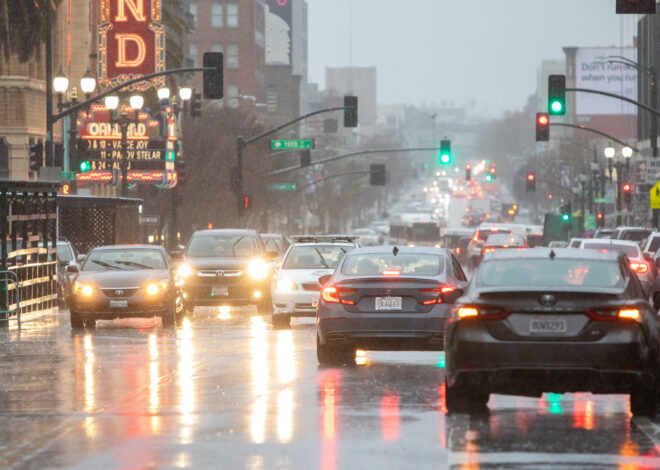
Patience will be key especially if you live in the Bay Area, which is forecast to be stuck in a pattern of clouds and fog this week from the evenings through the mornings, according to Matt Mehle, a meteorologist at the National Weather Service’s San Francisco office.
Read more Jeremy Peña hits go-ahead single, Isaac Paredes 2-run double in 10th as Astros rally past Giants 6-3
“What also complicates matters is we also have a weak disturbance sliding through the Central Coast south of San Francisco,” he told SFGATE. “Usually, the rule of thumb is head inland or head up in elevation. But we’re still going to be dealing with some mid- and upper-level clouds streaming overhead, so the viewing of meteors midweek is still going to be hard.”

BECOME A FRIEND. GET OUR AD-FREE APP.
In Southern California, inland spots have a fighting chance of clear skies, said Lauren Villafane, a weather service meteorologist in San Diego. In the Sierra Nevada, the forecast calls for 50% to 60% sky coverage Wednesday night, according to Chris Johnston, a Reno meteorologist. But smoke from active wildfires could pose another barrier.
On Wednesday night, there are several watch parties throughout the Bay Area, including at Chabot Space & Science Center in Oakland, the Lawrence Hall of Science in Berkeley, Robert Ferguson Observatory in Napa County and Sugarloaf Ridge State Park in Sonoma County. In the case of fog in Oakland, “we actually have the capability of simulating a meteor shower in our planetarium,” Gerald McKeegan, an adjunct astronomer for Chabot Space & Science Center, told SFGATE. Additionally, NASA will stream the meteor shower, starting at 9 p.m. Pacific time Wednesday, on YouTube.
There’s yet another cosmic event on Wednesday that residents can enjoy virtually. The day will also feature a total solar eclipse, though it won’t be visible from California. Catch the livestream of the eclipse, featuring footage from Iceland and Spain, broadcast by California Academy of Sciences in San Francisco or by NASA.
— Super rare tropical bird swoops over California. Experts fear a trend.
— New fault capable of massive earthquakes discovered in California
— Deadly parasite is flourishing in a California river
— NASA satellite spots El Niño driving higher seas toward California
Read more Experts quickly solve salmonella mystery linked to Taylor Farms
Sign up for daily SFGATE breaking news alerts here.