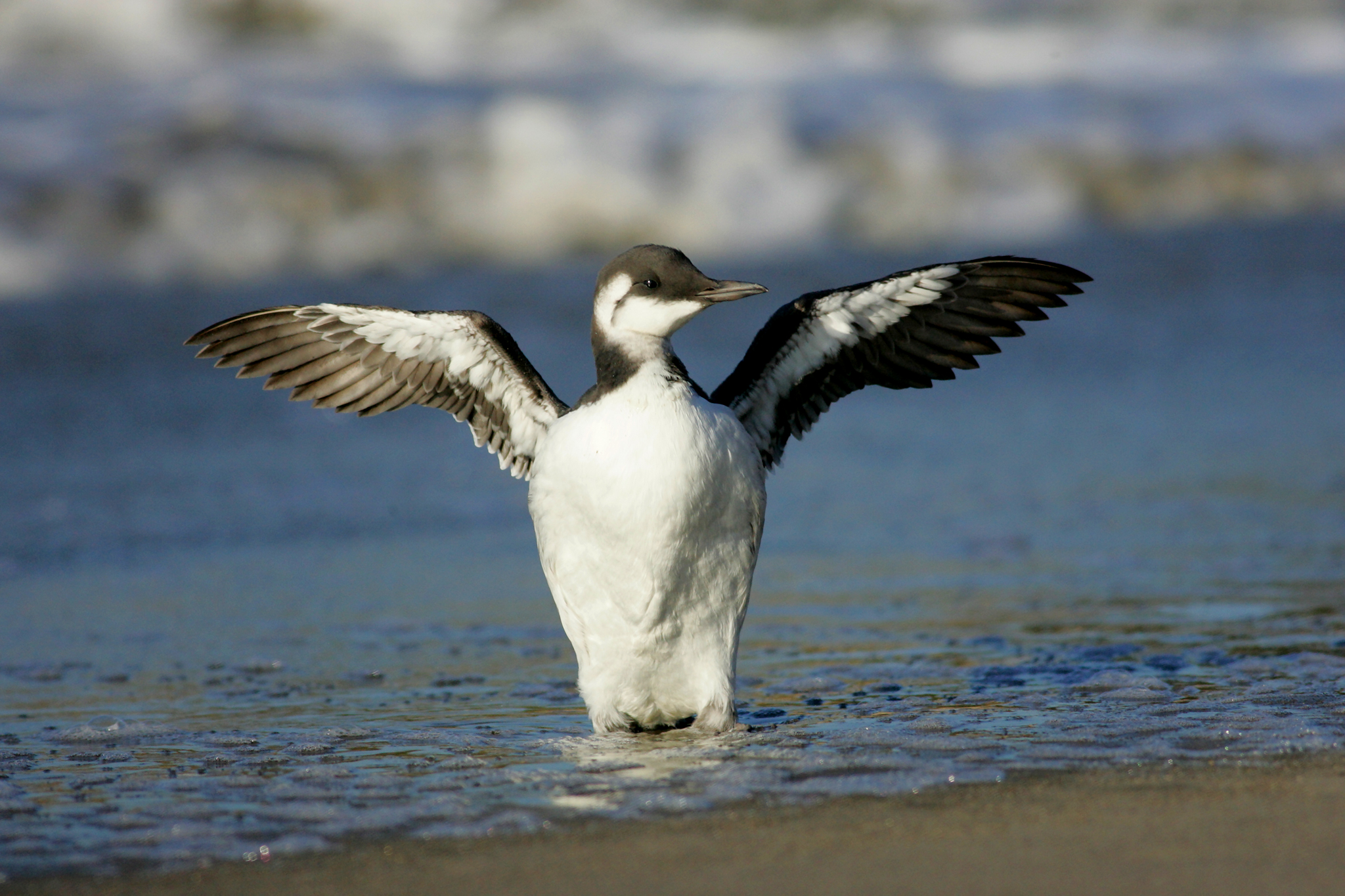
Biologists fear the worst as Bay Area seabirds starve
The number of common murres washing ashore in critical condition has alarmed experts. These charcoal-and-white seabirds rarely come to land.
Read more Emergency bridge repair to cut Olympic National Park in half

International Bird Rescue has taken in 162 of the penguin look-alikes from Northern California beaches this year, with a notable spike since August. Many are starving.
A decade ago, biologists documented millions of these seabirds dying during a long period of high ocean temperatures. Now, California biologists are still investigating the deaths, but they worry it could be the start of a similar scenario with the ongoing marine heat wave — and El Niño on the way.
“The bleak conditions early in the year likely took a toll on the seabirds that survived that period and now they have less than ideal conditions, which are only going to get worse as El Niño progresses,” Tammy Russell, a marine ornithologist for Scripps Institution of Oceanography at UC San Diego, wrote to SFGATE. “I fear that these back-to-back warm periods are too much for many of these species to take; there’s no time to recover in between.”
In March, the Fairfield-headquartered nonprofit International Bird Rescue raised concern about high admissions of not only starving murres but also brown pelicans and Brandt’s cormorants. Scientists reported this was likely due to the marine heat wave. This appears to be a second peak in the event, with the murres most affected so far.
The rescue group, which is the ultimate stop for struggling seabirds in Northern California, reports that it has released only a handful of birds back into the wild. Most of the birds are dying, despite food, vitamins and personalized human care. There is a mix of babies and adults from mostly Santa Cruz, Monterey, Marin, Sonoma and San Francisco counties, according to Kelly Beffa, the NorCal wildlife center manager for the group. Many of them are emaciated and have damaged feathers.
“They are all very, very skinny,” Beffa told SFGATE. “An adult will come in at half of its body weight. It’s really horrifying seeing these animals in such a condition.”
Scientists are still looking into the recent deaths to determine the cause. “It is fall, and it’s generally not uncommon to have an increase in reports of dead birds, mostly ‘young of the year’ — birds born this year that are learning to survive,” Krysten Kellum, a spokesperson for the California Department of Fish and Wildlife, wrote to SFGATE. “… Pending testing should help rule out other potential contributing factors such as diseases and toxins.”
During the previous die-off about a decade ago, a study published in the journal Science estimated a shocking loss of 4 million murres — which was half the Alaska population and “the largest documented wildlife mortality event in the modern era,” the researchers reported. In 2015, International Bird Rescue locally took in 588 dead murres, the standing record year.
It took some digging for biologists to figure out how exactly ocean temperatures had impacted the murres. Ultimately, they determined the cause was a cascading ecosystem shift, with both fewer nutritionally rich food sources and increased competition for that food with other creatures.
Biologists are on edge, waiting for this year’s potentially historic El Niño to impact seabirds of all types.
“Our fear is that with El Niño comes continued warm water, less productive conditions that will continue to challenge seabirds and other marine predators, and their ability to find food, survive, and reproduce,” Russell wrote in a recent statement. “We’ll be continuing our beach surveys to keep that long time-series going, in addition to increased surveys of seabird roosts and breeding colonies over the next year.”
If you find a bird in distress, reach out to Bird Rescue’s Bird HelpLine at 866-SOS-BIRD (866-767-2473) for guidance. Report dead birds to the California Department of Fish and Wildlife’s Wildlife Mortality Reporting page.
— Sea turtle lays eggs in Calif. for first time in recorded history
— Super rare tropical bird swoops over California. Experts fear a trend.
— New fault capable of massive earthquakes discovered in California
— What the ‘extraordinary’ new El Niño forecast means for California
Read more Pacific hurricane reaches Category 5 in record time
Sign up for daily SFGATE breaking news alerts here.