Employers are ghosting college grads and rescinding offers, destroying morale
For the past two years, navigating the job market has been demoralizing, especially for those who are just now graduating college and entering a tumultuous workforce rife with ghost jobs, smug artificial intelligence agents and disturbing “blue people.” As a result, spraying and praying — the act of blasting out hundreds or even thousands of AI-generated resumes to job postings out of desperation — is becoming the norm. Now, according to career experts who spoke with SFGATE, overwhelmed employers are rescinding job offers and ghosting applicants, creating even more pain, confusion and regret among recent college grads.
Read more 3 Bay Area high schools crack California’s top 10 in new ranking

Per a June 2026 report from Resume Builder, which included survey responses from 1,000 respondents between the ages of 20 and 28 who graduated with a bachelor’s degree within the last year, 34% percent said that they had a job offer rescinded right after accepting it. Among that 34%, 21% said this happened to them once, while 13% said it happened to them multiple times. Sixty-eight percent of applicants in the June report said that they were ghosted by employers after interviewing, and 65% believed that AI led to cuts in entry-level jobs in their departments.
While ghosting has always been an issue, “today, it’s totally out of control,” Stacie Haller, Resume Builder’s chief career adviser who was quoted in the report, told SFGATE. Spraying and praying is inundating recruiters, she said, and the chances are that many entry-level applicants aren’t qualified. But bills need to be paid, and “people are getting desperate,” she said, adding that while this method might seem to make sense at first, it’s also “the quickest way to get depressed.” Many organizations that overhired during the pandemic and that are trying to find ways to implement AI may have no idea how many employees they actually need, either, Haller said.
Subsequently, this behavior is destroying morale among recent college graduates who spent years on higher education — and chipping away at their self-worth.
Fifty-five percent said they lowered their salary expectations, and 35% applied to roles they knew they weren’t qualified for, the report continued. Overall, it’s fomenting doubt among college grads who studied everything from math and physical sciences to the liberal arts: 39% percent of respondents said they’d choose a different major if given the chance; 17% would choose a different major in the same field; 16% would go into a different field entirely; 4% would go to trade school; and 2% would forgo school entirely.
“Having an offer withdrawn without explanation is unacceptable, and experiencing it more than once is incredibly discouraging,” Haller wrote in the report. “For someone new to the workforce, that letdown can feel even more crushing than being ghosted during the interview. I always advise job seekers to keep searching until they have actually started the job and received their first paycheck. Too many stop the moment they believe an offer is coming, only to be back at square one when circumstances change.”
With this in mind, it’s understandable that more and more college grads are disillusioned by white-collar culture and are forgoing office cubicles for power tools instead.
Read more After slashing science budgets, Trump bets on Bay Area researchers
To get ahead of AI and secure stable, high-paying jobs, high school graduates in the Bay Area have been turning to the trades, SFGATE reported in 2025. That year, a report from Zety said that out of 1,000 Gen Z adults, nearly half changed their career plans because of artificial intelligence. Around that same period, Microsoft predicted that blue-collar jobs like plasterer, roofers and pile drivers were the most protected from AI — but scholars say that these jobs might not be safe forever.
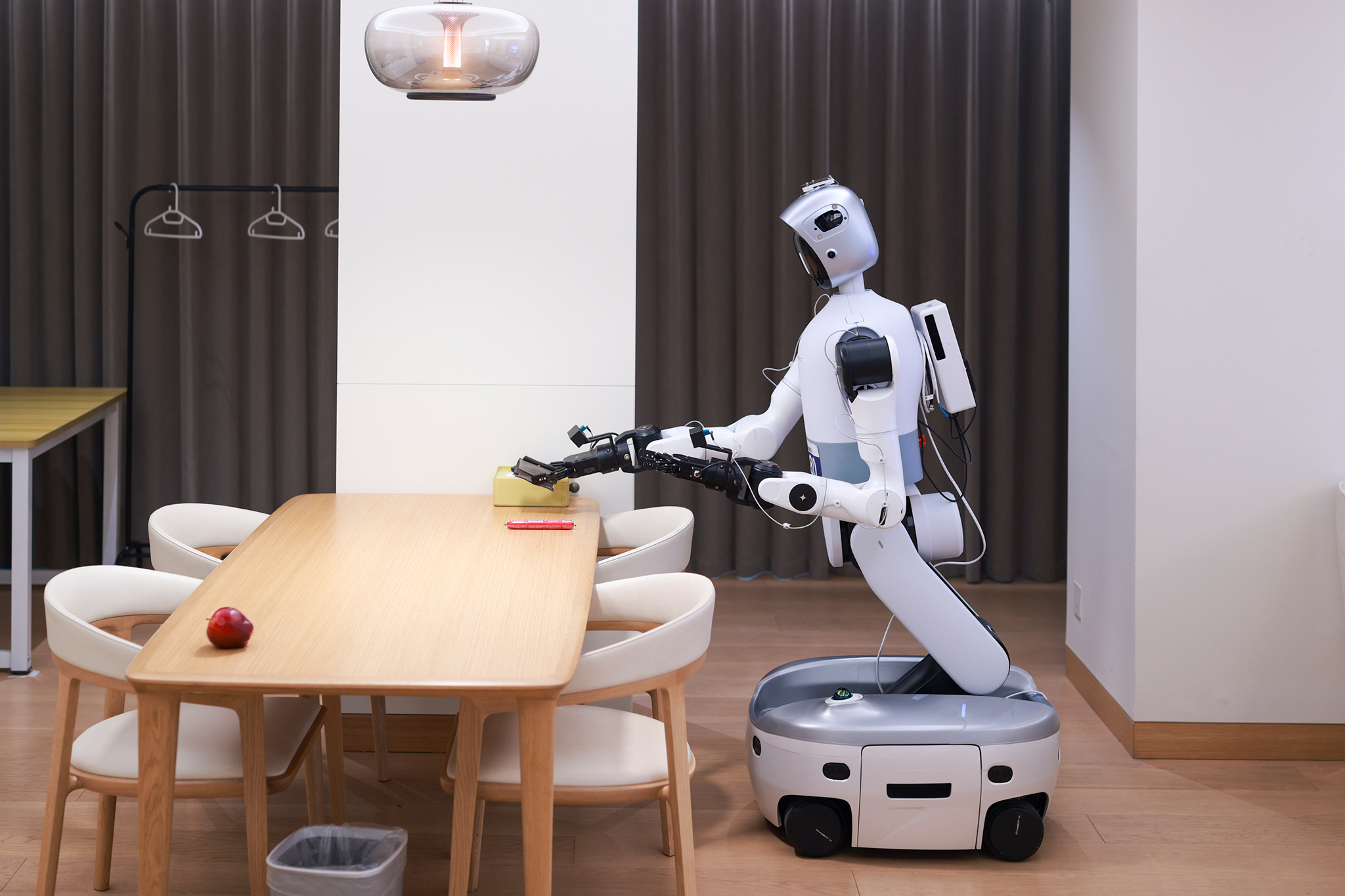
The market for humanoid robots could reach up to $38 billion within the next 10 years, a 2026 report from the Michigan Journal of Economics said, stating that “blue-collar workers typically perform unskilled manual labor” and “rely heavily on physical ability and strength” to make a living. Already, tech companies are in an arms race to usher in robotic baristas and warehouse workers, but mimicking the hand movements and decision-making patterns of these so-called “unskilled” employees is difficult to accomplish.

BECOME A FRIEND. GET OUR AD-FREE APP.
As AI continues to upend the labor market, Haller urges young people to research growing industries as they continue to figure out their careers. But she also has reassuring words for discouraged college grads who are still new to the labor force.
“When this many new graduates already question their major, it is worth remembering how early they are in their careers,” Haller wrote in the June report. “Some who do not regret their choice now may feel differently once they try to find a job that actually requires it. Employers are increasingly hiring for skills and experience over a specific degree, which makes the major a student picks matter less than it once did, and helps explain why so many are second-guessing theirs.”
“A major may not lead directly to an ideal job, but it can still be the foundation for a rewarding career,” she also said.
— Blue Apron, meal kit powerhouse once valued at $2B, descends into chaos
— Without new water, America’s second-largest reservoir may collapse
— Rapid erosion reveals decades-old infrastructure at Calif. beach
— Boys ages 12, 13 and 16 charged in California killing
Read more Lake Powell, America’s second-largest reservoir, may collapse without new water
Sign up for SFGATE’s breaking news email