Trump cancels protections at famous Utah trails, canyons and landmarks
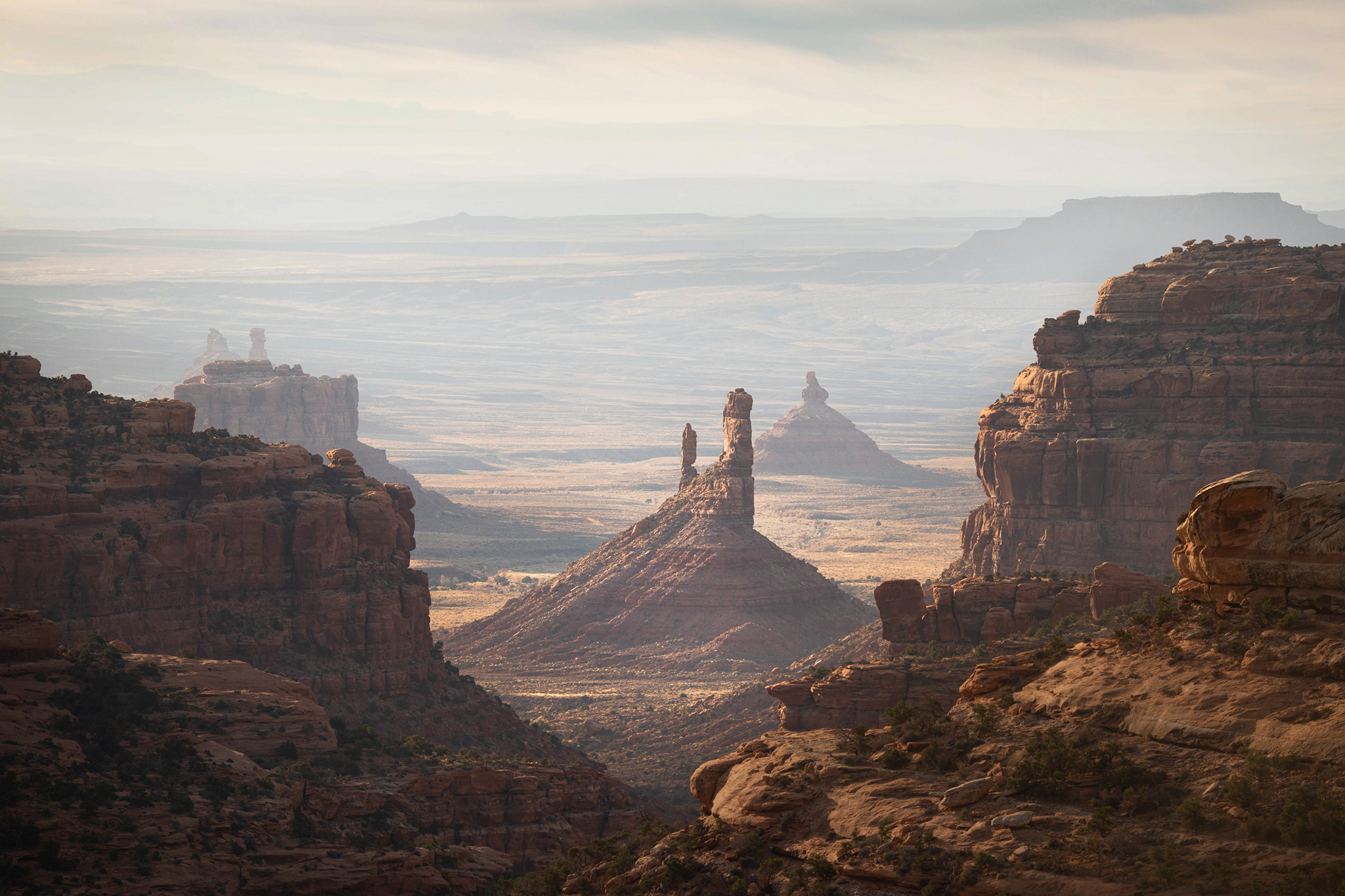
To visit Valley of the Gods in Bears Ears National Monument is to come into contact with the sublime. The sweeping, crenellated towers of Cedar Mesa sandstone, formed from sediment deposited in Utah more than 250 million years ago, rival any gothic or baroque church front, and their presence — jutting from the valley floor, casting looming shadows over the landscape — can only be described using words like reverence. Awe. Sanctuary.
Read more Big tech’s AI-powered ‘pervert’ glasses are in a losing battle with DuckDuckGo
The sanctity of this site, and thousands of other cultural, scientific and recreational landmarks across southeast Utah, is now being threatened, however. On July 13, at a gathering in the Oval Office, President Donald Trump signed a pair of executive orders slashing the collective footprint of Bears Ears National Monument and neighboring Grand Staircase-Escalante National Monument by more than 90%. Before the cuts, the pair collectively held land the size of Connecticut; now, it’s more like the size of New York City. Valley of the Gods was just one of many landmarks omitted from the final boundaries.
What this decision will mean for these public lands is undecided, but it’s likely that the change will open the landscape up to previously banned activities such as mining and oil and gas exploration. During the signing, Trump justified the cuts by saying that the smaller footprints would continue to protect the most vital areas while unlocking the remainder for additional uses.
“You can’t go hunting. You can’t go fishing. You can’t do anything. You can virtually not even walk on it,” he said.
Standing at this shoulder, Deputy Interior Secretary Kate MacGregor replied, “That’s exactly right, sir, so you are remedying that today.”
But for those who steward these lands, including current and former federal employees and representatives of local Indigenous tribes, the words landed not only as untruths, but as a punch to the gut. Both Bears Ears and Grand Staircase are widely known for their scenic beauty and world-class recreation, something recent investigations suggest both federal and state officials are well aware of. Among the landmarks now chopped from the monuments are internationally recognized rock climbing areas, some of the densest ancient settlements in the country, and paleontological outcroppings found nowhere else.
“That didn’t stop them from acting in their own interest and against the interests of people who truly care about public lands,” Alan Titus, a retired paleontologist who previously spent two decades as the monument paleontologist at Grand Staircase-Escalante, told SFGATE. “This is a level of rollback I wasn’t emotionally prepared for, and it will fundamentally change how these places are managed.”
A brief history
The executive orders came as Bears Ears and Grand Staircase-Escalante prepared to celebrate their 10th and 30th anniversaries, respectively. From their earliest days, both have been cited for their singular beauty and priceless resources.
In the 1996 proclamation establishing Grand Staircase-Escalante, Bill Clinton noted that the land provided “exemplary opportunities for geologists, paleontologists, archeologists, historians, and biologists,” while Barack Obama noted in his 2016 proclamation that Bears Ears held not only recreational opportunities, but “one of the densest and most significant cultural landscapes in the United States.”
Recognizing the region’s overlapping importance to several Indigenous tribes, Obama’s proclamation also established the Bears Ears Commission — a collaborative body of five local tribes and nations — to co-manage the monument alongside the Bureau of Land Management and the U.S. Forest Service.
“It was a first-of-its-kind endeavor, one that served as a model for other places in the U.S. where tribes are advocating to manage their ancestral homelands alongside the federal government,” said Lauren Henson, the interim director of the Bears Ears Inter-Tribal Coalition, a policy and advocacy counterpart to the commission. After a decade of trust- and consensus-building, the finalized resource management plan was released in January 2025.
News | After 117 dead dogs found, Calif. rescue owner speaks out
Culture | Calif. radio station lays off entire on-air staff
Crime | Influencer shot dead in Mexico while livestreaming
Local | Prank SF billboard gets thousands of responses
Read our stories ad-free on the new SFGATE app.
Beyond giving Indigenous groups greater oversight, monument status also places important guardrails around the land’s use. When monuments are created, they specify areas of scientific, cultural or historic importance and mandate that their preservation be given priority. Those protections have kept visitors from collecting fossils, for example, or driving off-highway vehicles across fragile landscapes. Without them, conservation and preservation are given equal footing with other, more extractive uses.
The monuments have been reduced once before, in 2017, during Trump’s first presidency, before being restored and expanded by Joe Biden in 2021. Then, as now, the administration argued that the 1906 Antiquities Act allowing presidents to establish monuments specifies that they must occupy only “the smallest area compatible” with protecting the resources inside them. The massive size of Bears Ears and Grand Staircase-Escalante, Trump has long argued, therefore constitutes a land grab.
The legality of that claim has yet to play out in court, but in the meantime, the back-and-forth has created challenges for stewards and confusion for visitors.
“Every time we go through one of these boundary changes, we introduce uncertainty and stall effective management,” said Erik Stanfield, an anthropologist with the Navajo Nation Heritage and Historic Preservation Department. “There’s already a misguided sentiment that anything goes on public lands. What we really need is good stewardship and consistency.”
‘A giant treasure house’
Despite their remoteness, the two monuments still collectively draw about 1.5 million visitors annually seeking a quieter, more intimate nature experience.
Opportunities for engaging with the land are myriad, and the idea that one cannot walk upon it is unbelievable to anyone who has ever been there, according to Louis Geltman, the vice president of policy and government relations at the recreation nonprofit Outdoor Alliance.
“Not only can you walk, hunt and fish, you can also hike, run, drive, camp, climb, canyoneer and mountain bike through some of the most scenic land in the state,” he told SFGATE.
Read more Chase Center Earth, Wind & Fire show abruptly postponed for medical emergency
Indian Creek, for example, is an internationally renowned rock climbing destination that previously fell within Bears Ears. The new boundary runs directly through the area, severing 80% of the climbs there, or more than 1,200 routes, from the monument’s protection, along with dozens more climbs in Grand Staircase-Escalante.
Trails in both monuments used for hiking, bikepacking and canyoneering have similarly been shaved off, including treks into Dark Canyon, Fish and Owl Canyons, the Paria River basin and Buckskin Gulch. One of Grand Staircase-Escalante’s most popular attractions — a swathe of land cluttered with hoodoos and natural arches called Devil’s Garden — no longer falls within the monument.
Beyond recreation, the monuments are also well-regarded for their scientific value, particularly surrounding the land’s geological and paleontological history. Proponents of reducing the monuments argue that protecting so much land is unnecessary when the underlying rock formations are regionally common, but Titus, the former monument paleontologist, says that’s simply not true.
“The land here represents a really unique moment in time, one that you absolutely cannot find anywhere else,” he said. “It’s a giant treasure house of information about what the planet was like on land just before the mass extinction that killed off the dinosaurs. There are not a lot of places in the world where you have the same quantity and quality of fossils over such a broad span of time.”
Asked whether the new footprint covers the most critical sites, Titus is clear: “The vast majority of the highest value paleontological resources have been excluded from the current monument.”
The sentiment is similar with respect to the region’s cultural and anthropological resources. Bears Ears alone contains more than 100,000 sites of cultural significance to Native Americans, filled with many hundreds of thousands of individual artifacts. Grand Gulch, in its prior footprint, represents one of the densest concentrations of Ancestral Puebloan archaeological sites in the United States.
Valley of the Gods is also considered sacred to the Navajo, its towers said to contain the spirits of warriors locked in stone and time. “The general vicinity of Valley of the Gods is important in many ceremonial narratives, local histories, and clan migration stories,” Cassidy K. Morgan, a programs and projects specialist at the Navajo Nation Heritage and Historic Preservation Department, told SFGATE in an email. “The area in and of itself is a cultural resource for Navajo people and the protection of places like these is integral to the continuation of our lifeways.”
What comes next?
Lands will continue to be managed under the current plan until 60 days after the signing of the orders, on Sept. 11. After that, tribes will no longer be considered joint stewards of Bears Ears. Trump’s executive orders dissolved the Bears Ears Commission, and weeks after the orders were signed, federal employees were documented removing the official seals of the five represented tribes from the monument signs, before later pulling down signs for both monuments from nearby gateway towns.
The cuts have so far proved deeply unpopular, and reflect a growing dissatisfaction with how the state has managed its public lands. Even as Utah officials praised the cuts, several polls have noted that residents largely support previous boundaries and ongoing protections for public lands. A commissioned by the Grand Canyon Trust found that more than 70% of Utah respondents supported maintaining the boundaries of Bears Ears and Grand Staircase-Escalante, while a 2026 Conservation in the West poll showed that most residents favor protecting America’s natural resources over maximizing the land available for extraction.
A new management plan will eventually need to be drafted, which should require public comment. But the government could implement what’s known as interim guidance in the meantime. Federal agencies issue interim guidance to direct field offices while permanent regulations are updated, and do so without the need for public input. In the time it takes to draft a new management plan, damage could be done.
Before the original monument reductions were reversed in 2021, for instance, several new mining claims were filed within the newly opened lands, and the BLM received over 100 oil and gas lease nominations totaling tens of thousands of acres. Many overlapped with known recreation areas. The second Trump administration is arguably even more friendly to these industries, and the 2026 executive orders made repeated references to critical minerals, fuel prosperity and energy independence.
Brian Somers, the president of the Utah Mining Association, recently told E&E News that interest in the land is there. “The areas around Bears Ears are definitely part of Utah’s uranium belt and the lands around, in the Grand-Staircase are known to contain some of our largest coal reserves,” said Somers, adding that there are likely other critical minerals as well.
Similarly, both Titus and the Bears Ears Inter-Tribal Coalition’s Henson told SFGATE that during the last shrinkage, there was “casual looting” of scientific and cultural artifacts. “Each of these monuments has only one law enforcement ranger,” Titus said. “Even when the monuments stand, it’s not possible to catch every bad actor.”
Rather than slip into despair, several advocacy groups are preparing to renew their legal fight. Organizations including the Southern Utah Wilderness Alliance, the National Parks Conservation Association, and the Access Fund are weighing plans to block the reductions in court and increase lobbying efforts in Congress. In a statement sent to SFGATE, SUWA Executive Director Scott Braden says the organization is “confident that President Trump’s reckless and unlawful acts will be rejected and the Monuments restored.”
Both the Bears Ears and Grand Staircase-Escalante inter-tribal coalitions will continue their work as well, liaising with tribal representatives and federal officials to make sound recommendations for the land’s management.
“The relationships that tribes have with this land did not begin when it became a monument, and it does not end with reactionary politics,” Henson said. “Traditional knowledge teaches us that these landscapes are both alive and interconnected, and we’ll continue to honor our role in that.”
— A man went over Yosemite’s Nevada Fall. A stranger tried to save him.
— Time is running out to visit Olympic National Park’s best coastal hike
— Kids were allegedly poisoned in Yellowstone. The park says it isn’t responsible.
We love national parks just as much as you do, so we have a newsletter that covers them from top to bottom. Sign up here.
Read more Historic inn in Fort Bragg transformed into boutique hotel