Stanford discovers way to save ghostly corals from the brink
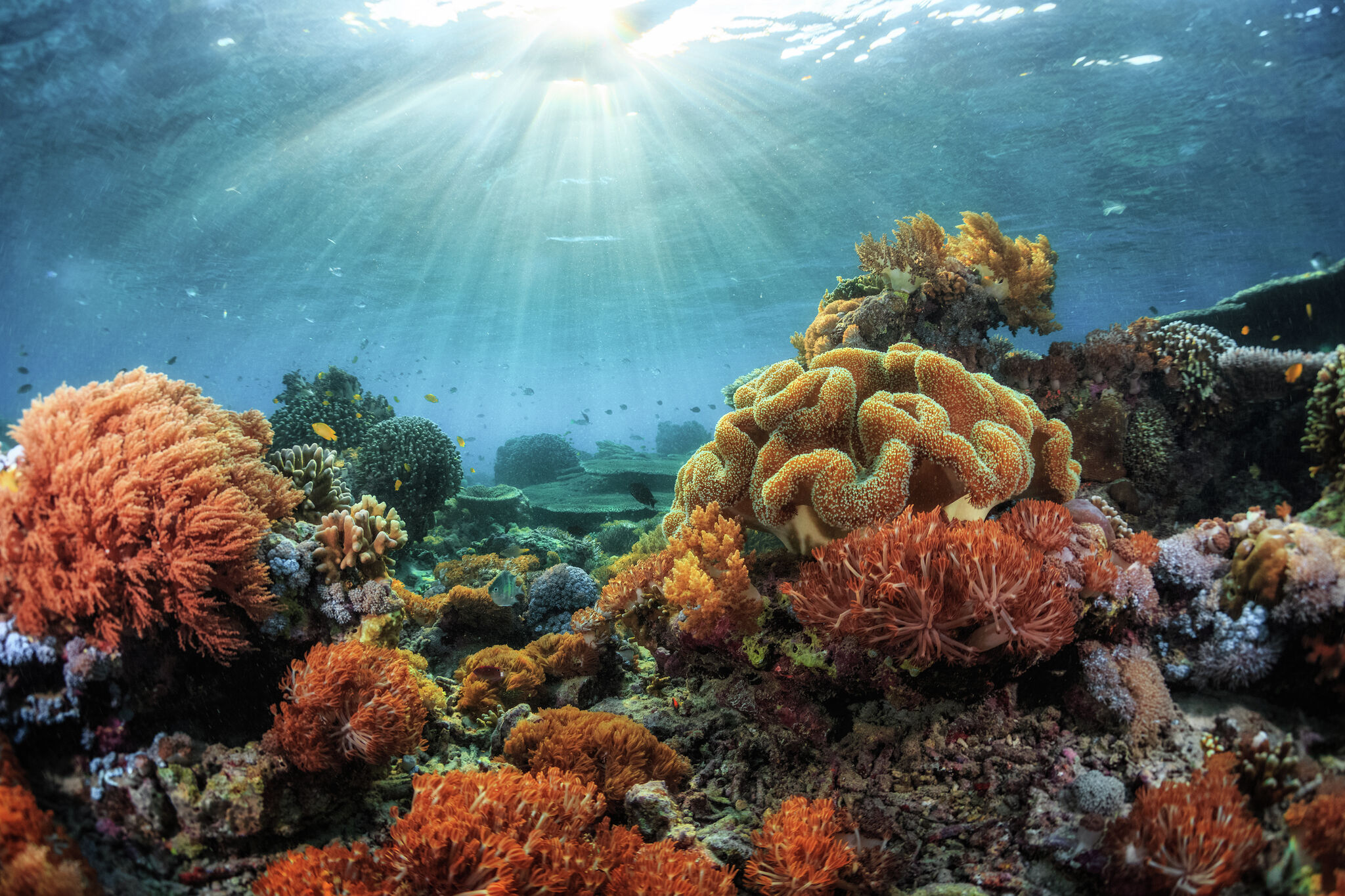
For decades, scientists have been anxiously watching corals across the globe turn ghostly white. Heat in the ocean can stress the animals and lead to bleaching — often a sign of impending death. Coral reefs, vital underwater ecosystems that also protect coastlines from big waves, are disappearing over time as climate change warms the seas.
Read more SF State’s enrollment is up for the first time in a decade but with a big caveat

This year’s El Niño, which is driving up temperatures in the Pacific Ocean to near-record highs, poses a renewed threat to fragile corals.
But now, in a study published Wednesday in Science Advances, Stanford researchers describe a new method of resurrecting bleached corals. The dying coral, after physically touching healthy coral in the lab, completely recovered within seven weeks.
“What was most exciting about this was seeing the remarkable potential that bleached corals have to rapidly recover,” Danny Collins, a doctoral student pursuing his Ph.D. in oceans at the Stanford Doerr School of Sustainability and the lead author of the study, told SFGATE. “These bleached corals are often treated as a lost cause.”
In the wild, individual corals of many different species multiply by producing clones. The study demonstrated that, in a lab setting, one bleached coral fragment and one healthy coral fragment from the same animal needed close contact for about one week for healing to occur.
Read more ICE officer shot by 72-year-old Fresno homeowner now faces 3 felony charges
“Genetically identical corals recognize one another when they come into contact,” Steve Palumbi, a study author and Stanford professor, said in a recent statement. “Their tissues fuse if they are from the same clone. We see something similar in humans. Organ transplants are often successful if the donor is your identical twin.”
Still, the scientists cautioned that until further research is conducted, it might not be feasible to use this exact approach on the scale necessary to restore whole reefs in the wild. That would require a genetically identical, healthy copy of each dying coral and continuous contact.
“These new insights into how corals can naturally recover give us hope for the future,” Fiorenza Micheli, another study author and the co-director of the Stanford Center for Ocean Solutions, said in a statement. “They open the door to what’s possible and may lead to the breakthrough we need to accelerate reef restoration.”
— Sea turtle lays eggs in Calif. for first time in recorded history
— Pup boom for endangered gray wolves breaks California records
— After mistaking call as spam, Bay Area resident wins ‘genius grant’
— All eyes are on this new El Niño forecast for California
Read more Missing Oakland woman, 22, found dead beneath freeway
Sign up for daily SFGATE breaking news alerts here.