San Francisco’s most debated street name to change again
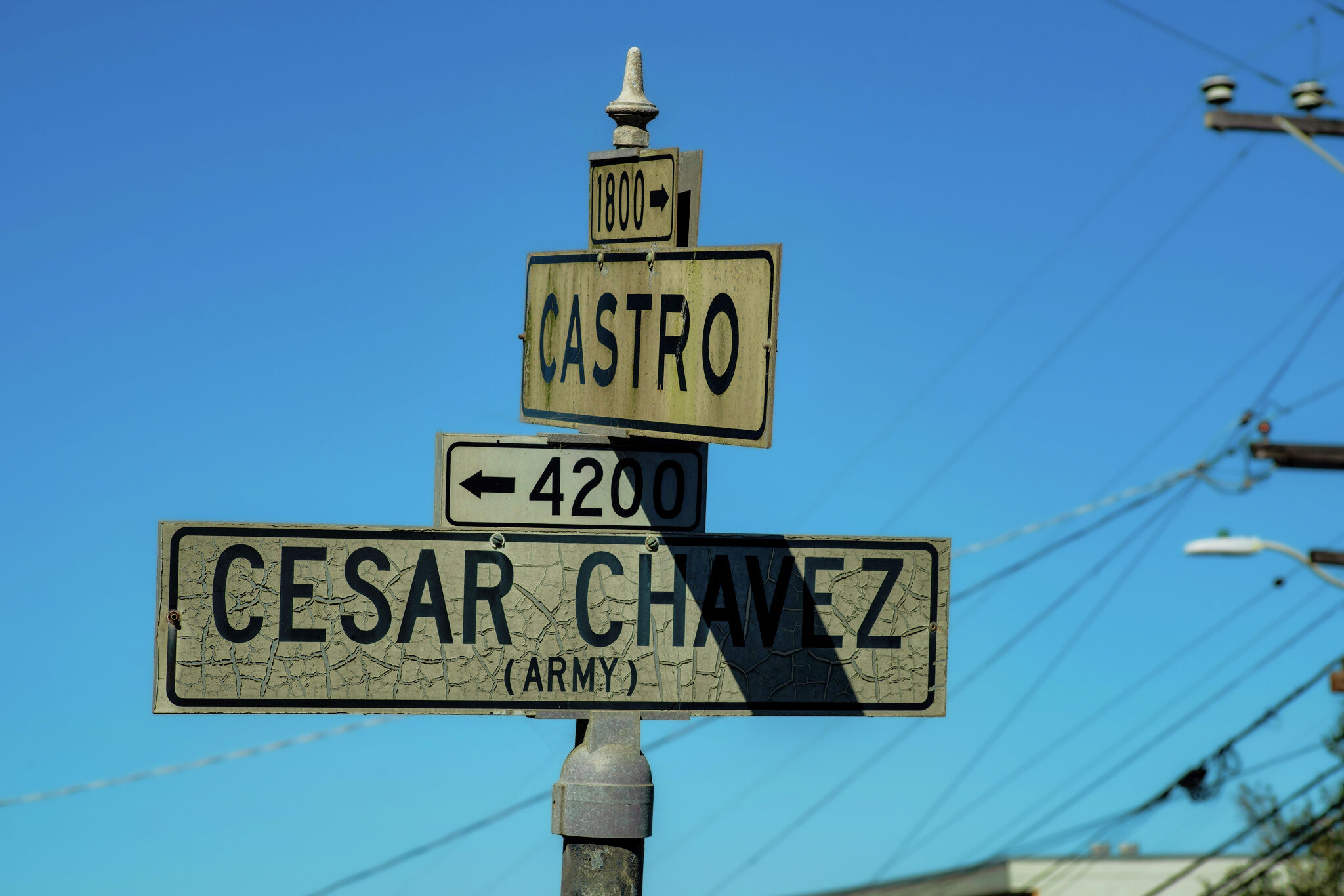
The most debated street name in all of San Francisco is set to change again for the second time in 31 years. Once called Army Street before the Board of Supervisors switched it to Cesar Chavez Street in 1995, the 37-block avenue is now expected to become Las Campesinas Street.
Read more Ex-49ers player cut for reportedly grabbing firearm after teammate dispute

Although San Francisco is a city that celebrates flux and isn’t afraid of a rebrand — just ask the town of Yerba Buena — this 3-mile thoroughfare through the Mission and Noe Valley has divided the community before. Ahead of an unsuccessful citywide ballot vote to return the street’s name to Army months after the first change, two men representing opposite sides of the debate got into a fistfight that ended with one of them in the hospital.
The latest name follows discussions and public engagement by a working group that met five times since forming earlier this year. The committee was assembled at the behest of Mayor Daniel Lurie following revelations from a New York Times investigation published in March that found evidence that Chavez had sexually abused girls.
The consortium of politicians, artists and community members spent months deliberating a new name that would honor the city’s Latino heritage and farmworker movement. This week, the group announced its selection.
During Tuesday’s Board of Supervisors meeting, Supervisor Jackie Fielder, who represents the Mission, introduced a resolution of intention to rename Cesar Chavez Street to Las Campesinas Street, which translates to “women farmworkers” in Spanish.
“We believe we’ve brought a name forward that we’re happy about and can smile about,” Joaquín Torres, the city’s assessor-recorder, told SFGATE on Wednesday.
Torres co-led the 27-person working group alongside Susan Leal, who was a city supervisor at the time of the street’s last renaming.
Las Campesinas was selected to honor the women working in the fields that provide our food, “many of whom are nameless and faceless,” Torres said. He added that the group heard from “a lot of people” pushing to revive Army Street, but the group decided to look forward, not backward.
“We don’t start back at zero. We continue that conversation, “ Torres said. “We want to ensure that farmworkers and the labor movement were still reflected in any new name that was selected.”
Although Las Campesinas prevailed and won the support of the mayor — in a statement, Lurie thanked the working group for selecting a name that helps “honor the heroines of the Latino labor movement” — the choice wasn’t unanimously supported across the neighborhoods. A couple of Cesar Chavez Street homeowners launched a petition, which they said received 157 signatures, asking if the committee was open to reconsidering alternatives like Dahlia or Esperanza Street.
The resolution that Fielder introduced this week notes that the working group received over 680 online responses about the name change and that Las Campesinas Street was “the most favored choice.”
Read more NorCal mayor demands answers after ‘disturbing’ ICE action
The preference is stated, but there’s still a bureaucratic process to change the street name to Las Campesinas. Following Fielder’s directive, San Francisco Public Works will begin evaluating the overhaul before it’s presented back to the board and then signed by the mayor.
Then there’s the cost of updating signs and addresses. San Francisco Municipal Transportation Agency spokesperson Parisa Safarzadeh estimated at least $50,000 for the signs alone, not including labor. Other expenses include revamping the name engravings stamped on the sidewalk, updating signs on the highway that Caltrans oversees, and what the businesses on the street will pay to modernize their addresses.
Even after confirmation, signs with the new name will appear next to signs with the previous name for five years as the public transitions into adopting Las Campesinas Street.
Vestiges of the past continue to appear along the roadway. The original street name Army — which is still visible on the old Sears Building near the intersection with Valencia or on the building for Army Street Mini Storage — is believed to have come from ranch owners John and Robert Horner. They the land in the 1880s and named the street to honor the military. The ranchers also christened nearby Navy Street, which was eventually renamed 26th Street.
After Chavez’s death in 1993, his name began appearing in parks, schools and libraries across California, and at least 13 streets or roads in the state are named after him. Then-Supervisor Bill Maher first initiated naming a street after Chavez in San Francisco.
Although the Board of Supervisors approved the renaming in early 1995, a petition garnered enough signatures to place the decision on the ballot later that year. But the idea quickly proved contentious when residents at the Noe Valley end of the street objected to the change.
The debate also turned violent. The president of the Noe Valley Democratic Club ended up hospitalized after brawling with a man who was leading the charge against the street renaming. In the end, the effort to change the name back to Army Street lost by nearly 19,000 votes.
— San Francisco mansion with a checkered past hits the market for $25 million
— Desperate SF renters are going viral. Their stories reveal a city at its limit.
— ‘Everyone loves hiking’: The brutal monotony of dating in San Francisco
— One of the city’s largest plant shops is closing for good
Get SFGATE’s top stories sent to your inbox by signing up for The Daily newsletter here.
Read more Cal State LA launches San Quentin’s first bachelor’s program