‘Oddly shaped rock’ found in San Mateo County turns out to be huge ice age tooth
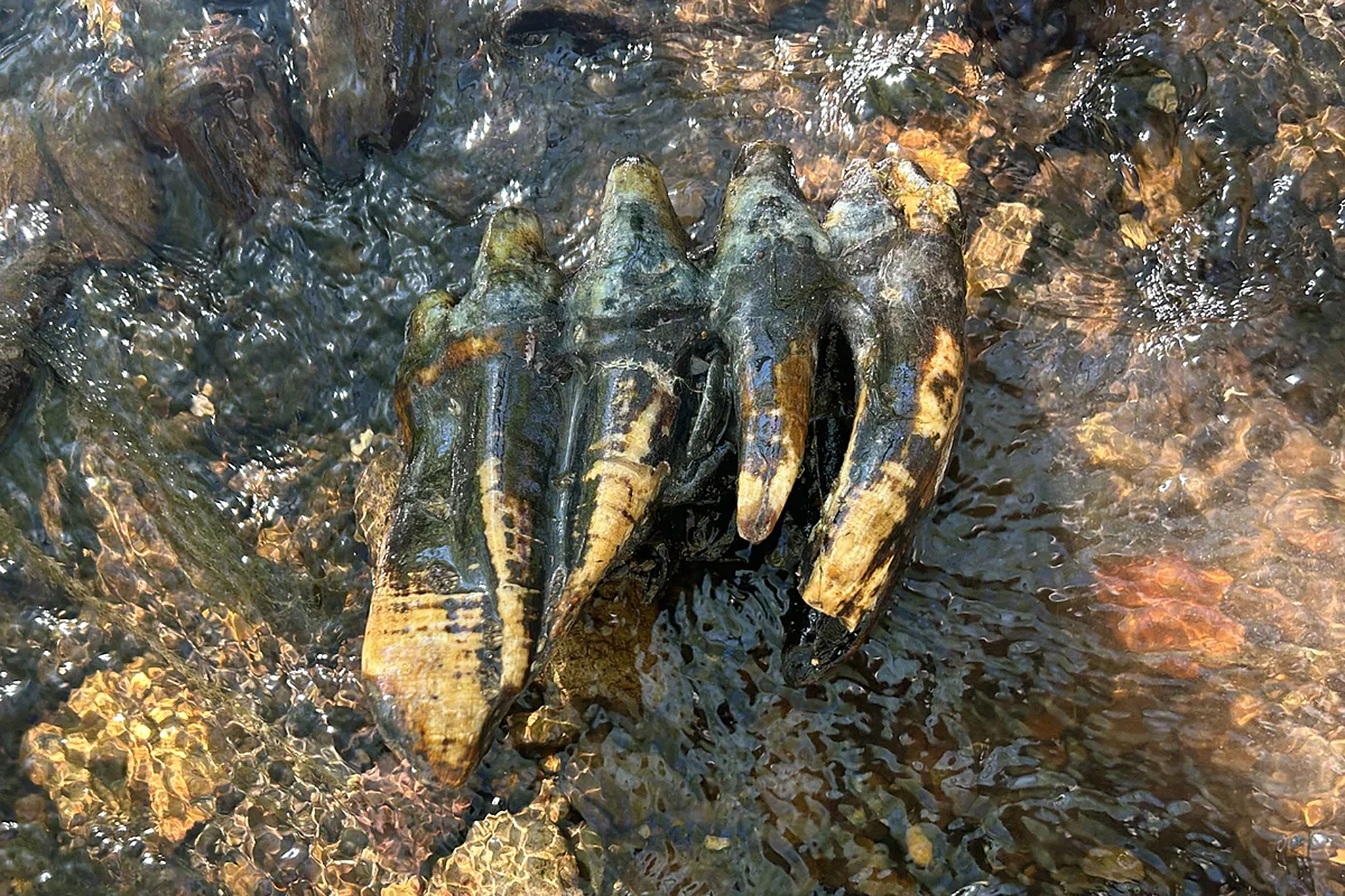
Brigid Lynch, a scientist who studies the Earth’s surface, was walking through a Midpeninsula Regional Open Space District (Midpen) preserve in San Mateo County when she stumbled upon a major find: a giant tooth from the ice age.
Read more Golden Gate University sells campus as 46-story tower is proposed in its place

Lynch was working in a creek bed on a field survey for the threatened California red-legged frog when she spotted the “oddly shaped rock” in the water. Paleontologists later confirmed it was a molar of an adult Pacific mastodon, a huge herbivore that resembled an elephant androamed the Earth for 2.5 million years before going extinct around 11,000 years ago.
“As a geologist, I’ve gone out and seen stuff in the field, but definitely nothing as exciting as this,” Lynch said in a news release.
The name mastodon, which is formed out of two Greek words meaning “breast” and “tooth,” refers to the animal’s molars, which are described as having “nipple-shaped” bumps, according to the American Museum of Natural History. Mastodons differ from woolly mammoths in head shape and their diet, which went beyond grass to include twigs, leaves and fruits.
Scientists only differentiated the Pacific mastodon from the American mastodon in 2019, based on its thicker leg bones and narrower teeth. Paleontologist Wayne Thompson, who owns Pacific Paleontology, said in the news release that the tooth is “another puzzle in the Ice Age saga that we can put into place.”
Read more Family accuses D4vd’s inner circle of enabling abuse of Celeste Rivas Hernandez

BECOME A FRIEND. GET OUR AD-FREE APP.
“The tooth itself is in immaculate condition. It’s the most complete mastodon molar from our area, and the most spectacular mastodon molar that I’ve ever seen,” Thompson said. “I had chills and shivers up and down my spine.”
Following the discovery, the Midpeninsula Regional Open Space District donated the tooth to Stanford University’s Doerr School of Sustainability, where scientists will determine its age. Afterward, researchers plan to 3D-print copies of the tooth for educational use.
“Fossils are our only opportunity to see into past biodiversity,” Christine Garcia, the curator and manager of the Geoscience Specimen Collection at Stanford University, said in the news release. “We can study fossils to better understand Earth’s past, past wildlife and the ecosystem they were a part of, and to help us make better predictions and better decisions about how to help our ecosystems and biodiversity thrive into the future.”
Local| ‘Oddly shaped rock’ found in Bay Area turns out to be ice age tooth
Culture |10-year-old San Francisco girl enters the Oscar race
Food |Cliffside Calif. restaurant ordered to close over fears of collapse
Crime| FBI says man ran meth operation out of Calif. Round Table Pizza
Read more Calif. man sentenced to nearly 200 years in prison for deadly DUI crash
Read our stories ad-free on the new SFGATE app.