New species discovered on expedition to Channel Islands National Park
California’s beaches may be some of the most photographed and well-documented coastlines in the world, but just miles from the shore, scientists are still finding creatures never seen by humans.
Read more Body of missing 17-year-old at Caswell Memorial State Park is found

This year, scientists from the Monterey Bay Aquarium Research Institute discovered a brand new species of gelatinous sea creature while on an expedition to the Channel Islands, according to a recent report. The team was on a 10-day mission from Monterey Bay to the islands to explore the world of deep-sea jellies, which can include but aren’t limited to jellyfish, that live thousands of feet below the ocean’s surface.
Special equipment, including a remotely operated vehicle along with a camera capable of working in extremely low light, was used to look for animals that make their habitat on or near the ocean floor.
Lead scientist Steven Haddock said they had been waiting four years for a new ship to go on the expedition, where they were able to reach depths as low as 3,700 meters or over 12,000 feet to glimpse seemingly alien sea creatures, including jellyfish, glowing sea cucumbers and multiple types of deep-sea predators called siphonophores.
“We were able to see some old friends and some new friends down there that we hadn’t been able to see for a while,” Haddock told SFGATE.
The team collected dozens of specimens, specifically on the hunt for gelatinous sea life, to document differences in these animals as they traveled from colder to warmer waters farther south.
“There’s just a lot of really interesting diversity that still has to be sorted out,” Haddock said.
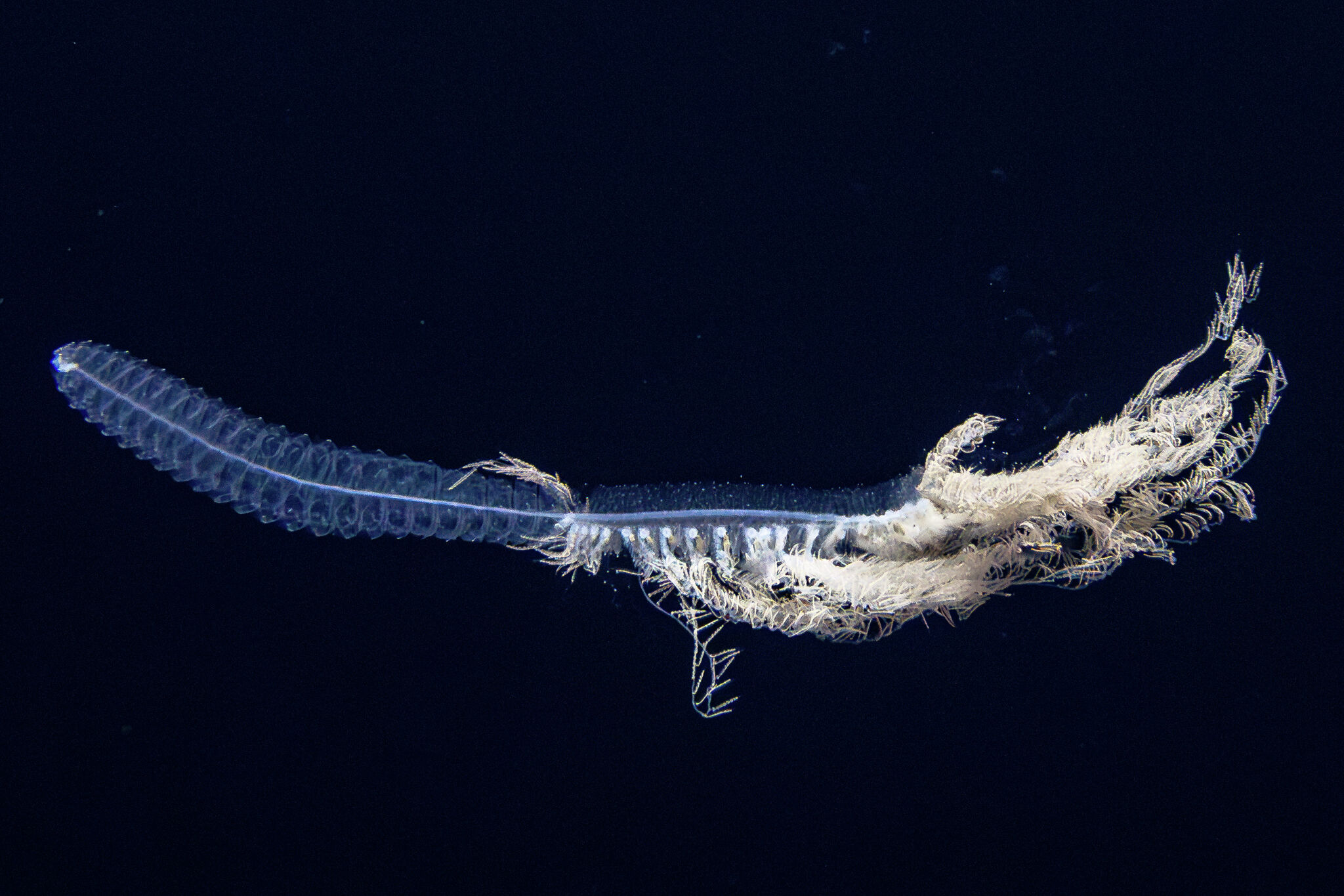
One surprise find was a new species of a clear jellyfish-related animal called the Erenna siphonophore. The animal was found about 6,500 feet below the surface of the ocean. The different species of siphonophores look like long, translucent worms or snakes with dangling bioluminescent tentacles that glow.
“They have these tentacles that hang down with little branches that stick off of them, like little fingers almost, and they wiggle them around with a glowing dot at the end of it,” Haddock said of Erenna siphonophores.
The reason for the glowing lures is that, compared with the ocean’s surface in the deep water, there is a lot less prey that these animals will encounter. The glowing lights at the end of the tentacles can draw in prey from a distance, and the siphonophores can nab the animals as they come closer.
At first, the team thought the animal was a known and documented type of Erenna siphonophore, but then they looked closer at the tentacles, which Haddock said made them look exactly “like a tadpole.”
Read more Phillies beef up lineup with 3-time NL batting champion Luis Arraez from San Francisco
“It had like a big round head and two dots where the eyes would be, and then like this long, wiggly tail,” he said.
The distinctive look meant this creature was likely “adapted to attract a different kind of fish” than other documented versions of the species, Haddock explained.
Haddock said all the different types of bioluminescent lures also indicate how different siphonophore species can thrive in the same area of the deep ocean.
“Why wouldn’t one species just become the dominant one? Well, I think the tentacles, the diversity of the tentacles, let’s them target different kinds of prey,” he said. “They each have their own little kind of corner of the ecosystem that they specialize in.”
Haddock said they are waiting to do more documentation before they release photos of the newly discovered species.
Haddock said these deep-sea creatures are an important part of the underwater ecosystem, as many of them migrate into shallower waters at night.

BECOME A FRIEND. GET OUR AD-FREE APP.
“That process connects those deep-sea ecosystems to shallow ecosystems,” he said. “So a lot of things that you know people are familiar with, like tuna or swordfish, will eat things that are actually deep-sea species.”
And while the clear glowing animals may seem alien, they may actually be more prevalent than your average land-dwelling animal, including humans.
“Some of them probably outnumber us,” he said “They’re pretty obscure, but they’re so abundant because the ocean is so vast.”
— 3 dead, 7 injured in Idaho In-N-Out shooting
— California teen girl found buried in vineyard identified
— Former Cal State coach gets prison time for pimping
— UC’s top 2 campuses heading in opposite directions, new data shows
Read more MLB trade deadline: Phillies add Luis Arraez as table-setter for Harper and Schwarber
Sign up for SFGATE’s breaking news email