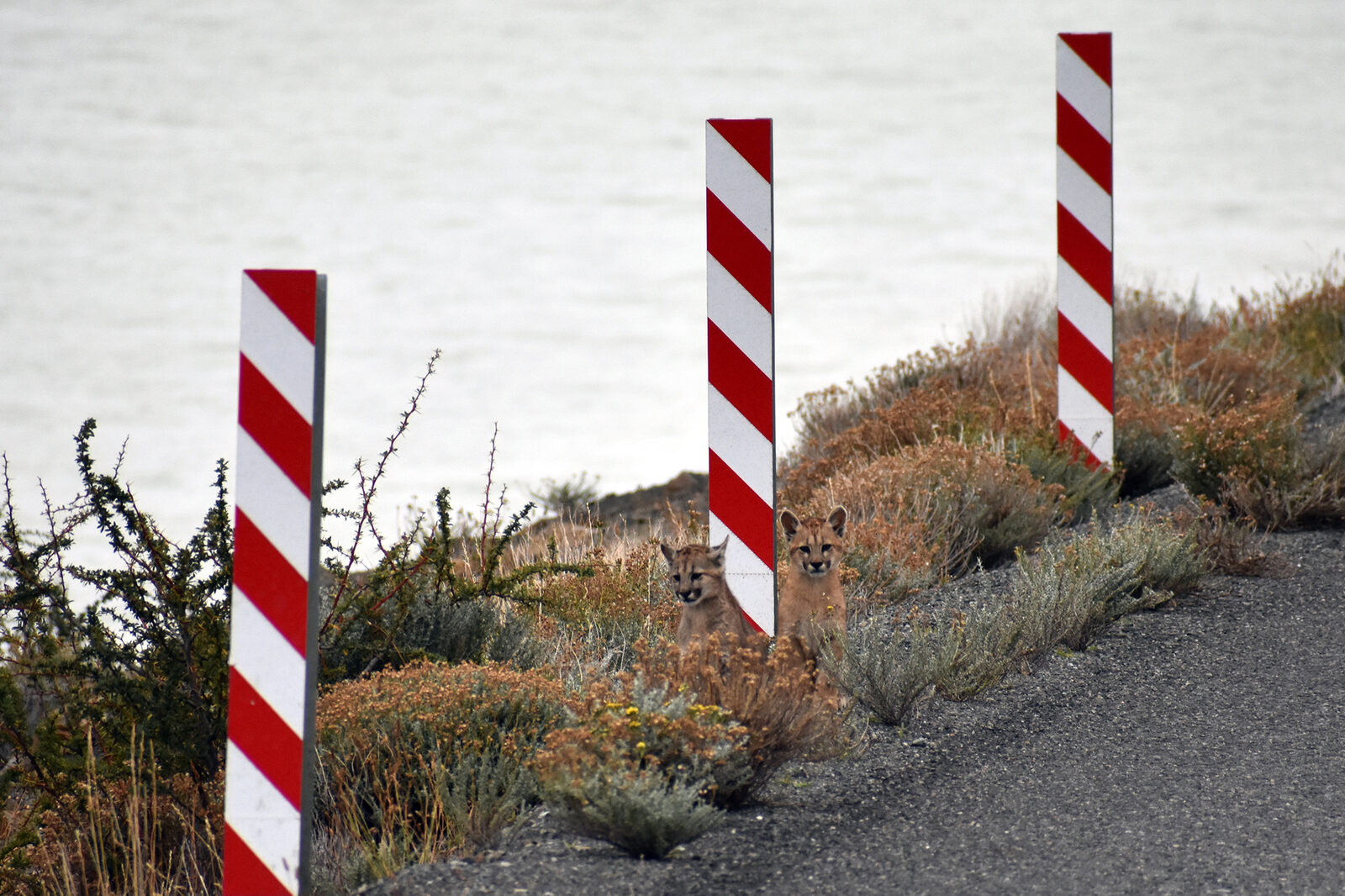
Mountain lions improve California road safety, new study finds
California drivers hit as many as each year by some estimates. Without wild cats, that tally could be even larger, according to new research.
Read more New California AI law goes into effect

In a study published Wednesday in the journal Current Biology, scientists found that the odds of a vehicle colliding with deer shrank by 67% in areas where mountain lions roam.
To explain this phenomenon, the researchers reason that the lions have a hunting advantage at forest edges, where trees meet a field or road. To avoid their lurking predators in these places, deer move into more remote habitat.
“When we talk about pumas, we often focus on the risks they pose,” Mark Elbroch, an ecologist for Panthera and a study author, said in a statement. “But we rarely stop to consider the many ways they benefit us as well. Living alongside large carnivores isn’t simply about protecting wildlife; it’s about protecting the many ways they quietly benefit us every day.”
To investigate how the lions — also called pumas, cougars and panthers —affect the behavior of deer, the researchers compiled camera trap data from about 500 spots and also GPS collar data from some 60 pumas across Washington’s Olympic Peninsula.
The study reports that cougars meant deer were more active during the day and 86% more likely to dwell in areas away from development and roadways. Those changes lead to a 67% reduction in the likelihood of a collision and a 76% drop in the total expected number of collisions over a five-year period, the researchers found. Although these findings were in Washington, Suraci said he expects similar results across puma habitat.
Read more Man who went missing from SoCal campsite found dead
In California, there are some efforts to adapt roads to try to protect both wildlife and drivers. Roads pose major danger to the pumas in the Santa Cruz Mountains, one of the groups that state officials recently listed as threatened under the California Endangered Species Act. Cars often kill them, or the roadways keep them isolated, leading to increased inbreeding. But the latest data from a wildlife tunnel on Laurel Curve, a white-knuckle bend on Highway 17 in the Santa Cruz Mountains, showed immediate benefits. About 1,000 animals per year are using the crossing, including mountain lions, black-tailed deer, bobcats, gray foxes and skunks.

BECOME A FRIEND. GET OUR AD-FREE APP.
“If you put in something like a wildlife crossing structure, you’ve got these sort of compounding benefits of perhaps you reduce the deer-vehicle collisions right there because deer are using that crossing structure, but you’re also promoting movement for pumas,” Justin Suraci, a senior scientist for the Truckee-based group Conservation Science Partners and a study author, told SFGATE. “That allows the pumas to hunt, affecting the behavior of the deer even more and further driving down those deer-vehicle collisions presumably.”
The study authors include experts from the Lower Elwha Klallam Tribe, Skokomish Indian Tribe, Quinault Division of Natural Resources, Point No Point Treaty Council, Makah Tribe and Port Gamble S’Klallam Tribe.
“The combination of data in this study was really useful for this field,” UC Davis Road Ecology Center Director Fraser Shilling, who did not participate in the study, told SFGATE. “This is useful for anywhere you have dense forest, roads and then more forest. In California, that would be the northern coast.”
— Super rare tropical bird swoops over California. Experts fear a trend.
— New fault capable of massive earthquakes discovered in California
— Deadly parasite is flourishing in a California river
— NASA satellite spots El Niño driving higher seas toward California
Read more Officials ID 24-year-old man who drowned in Laguna Beach
Sign up for daily SFGATE breaking news alerts here.