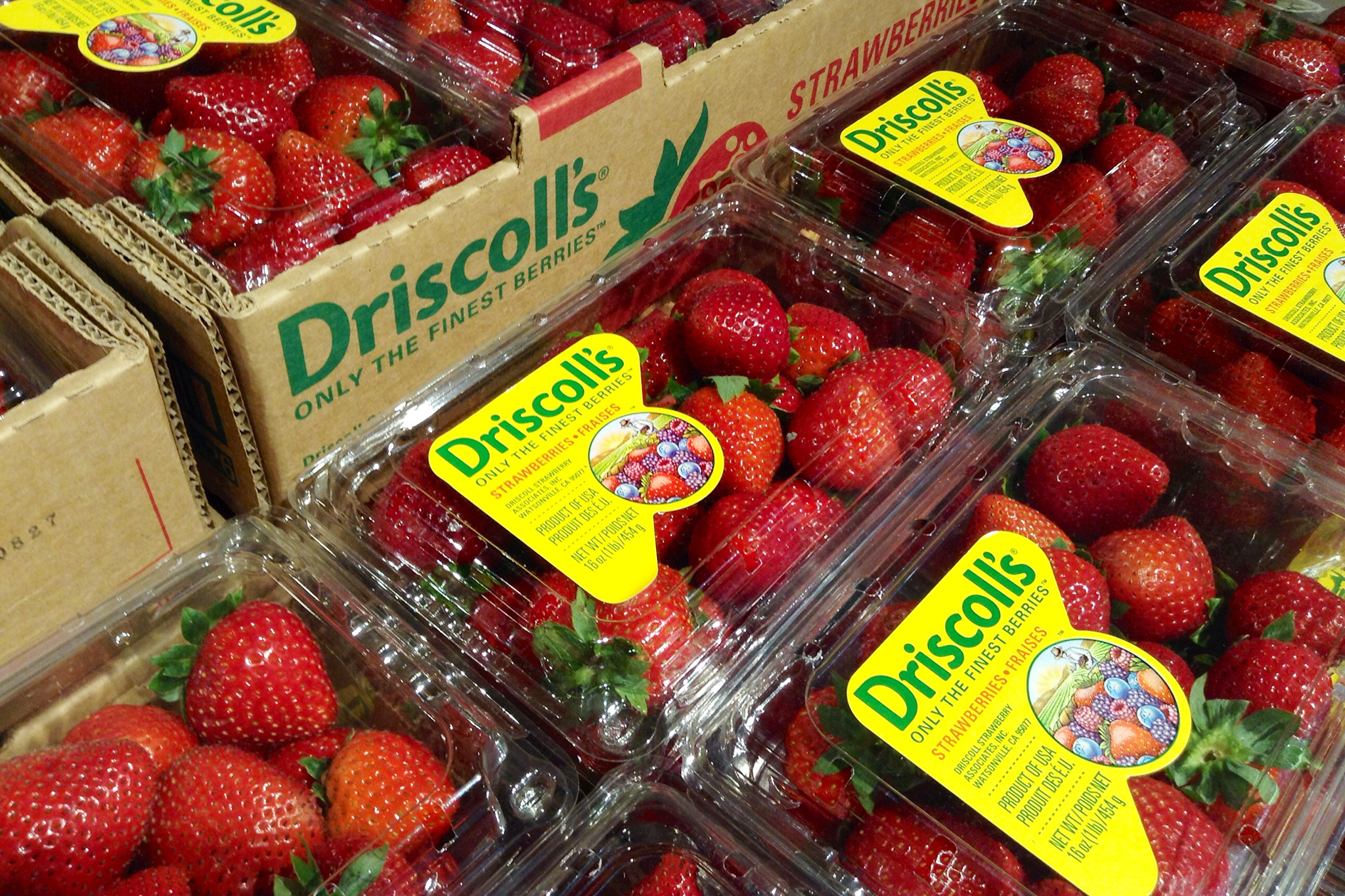
Driscoll’s strawberries hit with back-to-back accusations of pesticides and PFAS
Watsonville-based berry company Driscoll’s has been accused of “greenwashing” its products after a class action lawsuit alleged its strawberries contained forever chemicals.
Read more Remains of murdered California millionaire, killed by con man, identified

Attorneys for six people living in New York, New Jersey, Massachusetts and Illinois filed a lawsuit against the California company last month, alleging consumer fraud and deceptive practices, which cited testing that identified residues of eight “highly toxic” pesticides in its conventional strawberries that are known under the acronym PFAS. PFAS are often called forever chemicals because they can take up to 1,000 years to break down.
The study cited in the lawsuit, which was paid for by a consumer advocacy group, reported that the PFAS detected in Driscoll’s conventional strawberries were at “levels prohibited in the European Union, Taiwan, Chile, Korea & Russia.” The group did not include any evidence in the lawsuit of Driscoll consumers getting harmed, and instead argued that the alleged use of environmentally damaging PFAS combined with the berries’ marketing represented consumer fraud.
“Driscoll’s ran an environmentally friendly campaign—greenwashing its true farming and manufacturing practices that included these forever chemicals known to be extraordinarily difficult to clean up and break down and [to] accumulate in the environment and living organisms, including humans,” the June 26 lawsuit read.
The lawsuit, which was filed at the United States District Court for the Northern District of California, said that product labels did not disclose the presence of PFAS-related compounds, and marketed the products as “Only the Finest Berries.” The plaintiffs said they would not have bought the berries, or paid premium prices, if they knew the berries could contain PFAS chemicals.
Crime| She was alone in a remote Bay Area farmhouse. A killer found her.
Tech | LinkedIn, a mass grave of ghost jobs, is now becoming a dating app
Travel |Calif. roadside icon, closed for years, to be demolished
Food| Bay Area restaurant goes viral for its policy on unruly children
Get SFGATE’s top stories straight to your inbox by signing up for The Daily newsletter.
Driscoll’s rejected these allegations in a statement emailed to SFGATE Wednesday, calling them “without merit.” The spokesperson added that Driscoll’s maintains high standards and “robust food safety and compliance programs.”
“For more than 100 years, we have worked to earn the trust of our customers by communicating responsibly about our products and our growing practices, and we remain committed to that responsibility every day,” the spokesperson said.
Driscoll’s is the largest berry company in the world, and is the second-highest-earning brand in U.S. supermarkets after Coca-Cola, according to the New York Times. Ed Reiter and Dick Driscoll launched their berry empire in 1904 with a humble Watsonville farm. Today, Driscoll’s does not grow its own produce, but owns the genetic material of its berries that are grown through subcontracts with farmers, according to the New York Times.
The recent legal filing comes on the heels of another lawsuit filed against Driscoll’s in June, by former employee David Harada, alleging that he was wrongfully terminated after he told his employer that Driscoll’s had knowledge it was selling and exporting produce that violated the state and federal pesticide regulations, in addition to violating Canadian food safety regulations. Harada’s concerns were dismissed and he was instructed to focus on Driscoll’s profitability, the lawsuit said, and he was subsequently terminated when he refused to be part of the “coverup.”
Read more The infinite scroll may become endangered if controversial Calif. law passes
Driscoll’s denied the lawsuit’s claims in a statement to the Ventura County Star, saying the company does not retaliate against employees and does comply with product safety regulations.
Harada told the Star that he is worried about potential environmental and health impacts of the alleged pesticide use in the long term, but did not provide evidence that consumers of the berries were harmed.
While forever chemicals are still being researched, one of the greatest concerns is that the impact can be irreversible, according to Nathan Donley, the environmental health science director at the nonprofit organization the Center for Biological Diversity. Last year, the nonprofit Environmental Working Group found that 2.5 million pounds of PFAS pesticides are sprayed into California crops fields annually. The persistent spraying of pesticides in our food is concerning to Donley, who said, “Whatever we put into our environment today will be lurking around forever.”

The Bay Area’s best free newsletter.
By signing up, you agree to our Terms Of Use and acknowledge that your information will be used as described in our Privacy Policy.
“The important thing to realize here is that it’s not you or I who are going to be paying the price for this, it’s our grandchildren’s grandchildren who are going to be saddled with pollution that never goes away. And that really is the ultimate sin,” he said in an email Thursday.
Lawmakers are trying to curb PFAS pesticide use in the state. California Assembly Member Nick Schultz introduced a California assembly bill earlier this year to eventually phase out PFAS pesticides. The bill passed the assembly in May and is moving through the senate committee process.
Plaintiffs for the class action lawsuit seek a trial by jury and request that Driscoll’s stop selling strawberries until PFAS are removed or disclosed on packaging. Attorneys for the plaintiffs declined to comment on this story.
— Massive pod of dolphins sighted cavorting off the California coast
— Calif. farmers bulldoze acres of apple trees after Martinelli’s ends contracts
— Highway 101 lanes in Central Coast wine country close for the year
— Slab of cliff falls into the ocean at iconic surf break
Get SFGATE’s top stories sent to your inbox by signing up for The Daily newsletter here.
Read more 55-year-old Bay Area electronics company to close plant, lay off 200