Crystal Cove’s beloved Beachcomber restaurant sits in a cottage ‘time forgot’
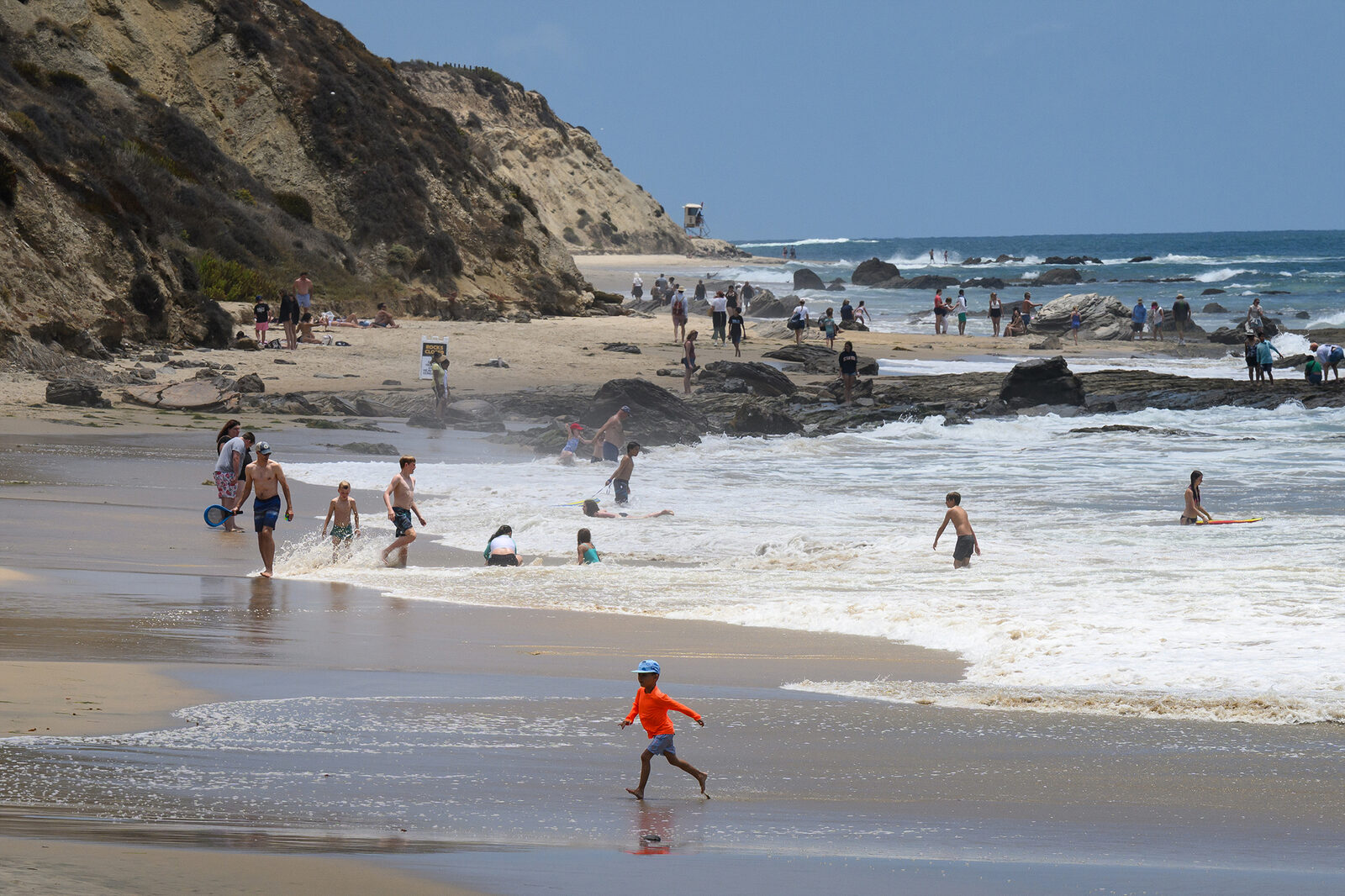
A trip to Crystal Cove State Park, an Orange County gem known for its natural beauty, crystal-blue waters and old-timey cottages, is not complete without a meal at the Beachcomber. Located in a 1,200-square-foot cabin right on the sand, the restaurant is bursting at the seams on a summer afternoon, with tourists and locals enjoying meals from a seafood-focused menu. Lunch is paired with a postcard view of the waves crashing against the shore under a bright California sun.
Read more UC’s top 2 campuses are heading in opposite directions, new data shows

The bustling scene is a far cry from 20 years ago, when Doug Cavanaugh opened a restaurant in the aging cottage in Crystal Cove’s historic district and served simple healthy meals on paper plates. Now, with real plates and an upgraded menu that lists cioppino and crab-stuffed salmon, it’s one of the country’s most celebrated waterfront restaurants, rooted in the history of a beachtown that is effectively stuck in time.
“When you’re down in the historic district, it’s literally the land that time forgot,” Cavanaugh told SFGATE. “People love to escape from the busyness of Orange County, so they come down to the cove.”
Tucked away at the southern end of Newport Beach, Crystal Cove has held the attention of visitors for its natural beauty for generations. Backed by coastal bluffs that rise to the Pacific Coast Highway, the beach is not a locals-only hidden gem; it’s more like an open secret for tourists. But what tourists might see as a beautiful beach with historic cottages is also the site of a decades-long battle between the state and locals to preserve the cottages while letting businesses like the Beachcomber endure and thrive. Today, the restaurant retains its original cottage charm even after remodeling, and Crystal Cove wouldn’t be the same without it.
The fight to save Crystal Cove
Crystal Cove’s story begins with the Acjachemen and Tongva/Gabrielino tribes, which hunted and gathered in the area and developed cultural ties to the land over thousands of years before the Spanish arrived in the 1700s. The Irvine family (yes, the same Irvines who would establish the city of Irvine a century later) eventually acquired the land in the 1860s, and in the early 1900s, the beach became the perfect place to film movies set in tropical destinations. In 1920, the crew for the first commercial film to be shot there, a lost silent film called “Treasure Island,” planted palm trees and built thatched huts to complete the south seas theme. More films would follow decades later, including “Beaches” and “A Few Good Men.”
When Irvine Co. owner James Irvine began allowing visitors to camp on the beach in 1925, he laid the foundation for the area’s scrappy beginnings. Built organically in the 1920s and 1930s by families who wanted more permanent vacation homes, the cottages were not beholden to building codes or coastal zoning. The ocean provided some building materials: A shipwreck brought lumber to shore, and driftwood was turned into porches, according to the Orange County Register. A defunct hotel provided windows, and the abandoned “Treasure Island” huts were also put to use. Eventually, artists and families had built 47 cottages throughout the landscape.
In 1962, after decades of visitors camping on Crystal Cove, the Irvine Company outlawed the practice. And in 1979, the company sold the land to the state of California for $32.6 million, according to PBS SoCal (the equivalent of around $167 million in 2026), the most the state had ever paid at the time to own and develop a state park.
The next year, the fight between the state and locals began when California tried to force residents out of their homes by issuing 90-day eviction notices. But residents, who had been living on the property for decades, refused to leave. A slew of legal battles ensued for over two decades until the state and residents came to a settlement.
Residents finally agreed to leave the land by July of 2001, and the state agreed to buy out a 60-year contract from a private developer that would have turned the cottages into a high-end resort. Then from 2003 to 2006, the state began a restoration project that would make 13 of the cottages open for a much more affordable overnight stay. Nine other cottages would be restored for “operations, interpretation and food concessions,” according to Crystal Cove State Park, leaving the door open for the Beachcomber to move in.
Education | UC’s top 2 campuses heading in opposite directions, new data shows
Crime
Travel | A group of teen hikers relied on Google Maps. It was a disaster.
News| Bay Area wildlife mystery leaves researchers ‘somewhat horrified’
Read our stories ad-free on the new SFGATE app.
Cottage 15
The Beachcomber is in Cottage 15, formerly owned by a train engineer named Mitchell, who named it the Whistle Stop in the 1930s and adorned it with an electric train around the shop’s sign (while the train is gone, a small model train is inside). Community members would know Cottage No. 15 as a place to stop by and share a meal. In the 1970s, artists Vivian Falzetti and Doug Falzetti moved into the home and hosted Thanksgiving dinners and Sunday suppers that were a huge hit in the community.
When Cavanaugh moved into the vintage cottage in 2006, he had his work cut out for him: He had to remodel a gutted interior and turn it into a restaurant with a commercial kitchen. The cottages are also still owned by the state, effectively making Cavanaugh a tenant. Despite the hurdles, he decided to go all in on a proposal to manage a restaurant and catering, and the state awarded him a contract as a concessionaire. In 2006, the remodel began, and in August, the Beachcomber opened its doors.
“What we got when we got the Beachcomber site was a vacant, empty building,” Cavanaugh said. “So whatever you see inside there, we created from scratch.”
This isn’t Cavanaugh’s first time as a restaurateur. He founded Ruby’s Diner in 1982 — a classic retro-style diner that began in Newport Beach. The restaurant chain has 15 restaurants and shake stands across Southern California and in Nevada and New Jersey, including one at the end of the Balboa Pier just up the coast. The Beachcomber and Cavanaugh’s other restaurant at Crystal Cove began under more humble conditions. The Crystal Cove Shake Shack, which is its own California institution (and no relation to the national chain), was serving cold-cut sandwiches and milkshakes cliffside. Meanwhile, down on the shore, the Beachcomber served creative, healthy meals, including artichoke sandwiches and organic egg dishes on paper plates with plastic silverware because there was no dishwasher.
“It began with a very humble menu, and of course, as people got more interested, we had to raise the bar,” Cavanaugh said.
The Beachcomber experience
At first, the Beachcomber was hiding in plain sight right on the shore. But word-of-mouth about tiny ahi tuna tacos and fluffy beignets that leave behind puffs of powdered sugar that get everywhere had locals coming back. Now, the restaurant has been named one of the top 100 restaurants in the country by OpenTable.
Cavanaugh describes the food and location as “a double win.”
“I think one of the nice surprises for people who come to the Beachcomber is they’re coming and expecting tourist food,” he said. “But when they arrive, they get a fabulous meal created by our great team, and they get this spectacular view.”
Paid parking is available across the street at the top of the cliff. Guests can take a short 10-minute, downhill walk through a tunnel bursting with colorful artwork and mosaic tiles that spits you out right at the restaurant. The other option is catching the shuttle, emblazoned with the Beachcomber logo. Two dollars pays for a 5-minute ride.
“When we first built the restaurant, my friend said, ‘Are you crazy? People are going to park in a parking lot across the street, and they’re going to get on a bus?’” he said. “And I said, ‘I’m hoping it all works out,’ and what happened is it’s all part of the experience.”
Read more Bystanders rescue unresponsive man at Russian River
A trip on the shuttle may also be paired with short stories about Crystal Cove’s history.
“We have some very charismatic bus drivers,” Cavanaugh said. “… These guys, they tell the story of what’s happened and keep people entertained on the way down.”
Upon arrival, visitors check in. If there’s a wait (without a reservation, there almost always is), they are given a pager. A walk along the shore, or a visit to some of the other historic cottages — including an art gallery, cultural center, and film and media center — is a great way to pass the time. But simply enjoying the sound of the surf and a view of crystal blue waters has to be one of the best ways to wait.
Lunch on the shore
On a perfect summer day, a table on the patio is the best way to enjoy the warm weather and a view of the ocean. Some menu choices, like the ahi tacos, have been there since the beginning. With huge chunks of raw tuna, an Asian slaw and spicy mayo wrapped in a crispy wonton, it’s the perfect appetizer: a great texture and a burst of flavor.
“It was something that actually we created and it got copied pretty widely,” Cavanaugh said.
He also recommended the creamy clam chowder — another longstanding menu item.
“When I was a kid, my dad would, for some reason, make clam chowder for Christmas,” Cavanaugh said. “He would jar it, and that would be the Christmas gift he’d give away. So it’s that same very same recipe we serve at the Beachcomber, and that’s been there for 20 years.”
The serving of fish and chips is massive — perfectly battered and fried fish served with salted, thick-cut fries. Another favorite is the mahi-mahi grilled fish tacos. The fish comes out bright orange from the achiote marinade, and crisp cabbage, pickled onions and a creamy cilantro crema keep the flavors balanced. Non-seafood items are available but a bit harder to spot.
The attached Bootlegger Bar has cocktails, beer and wine. And make sure you leave room for dessert. Although they are fried, the beignets, a Southern sweet treat, are surprisingly light and served with freshly whipped cream and a chocolate sauce. While the donuts travel well, it’s better to eat them while they are hot and fresh.
“We serve breakfast, lunch and dinner, so we’ve had so many of those items for so long,” Cavanaugh said.
The everyday hustle and bustle
Even in such a small space, the staff manages to feed and serve hundreds of guests every day. Many are longtime employees — some who have even been there since the opening. Chef Carlos Olivera, a longtime employee, has had a big hand in curating the menu.
“Whenever [my wife and I] travel, I’ve got to try every new restaurant where we go, and then I collect recipe ideas and come back and work with Carlos,” Cavanaugh said.
“He and I work together, and then he makes it work in that little kitchen.”
In a chaotic environment with such a small kitchen, it’s important to have a very cohesive staff.
“There’s a real family environment at the Beachcomber,” Cavanaugh said. “We, they have a lot of fun, and of course, they get to serve great food and they get a lot of happy guests.”

BECOME A FRIEND. GET OUR AD-FREE APP.
The Beachcomber may have arrived nearly a century after the birth of Crystal Cove, but its cult following has cemented its place in the land’s legacy. And its welcoming hospitality also extends out to the beach. During the summer, it offers a “beach express menu” serving sandwiches and snacks to take away. The restaurant also rents fire pits on the sand and even all you need to make s’mores.
It all comes together for a package experience. Because while the food is great and the view is even better, a trip to Cottage 15 and the cove at large is also a rare opportunity to experience coastal Southern California as it was before.
The Beachcomber at Crystal Cove, 15 Crystal Cove, Newport Coast. Open daily, 7 a.m.-9:30 p.m.
— San Francisco suing to stop allegedly ‘brazen hotel booking scam’
— At California’s historic El Adobe, eat Nixon’s favorite dinner in a jail cell
— Bay Area neighbors hated airport noise. Then came the billionaires.
— The biggest name in Vegas makes a $200M bet on Lake Tahoe
— The Olympic National Park hike that took me to the quietest place in America
Read more Flagship San Francisco Ghirardelli store closes amid workers’ strike
For more travel news and features, sign up for our TravelSkills newsletter here.