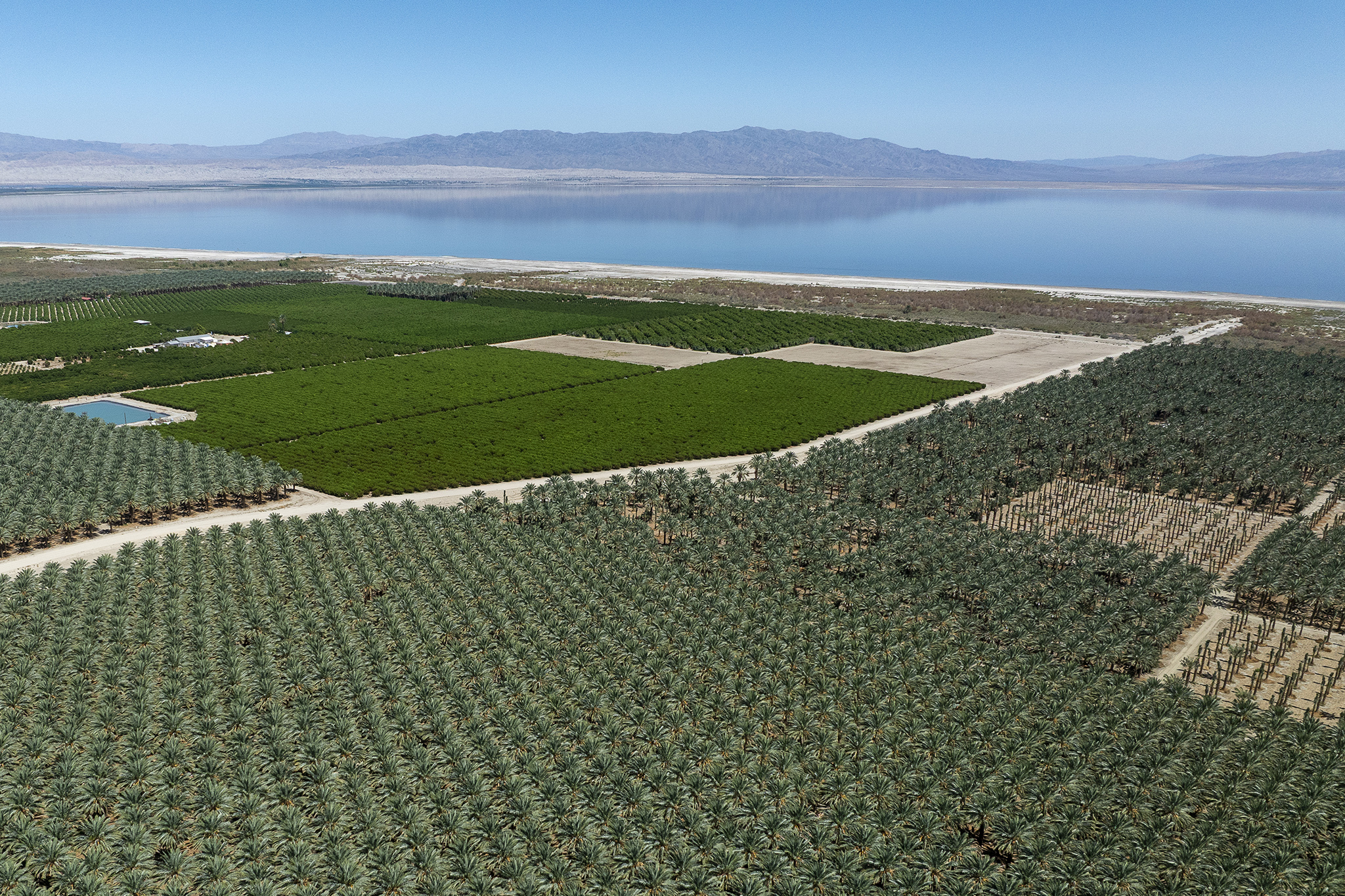
California county halts plan for data center that would have been the state’s largest
Residents in Imperial County who have been fighting against more than $15 billion in proposed data centers — including one that would be the largest in California — scored a big win this week.
Read more Californians could buy plug-in solar, pay less for PG&E under new bill

The Imperial County Board of Supervisors issued a moratorium on all new data centers Tuesday that will last for at least 45 days as the county reevaluates the process of data center development in the area. This pauses all new and pending data center permits, though applicants can still submit new applications; those wouldn’t be approved or denied until the moratorium is over.
The supervisors also approved the creation of a 19-person committee to analyze land use and zoning laws surrounding data center development. The committee will be required to evaluate current regulations and produce recommendations by January 2027, such as how close data centers can be to residential areas and schools. The moratorium could be extended to 10 months and 15 days if the committee has not delivered any recommendations within the initial 45 days.
These decisions are an about-face for the Imperial County Board of Supervisors, which in April advanced a proposal 4-1 for a $10 billion, nearly 1 million-square-foot data center at the center of the controversy. Board members had hoped the new development would spur jobs and economic growth in the county, with one estimate promising over 1,600 construction jobs and 100 permanent jobs, in addition to around $28 million in annual tax revenue. But massive backlash from the community surrounding concerns about water use, pollution, air quality and other public health impacts likely made supervisors reconsider.
Calexico resident Kristian Salgado, a member of NIMBY Imperial, a group that opposes the construction of data centers in Imperial County, said she was “a little shocked” when the moratorium passed. She’d been showing up to community meetings and voicing her concerns for months, but she didn’t know if enough supervisors would vote in favor.
“I’m grateful that the Board of Supervisors heard the residents of Imperial County. It was an extremely necessary pause,” she told SFGATE over the phone.
While she personally said she opposes all data centers in the county, she said she hopes the committee will look closely at how districts are zoned for development, and she wants any new data center proposals to go through a California Environmental Quality Act review. CEQA is a state law that requires an examination of a project’s impact on the overall environment and a declaration of how those impacts will be mitigated.
Whether these projects go through environmental review is a sticking point for many, and is a chief concern in two lawsuits surrounding new data centers in Imperial County. The Sierra Club’s San Diego chapter sued Imperial County after its April approval, alleging that it was skirting CEQA to finalize the project. The city of Imperial also sued the county, saying the project shouldn’t be exempt from CEQA.
Mark West, the director of the Sierra Club’s San Diego chapter, called the board’s actions an important first step.
“These actions provide an important opportunity for residents, stakeholders, and decision-makers to thoughtfully evaluate the impacts of large-scale data center projects before additional approvals move forward,” he wrote in a statement sent to SFGATE.
Read more ‘We’re nervous for sure’: Tahoe fire restrictions land before summer holiday
The absence of a CEQA review is one of the reasons Huntington Beach developer Sebastian Rucci, whose company is proposing the $10 billion data center, chose Imperial County in the first place. Data centers use massive amounts of water and energy; in this case, more energy would be used to power the center than the entire county used in 2024, a KPBS investigation found.
After the strong community opposition, Rucci proposed moving the site farther from a residential area in a letter to the editor published in the Desert Review, arguing it solves problems posed by the public while preserving local job creation and new tax revenue for the county and city.
But Rucci had also proposed an ambitious plan to avoid using water from the Colorado River, another prominent concern for residents as the waterway faces unprecedented challenges since demand for its water far exceeds supply. Data centers require massive amounts of water for cooling, and Rucci had been vocal that his project wouldn’t get its share from the Colorado River, including on his website, instead relying on recycled wastewater. Now, Rucci’s company, Imperial Valley Computer Manufacturing has filed a lawsuit against the Imperial Irrigation District to use approximately 260 million gallons of water from the river each year after talks with cities about using their recycled wastewater stalled. The utility company had rejected Rucci’s earlier application for water and now Rucci’s company alleges the denial was unlawful.
The Imperial Valley has the largest water rights to the Colorado River in the state, but arguments over the use of the water have been fierce. Earlier estimates put water needs at around 750,000 gallons per day for the center — meaning the Colorado River allotment, if approved, would end up supplying more than 90% of the needed water.

The Bay Area’s best free newsletter.
By signing up, you agree to our Terms Of Use and acknowledge that your information will be used as described in our Privacy Policy.
Rucci did not respond to SFGATE’s request for comment as of publication.
During the public comment portion of the Tuesday meeting, residents continued to express the primary concerns that have been brought up for months — stress on the local water supply, poor air quality, pollution and environmental concerns related to the center’s proximity to residential areas.
“Data centers are not new to California, but where they’re being placed in California is extremely important,” Salgado said.
Travel | Disneyland’s likely 3rd theme park has been nearly 30 years in the making
Culture| The 18-foot-high fence that turned Sonoma and Marin communities upside down
Food| The SF tech worker whose unhinged order broke In-N-Out forever
Politics | Gen Z students are embracing the ‘Kirk doctrine’ on California campuses
Get SFGATE’s top stories sent to your inbox by signing up for The Daily newsletter here.
Read more Giants-Braves series finale postponed by rain, rescheduled for Aug. 31