Oakland Ballers home runs keep destroying a neighbor’s property, lawsuit says
The Oakland Ballers are facing perhaps the most ironic lawsuit in recent memory.

Just before the season began, the defending Pioneer League champions were sued by the former owner of a glass company over damage — including broken windows — allegedly caused by balls flying over the left-field fence of Raimondi Park.
Read more UC Berkeley doctoral candidate arrested in China on espionage allegations
Last month, Ajor Property Group, which owns a building directly across the street from Raimondi Park, filed a lawsuit in Alameda County against the Ballers and the city of Oakland. The plaintiff alleges the city and team failed to act quickly enough to prevent baseballs from breaking windows, denting the roof and causing other damage at the building at 1661 20th St., leading it to ask for at least $350,000 in damages.
The city of Oakland declined SFGATE’s request for an interview, citing the pending litigation. But Ballers co-owner Paul Freedman did speak to SFGATE last week — which he said he was doing against the advice of his legal counsel — not just because he wants the Ballers to be transparent about all things with their organization but also because he sees this as indicative of a larger issue in his hometown.
“We’ve been trying to get people to viscerally understand that Oakland has its challenges,” Freedman told SFGATE. “There’s a lot of people in the Bay Area, like, why is it so hard to get some things done in Oakland? I think this story, you know, tells a lot about that.”
He later added: “My perspective is that, as soon as there’s any semblance of success in Oakland, knives tend to come out, and not always from people in Oakland.”
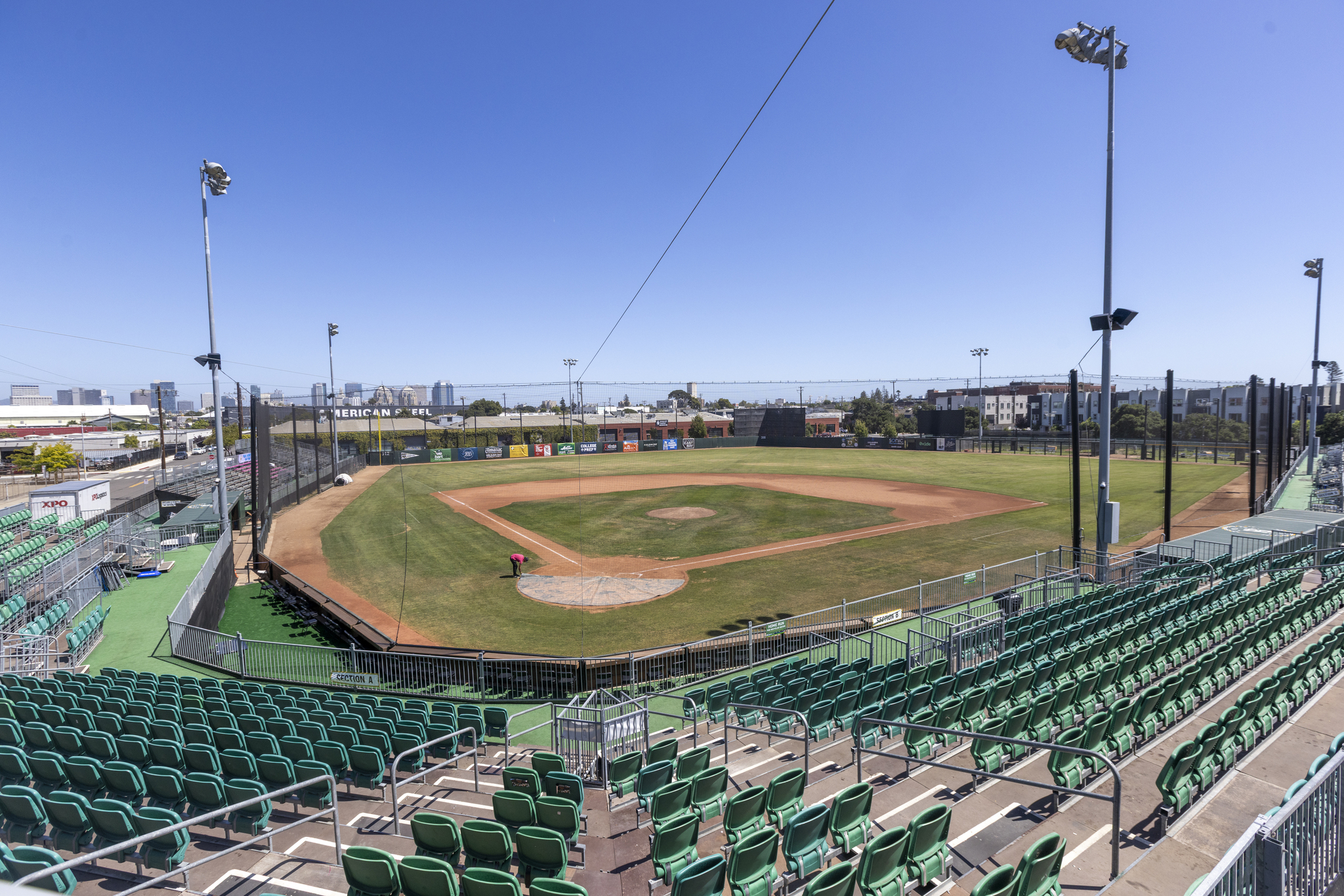
Raimondi Park has been a baseball field for more than a century. It is named after Ernie Raimondi, a homegrown star for the Oakland Oaks in the Pacific Coast League who was killed in action during World War II. The park has gone through cycles of disrepair over the decades but finally had a $5 million renovation completed in 2008. The baseball field had been primarily used by little leagues, recreational teams and local high schools since then, while the area around Raimondi was one of Oakland’s largest and last major homeless encampments until it was cleared in 2023.
Ajor Property Group, which is owned by Hassan Najafi, has owned the building at 1661 20th St. since 2001. Supreme Glass Company, the tenant in the building, was also owned by Najafi when the Ballers arrived at Raimondi Park in 2024, although state records indicate Najafi sold the company to Gregory Scharlemann and Roderick Heisler last year. Ajor Property Group continues to own the building, though, and alleges in the lawsuit that it didn’t suffer any baseball-related damage when the field was used for recreational and youth sports.
Things changed when the pros came to town, the plaintiff alleges. The A’s announced they would leave Oakland for Las Vegas and play their final MLB season in The Town in 2024. Freedman and his co-owner, Bryan Carmel, founded the Ballers as an independent team, set to compete in the Pioneer League. They settled on Raimondi Park, investing $1.6 million to upgrade the space. The new and improved Raimondi opened to a sold-out crowd in May 2024 and saw the Ballers win the league championship on its field in 2025.
But Raimondi’s left-field fence sits at 312 feet from home plate — a short distance for professional hitters. Just behind the fence is a 30-foot-high net intended to catch any dingers before they hit something else. Ajor’s lawsuit alleges that for the past two years, the team and the city of Oakland have known about the damages but have failed to act to prevent them.
SFGATE went to the building last week and noticed several broken or damaged windows, including a few that appeared to have a baseball-sized hole. SFGATE also reached out to Najafi last week by phone, requesting an interview about the lawsuit. Najafi replied by asking rhetorically if he was suing this reporter, who answered, “No.” Then Najafi told SFGATE to “mind your own business” multiple times. When SFGATE reiterated that the outlet was pursuing a story on the lawsuit, Najafi said, “I don’t give a f—k what you want to tell me,” and told this reporter to “f—k off.”
Najafi’s lawyer, Robert Jweinat, did speak to SFGATE last week, though he declined to answer specific questions about the lawsuit. Jweinat, who serves as a city councilmember in San Ramon, told SFGATE that his experience in municipal government has informed his handling of this case, including the need to file a claim against a city ahead of any lawsuit.
The lawsuit, which includes two years of email correspondence between Najafi and Freedman, alleges the team did not raise the netting in left field up to the maximum 50-foot height allowed in the field use agreement between the city and team. It also alleges the Ballers took responsibility to pay for the broken windows, as well as damage to the aluminum siding and roofing, and have failed to do so.
Freedman and the Ballers don’t dispute that the damage is occurring to the building across the street and repeatedly offered to pay for the damage at cost, if Ajor could prove the damage had clearly resulted from a Ballers game or practice. According to Freedman, the Ballers paid $1,500 to repair a window in their first year at Raimondi after Najafi showed the team a video of a baseball breaking it. But when asking for proof of a later incident, Freedman alleges Najafi asked for $500 to show the team the video. Freedman also told SFGATE (and Najafi in emails) that raising the netting height to 50 feet would require the city to change height ordinances for the property and potentially set a precedent that could be used by other buildings.
Read more Pete Crow-Armstrong homers on 1st pitch of the game in the Cubs’ 6-1 win over the Giants
Ajor also cites “lost solar energy generation and installation delay” due to what it says is an inability to install solar panels on the building due to the potential risk from flying baseballs, something Freedman is skeptical about. In a multi-email exchange on June 9, 2025, the Ballers owner offered the types of solar panels Najafi should consider purchasing but also suggested Najafi “get in touch with” PG&E, citing grid challenges in their neighborhood and the western-facing positioning of the building’s roof. (Freedman told SFGATE the Ballers have had difficulty with their power usage and said he’s been told the neighborhood is “a tough grid” for PG&E.) The suggestion prompted a fiery response from Najafi.
“Apparently you have lied to us 10 months ago and now you are advising us what to do about what is not your decision at all,” Najafi wrote back less than an hour later. “However, our position is firm, you are warned and you know what you are responsible for including all legal cost.”
Freedman told SFGATE he even made an offer to buy the building from Najafi, a proposal that is acknowledged by both parties in the emails attached in the lawsuit. But Freedman told SFGATE that Najafi’s initial asking price was $10 million, and then the price went up when the team checked in months later.
“We have done a lot, and I think our track record is really strong, to engage the neighbors and engage the neighborhood,” Freedman said. “We literally knocked door to door, asking whether people wanted a baseball field here. It’s hard to get things done in Oakland, it’s hard to get things done in the Bay Area if the neighbors are against it. So having the neighborhood support has been critical for the success the whole time.”
And while things haven’t always been great in West Oakland, the community is on the upswing. The Prescott Market food hall opened last year right next door to the Ajor property and has partnered with the team. So did a six-story affordable housing complex, located on the other side of Raimondi Park.

The Bay Area’s best free newsletter.
By signing up, you agree to our Terms Of Use and acknowledge that your information will be used as described in our Privacy Policy.
The Ballers sure seem to be benefiting: Their average attendance climbed from 1,918 in 2024 to 2,303 in 2025. (It’s at 2,295 through their first 12 games of 2026, with larger crowds expected later in the summer.) After initially signing a one-year trial run lease with the city, they are now in the second year of their 10-year deal at Raimondi Park.
The Ballers have been hoping to make progressive upgrades to their home, all of which need to go through an approval process with the city that Freedman admits can take some time. Raimondi Park still doesn’t have permanent bathrooms (it has portable toilets instead) or concession stands (the park is using tents and tables). In Freedman’s view, the lawsuit threatens to derail their progress, given the potentially large payout if they lose. He told SFGATE the Ballers “have no intent to settle” and are currently preparing their response to Ajor’s lawsuit.
“We were very public about , and our goal is to break even this year,” Freedman said. “We do not have an extra $350,000 lying around.”
Travel | Disneyland’s likely 3rd theme park has been nearly 30 years in the making
Culture| The 18-foot-high fence that turned Sonoma and Marin communities upside down
Food| The SF tech worker whose unhinged order broke In-N-Out forever
Politics | Gen Z students are embracing the ‘Kirk doctrine’ on California campuses
Get SFGATE’s top stories sent to your inbox by signing up for The Daily newsletter here.
Read more Cubs outfielder Seiya Suzuki leaves game against Giants with right knee discomfort