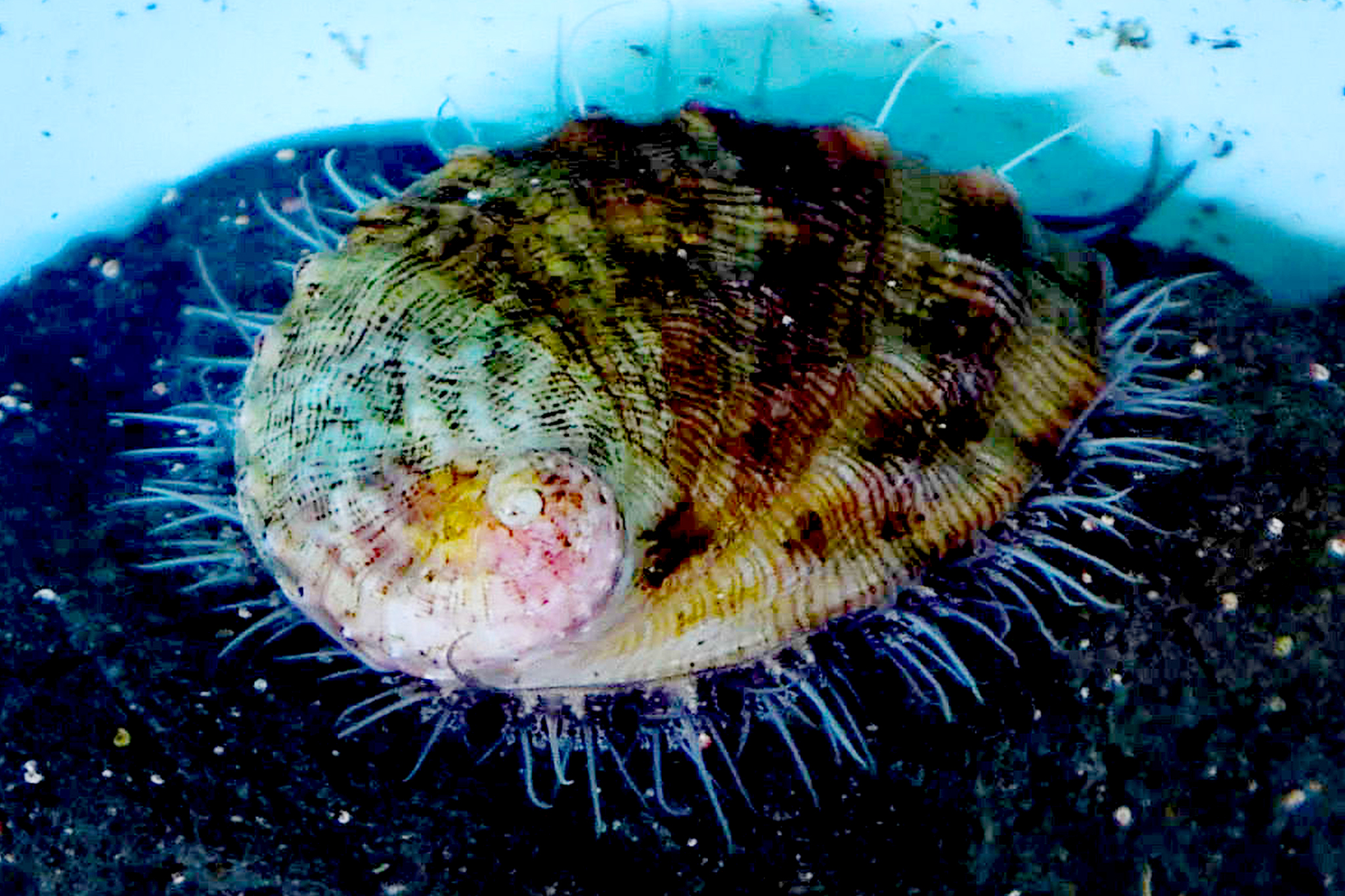
Scientists spot rare ocean animal in the wild for the first time in 5 years
Millions of white abalone once lived on the ocean floor off the coast of Southern California and Mexico before the population began to crater 50 years ago. Now, with only a relative handful left, scientists are celebrating the discovery of one in the wild.
Read more California county on verge of requiring in-person, same-day voting

On May 12, scientists and staff at the Channel Islands National Marine Sanctuary spotted a white abalone near the islands for the first time in five years during a habitat survey. The goal of the survey is to spot the marine snail and determine ideal habitats for its recovery.
“It’s been like searching for a needle in a haystack,” Julie Bursek, education and outreach coordinator for Channel Islands National Marine Sanctuary, said in a news release.
The species is critically endangered, with an estimated 99% population decline since the 1970s, according to the National Oceanic and Atmospheric Administration. Though California outlawed abalone fishing in 1997, poachers can sell the meat for a steep price, and just an estimated 3,000 white abalone remain.
“With so few remaining in the wild, the animals are often too far apart to reproduce successfully,” the National Marine Sanctuary wrote. “That makes each confirmed live sighting important for scientists working to understand where white abalone still occur and what habitat may support their recovery.”
Since 2011, the University of California, Davis, has operated a captive breeding program as part of a conservation effort to revive the species. The program has successfully bred thousands of white abalone.

The Bay Area’s best free newsletter.
By signing up, you agree to our Terms Of Use and acknowledge that your information will be used as described in our Privacy Policy.
Read more Teen killed in Fairfield shooting was reportedly posing for graduation photos
“The National Oceanic and Atmospheric Administration Fisheries deemed that captive breeding and ‘outplanting’ (i.e., placing captive-origin animals into the ocean) was the only way to save the species,” according to the UC Davis Coastal and Marine Sciences Institute.
Next steps for the National Marine Sanctuary scientists are to continue surveying additional habitat, attempt to relocate the white abalone they saw and process their collected environmental DNA samples.
“Community science, research partnerships, and habitat surveys like this one are all important tools for helping scientists better understand where white abalone may still survive in the wild,” Bursek said.
Travel | Disneyland’s likely 3rd theme park has been nearly 30 years in the making
Culture| The 18-foot-high fence that turned Sonoma and Marin communities upside down
Food| The SF tech worker whose unhinged order broke In-N-Out forever
Politics | Gen Z students are embracing the ‘Kirk doctrine’ on California campuses
Get SFGATE’s top stories sent to your inbox by signing up for The Daily newsletter here.
Read more Central Coast beach town named best in the country for the second year in a row