Whales keep dying in San Francisco Bay. Can AI save them?
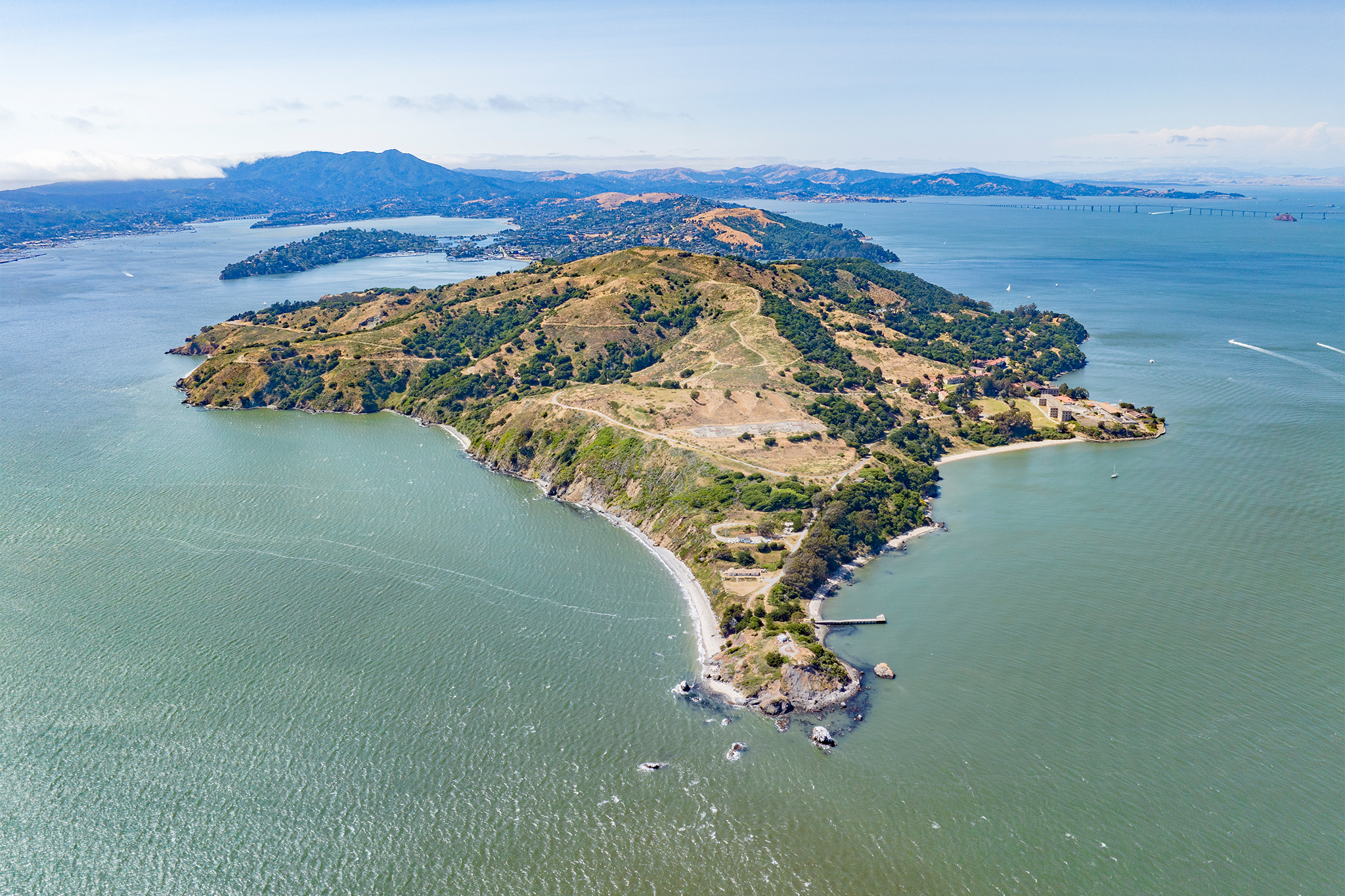
On a remote corner of Angel Island, the waters of San Francisco Bay lap against a collection of whale bones littering the white sand. Marine scientists have towed the mammoth bodies of dead gray whales across the bay to this isolated beach many times in recent years to investigate the mysterious spike in fatalities.
Read more TSA quietly rolls out expansion plan for private security

On Tuesday, state scientists and a coalition of regional partners gathered on a peak of Angel Island overlooking the graveyard beach. But their eyes scanned past the island to the gleaming bay, where blows from gray whales shot up sporadically between passing cargo ships, fishing vessels and sailboats.
The group wasn’t there to mourn the sea giants but rather to debut a new way to keep them safe: artificial intelligence.
“We can come together as a community and do something today, which is to ensure that more of the whales that come into the bay make it back out and are not struck and killed by ships,” Douglas McCauley, the director of UC Santa Barbara’s Benioff Ocean Science Laboratory, said during Tuesday’s launch of the new monitoring system on Angel Island.
The new system uses AI to detect gray whales swimming in the bay and then quickly alerts boat captains so they can slow down and change course. The detection network also includes a thermal camera recently installed at the U.S. Coast Guard communication site on Angel Island and a second fastened aboard a San Francisco Bay Ferry passenger boat. The ferry’s camera turned on for the route between Vallejo and San Francisco this week.
The system tracks whales by their heat signatures and exhaled breath using AI-powered technology from WhaleSpotter, a global company that emerged from a decade of Woods Hole Oceanographic Institute research. Experts from Benioff Ocean Science Laboratory and the Marine Mammal Center in Sausalito collaborated with WhaleSpotter and the U.S. Coast Guard’s vessel traffic service to tailor the project for San Francisco Bay.
Now, trained marine mammal specialists working around the clock for WhaleSpotter verify the AI detections of whales before alerts go out over radio to vessels and to the public website Whale Safe. While the new monitoring does not cover the entire San Francisco Bay, the first camera on Angel Island’s Point Blunt faces a triangular hotspot of whale activity between Alcatraz and Treasure Island. Over the next two years, the coalition hopes to expand to include more cameras on additional ferries, the Golden Gate Bridge and Alcatraz.
Before this improved monitoring technology, vessels were constantly reporting whales to one another via the radio and voluntarily reducing their speeds per the Blue Whales and Blue Skies program, but it hasn’t been enough to prevent strikes.
“This technology is now working 24/7,” Kathi George, the director of cetacean conservation biology at the Marine Mammal Center, said on Angel Island on Tuesday. “It gives us the ability to help locate whales and share the information for situational awareness. Captains are the folks that know best how to operate their vessels to avoid whales, so giving them the information is a true win-win for everyone.”
The new effort emerged amid dire conditions for gray whales. Out of the 26 whales that died in local waters last year, 21 were gray whales — the highest number of regional fatalities for the species in 25 years. This year, 10 gray whales have died in the greater Bay Area, according to the Marine Mammal Center. And a study published in April found that at least 18% of the gray whales spotted in the bay from 2018 to 2025 died. Vessels killed at least 40% of them, and many others starved.
Read more Calif. gas prices could spike even higher after India slashes exports
The Eastern North Pacific population of gray whales, which migrates about 12,000 miles each year between Mexico and the Arctic, has dramatically declined. According to McCauley, this population of grays has dropped by about 50% in the past decade down to just about 13,000 whales in 2025.
Boat strikes are only one part of the picture. The grays are likely struggling to find enough food in the warming Arctic during the summer.
“Climate change is causing sea ice to shrink and also disrupting and warming the Arctic, throwing a monkey wrench into how the Arctic works,” McCauley said. “What that means is there’s less of that food that has been there dependably for millennia for the gray whales, so they’re now leaving this migration with less than a full tank and undertaking that same journey. They’re running out of energy or fuel on the way back up.”

The Bay Area’s best free newsletter.
By signing up, you agree to our Terms Of Use and acknowledge that your information will be used as described in our Privacy Policy.
He added: “Gray whales are trying to be brave, new, weird whales in a weird, new world.”
The working hypothesis among local scientists is that the gray whales are turning into the bay to feed, though more research is needed. “The whales are definitely feeding here,” the Marine Mammal Center’s George said. “How much food is in here, and the quality and nutrition of that food are still questions that we have to answer.”
In April, Rep. Sam Liccardo and a group of co-sponsors introduced a bill that would establish a new “whale desk” in the U.S. Coast Guard’s San Francisco station, which would be dedicated to preventing deadly collisions between vessels and whales.
— AI data centers appear to be creating their own microclimates
— After ‘unprecedented’ results, SF researchers get closer to HIV cure
— Gray whales are out of luck in San Francisco Bay
— California faces first sign of a new drought
Read more TikTok influencer arrested at Calif. airport in alleged murder-for-hire plot
Sign up for daily SFGATE breaking news alerts here.