TSA quietly rolls out expansion plan for private security
The Transportation Security Administration quietly rolled out an extension of a program that’s been present at San Francisco International Airport since 2002, which could change how many airports throughout the U.S. operate.
Read more Calif. gas prices could spike even higher after India slashes exports

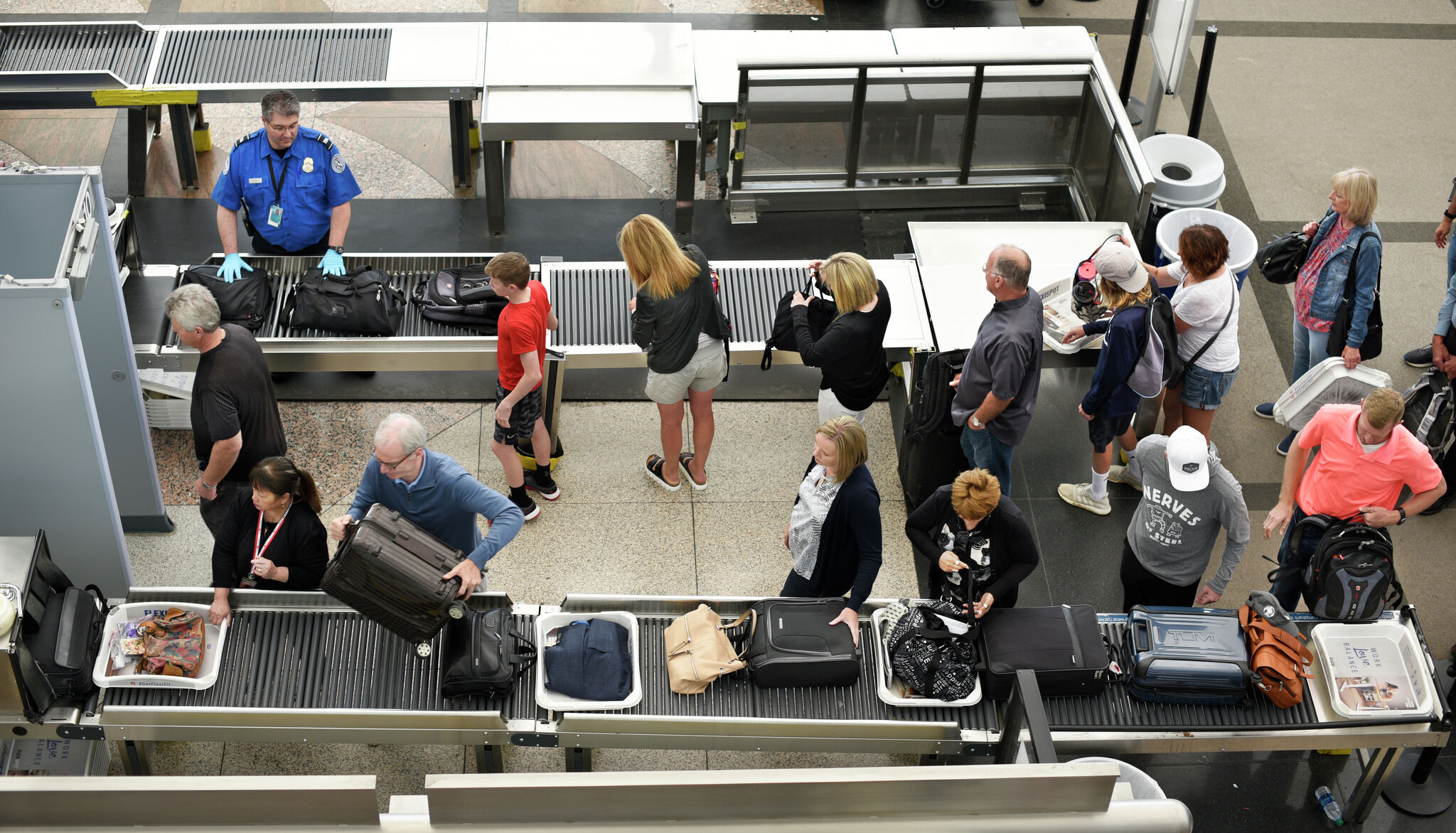
The agency sent an internal memo on May 14 to all employees announcing the rollout of TSA Gold+, former TSA agent Caleb Harmon-Marshall shared in his newsletter. TSA said the program is an “extension of the existing Screening Partnership Program (SPP) model,” allowing private contractors to manage both the employees, known as transportation security officers, and the technology that screens passengers. The administration has since launched a public-facing website with the details.
“The launch of TSA Gold+ will enable closer collaboration with the private sector, drive greater innovation and investment, and strengthen the resilience of TSA operations,” the agency said in the memo.
Currently, 20 airports use private contractors for TSA screening. However, SFO is the only major airport that has adopted the program. The private contract left the airport immune to any delays during the last two government shutdowns, when staffing shortagesleft passengers waiting in line to be screened for several hours and a collective 2,100 agents ultimately quit.
Republican lawmakers expressed interest in privatizing airport security last year. In March 2025, Sens. Mike Lee of Utah and Tommy Tuberville of Alabama introduced legislation similar to the TSA Gold+ program that sought to transfer TSA’s aviation security operations and equipment “to qualified private companies.”
At a hearing last month, TSA Deputy Administrator Ha Nguyen McNeill said the agency was looking into further privatization to avoid future funding lapses.
“As of today, TSA has been shut down for 109 days, nearly 60 percent of FY26,” McNeill told the House Homeland Security Appropriations Subcommittee on April 16. “If this year demonstrates anything, it is that the TSA workforce and our operations cannot depend on predictable congressional funding.”
Airports can adopt TSA Gold+ at no additional cost, according to the program’s website, but it must be approved and implemented by individual airports. The Trump administration is looking to expand privately contracted airport security to around 220 airports, Everett B. Kelley, who is the national president of the American Federation of Government Employees, told Congress this week. However, Kelley also said expanding the program to that many airports would leave security officers just as vulnerable to not being paid during government shutdowns, with none of the protections of being part of a government agency.
“TSA enters this period with thousands fewer experienced officers than it had a year ago, with no realistic path to backfill them in time, with morale at historic lows, and with the workforce being told publicly by its own department leadership that the union it has elected to represent it is illegitimate and that its jobs may soon be contracted out from under it,” Kelley told Congress. “This is not how a serious country prepares its aviation security system … It is, however, exactly how a manufactured workforce crisis is used to argue that the existing model has failed and that privatization is the only answer.”
John Pistole, who served as a transportation security administrator during the Obama administration, told SFGATE that it’s the responsibility of the federal government to keep travelers secure, but that it’s possible private companies could be capable with enough federal oversight.
Read more TikTok influencer arrested at Calif. airport in alleged murder-for-hire plot
“Is it one of the jobs of the government to protect its citizens? I would say yes,” Pistole said. “Does that mean that they have to be government employees to do that, or could it be a privatized workforce that follows the policies, the procedures, the protocol that the government sets from the standpoint of providing global standards at a cost that makes sense for the taxpayers … I think it’s something that people are evaluating.”
Still, Kelley thinks leaving private contractors in charge of security screening technology could be dangerous.

The Bay Area’s best free newsletter.
By signing up, you agree to our Terms Of Use and acknowledge that your information will be used as described in our Privacy Policy.
“TSA would, in theory, provide oversight,” he said. “In practice, the federal government would be ceding direct operational control of the most sensitive technology in the aviation security enterprise to private vendors.”
If the program is adopted more widely, it’s unclear when passengers will start seeing changes. SFGATE reached out to San Jose Mineta International Airport, Oakland San Francisco Bay Airport and Sacramento International Airport. Only SMF said that it had previously expressed interest in private security.
“SMF has considered [private security], but any potential changes would be made in conjunction with TSA,” Sacramento airport spokesperson Lindsay Myers told SFGATE in an email. “We will continue to look at all options with customer service, safety, and efficiency top of mind.”
Food | SF bakery finds unusual solution to neighbors complaining about its long lines
Local
Travel | The California town that rose and died in 2 years
Get SFGATE’s top stories sent to your inbox by signing up for The Daily newsletter here.
Read more Zuckerberg names communication as ‘one area’ to improve as Meta guts workforce