SF State’s enrollment is up for the first time in a decade but with a big caveat
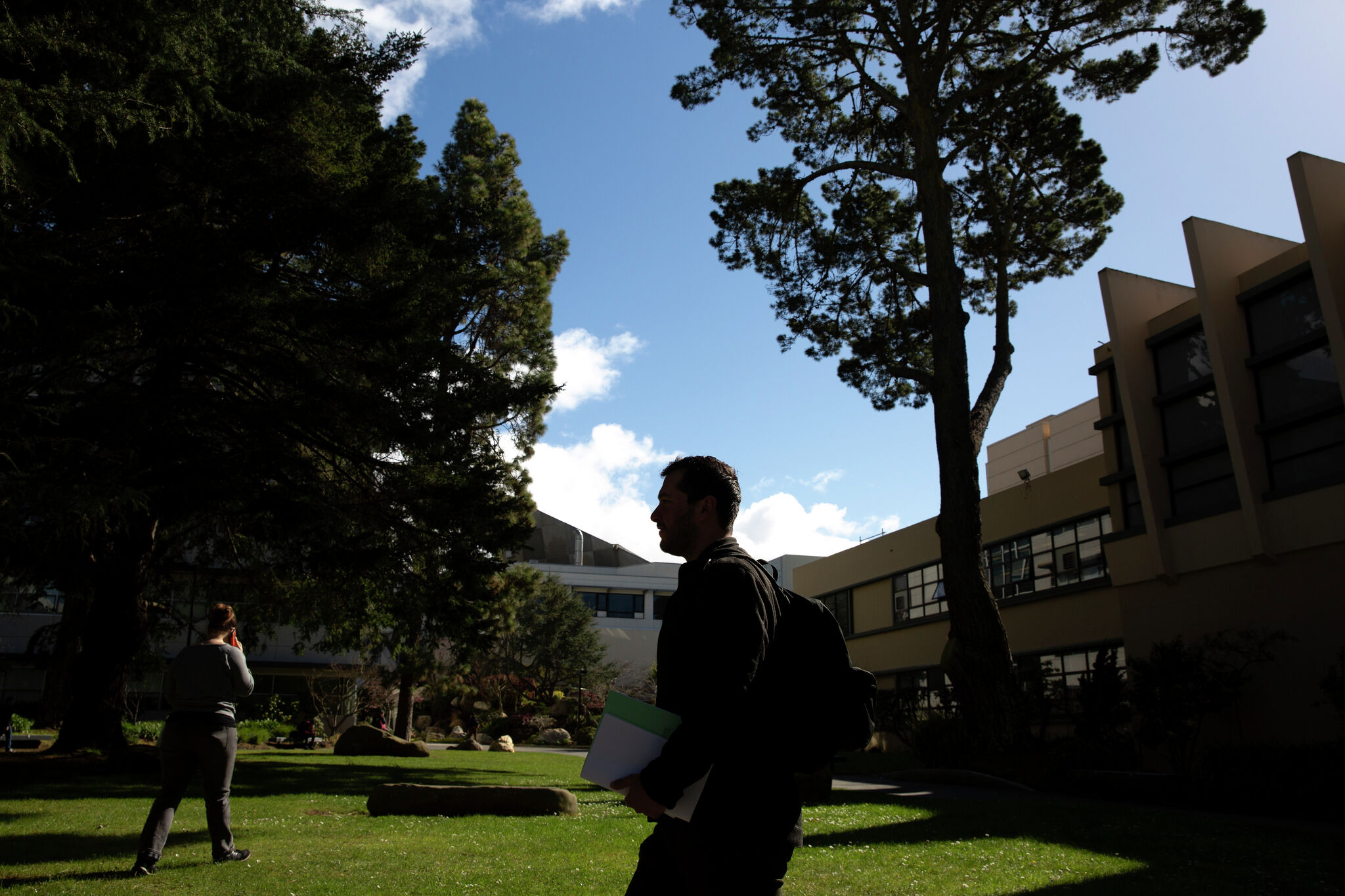
After years of steep declines fueled in part by pandemic-era struggles, San Francisco State University’s enrollment is growing for the first time in more than a decade, officials say.
Read more ICE officer shot by 72-year-old Fresno homeowner now faces 3 felony charges

The university saw a 20% increase in the enrollment of new students this fall compared with last year, including first-year and transfer students, SF State announced earlier this month. The increase also comes as more students are staying at the university rather than transferring elsewhere. This year, SF State saw a 2.5% increase in its first-year undergraduate student retention rate, Katie Lynch, the university’s chief enrollment officer, told SFGATE.
“We’re making sure that our students are still performing well and happy to return,” she said.
Of the California State University system’s 23 campuses, SF State has experienced one of the slowest enrollment recoveries, continuing to lose students in year-over-year declines, even as much of the system has slowly started to rebound from pandemic-era losses. The crisis at SF State has meant fewer classes, canceled programs and millions withheld in state funding, since enrollment helps determine how much money the university receives from the state. This fall’s growth could mark a turning point, but the university still faces a multimillion-dollar deficit and remains short of its enrollment target.
Just three years ago, SF State’s enrollment dropped to 23,700 students, its lowest number since 1979, the Golden Gate Xpress, the university’s student-run newspaper, previously reported. Enrollment in the years that followed then sank even lower: In 2024, the university recorded 22,357 students, and in 2025, it had 20,713 students, according to CSU data. This year’s bump in new students brings the university’s total headcount to 20,824. While that’s only 111 more students than last year and enrollment still has a long way to go before it reaches pre-pandemic levels (almost 30,000 students attended in 2017), university officials still regard the trend as a welcome reversal.
“This growth did not happen overnight. It reflects years of thoughtful planning and a tremendous amount of work across the University,” Lynn Mahoney, the university’s president, said in the news release.
‘Renaissance of the city’s reputation’
SF State officials told SFGATE that the highest boost in incoming students came from transfer students, with a 23% increase, or 518 more students, compared with last year. The number of first-time freshman students also increased by 17%, which amounted to 367 more students, and the number of graduate students increased by 7%, with 103 more students.
Lynch said a big part of the turnaround comes from SF State’s revamp of its recruitment events and the fact that San Francisco is gradually recovering from the pandemic, making the university a more desirable place for students.
“When I go around and I speak to families and supporters of students at those [recruitment] events, there’s a real excitement to come to San Francisco,” she said. “… Some of the marquee events and happenings in the city have kind of come together for us.”
During the pandemic and shortly after, reports of rising crime rates and business closures fueled San Francisco’s “doom loop” reputation, which Lynch believes affected SF State’s enrollment.
“I also think this kind of renaissance of the city’s reputation, the revitalization of the city, everything like the Super Bowl coverage, the Valkyries, it’s all been so positive,” Lynch said. “We are still post-pandemic with some of that pandemic weight on us still. It’s been a really cool thing to see San Francisco’s reputation turn around. I think that those two things are very connected.”
Specifically for recruitment, Lynch said that one of the university’s most successful strategies has involved hosting receptions throughout the state for admitted students. University officials have visited various venues in places such as Los Angeles, the Inland Empire and Sacramento, where students admitted to SF State can learn more about the university before making their official decision.
According to data from SF State spokesperson Robert King, 446 students attended the receptions this year, a 74% increase over last year. The university’s uptick in digital marketing campaigns, along with email messages targeting specific groups of students, also helped with recruiting more students this year, Lynch added. For example, the university sent messages to prospective veteran students, with information about their benefits, employment opportunities and academic programs. According to Lynch, SF State saw a 58% increase in new students who are veterans this year.
Read more Missing Oakland woman, 22, found dead beneath freeway
“We transformed a lot of what we’ve been doing to just be more personalized and speak to students about what they’re most interested in, making sure that we’re really connecting the employment opportunities within San Francisco and the Bay Area region with what a student’s academic program will be,” she said.
The financial crisis remains dire
Even with the boost, SF State is still below its CSU requirement of full-time enrolled students, Lynch said, meaning its funding problems aren’t going away anytime soon.That number is one way the university system determines the campus will receive from the state, according to SF State’s website. Last year, for example, the CSU chancellor’s office withheld $6.5 million from SF State after it missed its enrollment target, the San Francisco Chronicle reported. (The Chronicle and SFGATE are both owned by Hearst but have separate newsrooms.)
“We’re excited to have some positive results this year, and we hope it’s momentum we can continue to build upon,” she said. “But the financial realities persist.”
In an August 2026 , university officials predicted that SF State’s operating deficit would hit $12.6 million for the 2026-2027 academic year. Lynch said the university’s fall 2026 enrollment numbers will help cut into the deficit, but officials will need to continue making major adjustments to reduce the overall budget.
The enrollment collapse has been a factor in the university’s higher costs and skyrocketing deficit for several years, according to an SF State budget committee . In an to faculty from the university’s provost, Amy Sueyoshi, she called the continuous enrollment decrease “dramatic and rapid.” At the time, Sueyoshi predicted that if the university continued to lose students, it could be half its size by 2030 with just 15,136 students.
With fewer students and less revenue, SF State has been forced to make deep cuts to stay afloat. Over the years, it has laid off faculty members, reduced units in its degree programs and discontinued programs altogether to mitigate the enrollment challenges. The Bachelor of Arts in Earth Sciences program is one example, which SF State’s Academic Senate voted in 2024 to discontinue, according to its meeting agenda.
Other cuts over the years have included athletic programs, such as baseball, men’s soccer and women’s indoor track and field. The university was also forced to cut more than a dozen courses at the last minute, just three days before the fall 2024 semester started, because of low enrollment, the San Francisco Examiner previously reported.
The student pipeline is shrinking
While the pandemic worsened the CSU’s enrollment struggles, as fewer students were going to college, it wasn’t the only factor. Declining birth rates throughout the state and country have left universities with fewer prospective students. Class rosters, especially in California, have continued to become smaller because Americans are having fewer children. The state’s K-12 public schools enrolled 75,000 fewer students in the 2025-2026 academic year compared with the year before, SFGATE previously reported.
In the fall 2025 term, the university system finally started to see recovery when it saw its biggest year-over-year increase in enrollment, 2%, in a decade. At the same time, though, SF State, Sonoma State University and Cal State Los Angeles bucked that enrollment jump trend. (Amy Bentley-Smith, a spokesperson for the CSU, told SFGATE that the university system will not have its systemwide enrollment data for this year until November.)
Some CSUs have reacted to the trend by working together to mitigate the painful budget cuts tied to shrinking enrollment. Last year, for example, officials proposed that SF State, Cal State East Bay and Sonoma State merge some administrative services to save money. And to help combat the steady decline in birth rates, Lynch said SF State is trying to expose grade-school students to the university as early as possible. She said SF State has expanded its tours to local fifth and sixth graders with scavenger hunts instead of traditional campus tours, for example.
“We go and visit schools earlier and earlier in their educational journey,” Lynch said.
— Private investigator shakes up a California high school
— Reality TV star’s sister charged in her Bay Area killing
— Search for ‘SNL’ writer’s missing sister leads police to Calif. Airbnb
— Bay Area BBQ restaurant in limbo after city forces smoker removal
Read more Bay Area AI startup linked to teen suicide files for bankruptcy
Sign up for SFGATE’s breaking news email