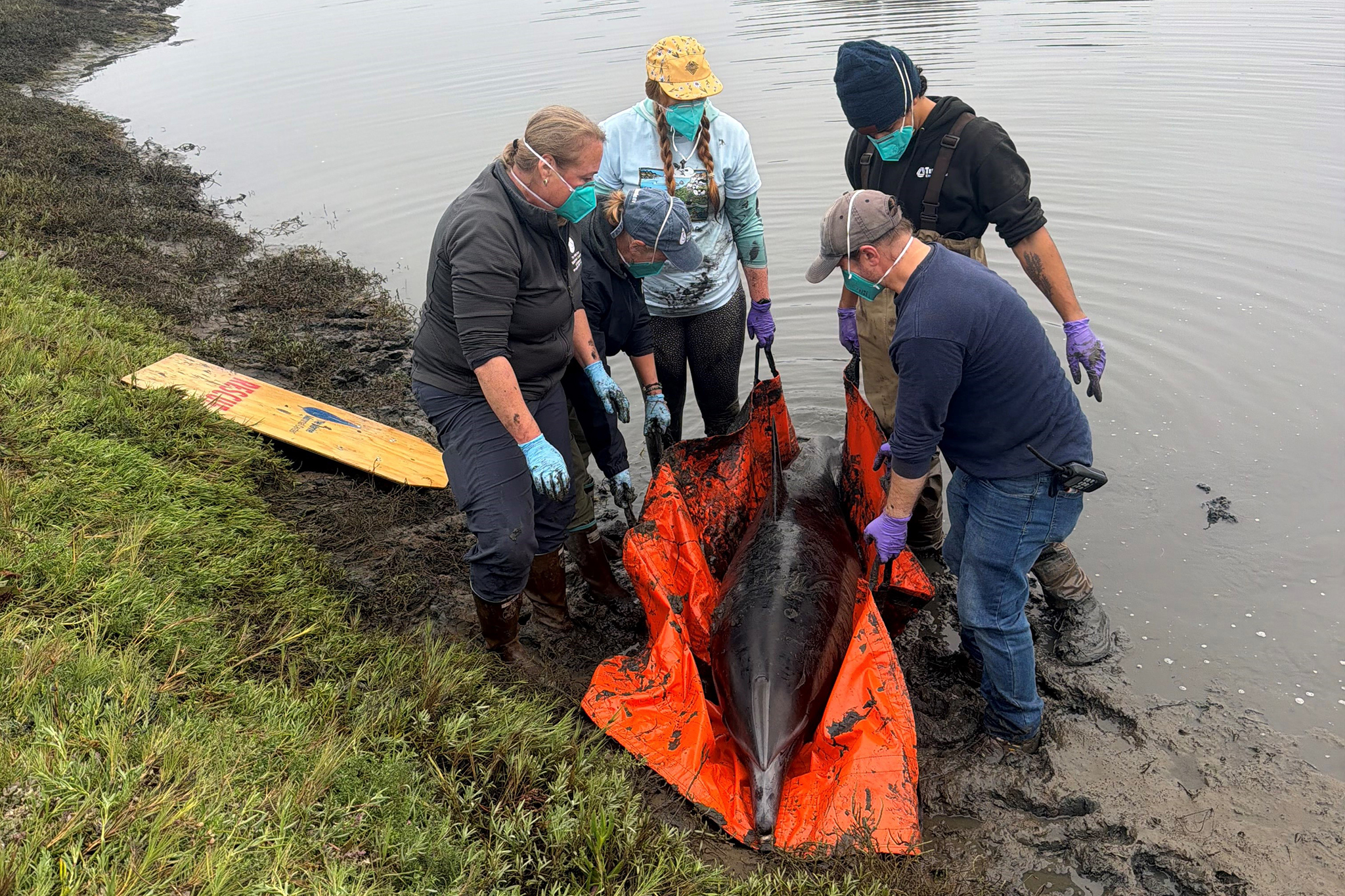
Dolphin dies after pod gets stranded on California mudflats
One dolphin died, and others became stranded while swimming in Morro Bay on Tuesday.
Read more Victims of fatal shooting near Cal campus IDd as Bay Area fashion executives

The common dolphins were swimming at Cuesta Inlet when the tide lowered in the late afternoon, Marine Mammal Center spokesperson Danielle Flores told SFGATE in an email. Three adults and one juvenile became stuck in the mudflats and couldn’t move back into the shallower parts of the bay. A fifth dolphin, an adult, was stranded at Shark Inlet, also in Morro Bay.
Flores said the Marine Mammal Center did not intervene immediately, hoping nature would help the animals return to the sea.
“Because these were wild, native animals that were exhibiting normal behaviors and actively foraging prior to the strandings, the best-case scenario was for the dolphins to make their way out of the inlet and into deeper water on their own,” she said.
The Marine Mammal Center and Morro Bay Harbor Patrol were unable to convince the dolphins to move on by hazing (an ethical strategy of harassing animals until they leave) them on Tuesday because conditions were too unsafe for trained response personnel to navigate, Flores said. Staff successfully released three of the four dolphins outside the bay near a pod of other dolphins Wednesday morning.
However, a fourth dolphin was found deceased. The center plans to do an autopsy on the dolphin that died. The fifth dolphin that was stranded at Shark Inlet has not been spotted since Wednesday, but responders are still monitoring the area for another sighting.
“Seeing an animal in distress is emotionally difficult, and our team feels that too. This has been a heroic effort by many partners, including Harbor Patrol and the community, to give these animals a second chance,” Sarah Pattison, director of hospital operations at the Marine Mammal Center, said in a statement. “We’re grateful that three of these dolphins were able to be safely returned to the ocean, and we continue to monitor the situation closely.”
Read more Bull Fire near California border marks 6th ignition in Reno hills in 2 months
Flores said the center isn’t sure what caused the dolphins to be stuck. Cal Poly experts told the center that domoic acid, a toxic algae bloom that has been making many marine mammals sick, is currently at low levels off the immediate San Luis Obispo County coast.
“Although we do not have data to confirm this theory, marine heatwaves and climate change can shift where dolphins’ prey are found and affect their feeding behavior, which could be one possibility as to why the dolphins were foraging in the shallower waters at Cuesta Inlet and Shark Inlet,” Flores said.
When dolphins are visible close to shore, the Marine Mammal Center warns to keep pets away from the animals and not fly drones overhead to reduce noise, stress and disturbance. Wildlife viewers should always keep a clear path: The National Oceanic and Atmospheric Administration advises people to stay at least 100 yards away from marine wildlife.
“The best way to enjoy dolphins is to give them space and let them decide where they go,” Flores said. “The public can also help researchers and wildlife experts by reporting sightings through the Marine Mammal Center’s whale and dolphin sightings page.”
Hawaii |The standard Hawaii vacation is over
News| Bay Area high school jumps from No. 187 to No. 10 in new ranking
Travel |TSA terminates contractor at SFO after 24 years
Culture| Crowds descend on SF to see pop star’s personal art collection
Read more More bad news for California’s imperiled Joshua trees
Read our stories ad-free on the new SFGATE app.