Becerra says he’s figured out how to reduce electric bills. With a small catch.
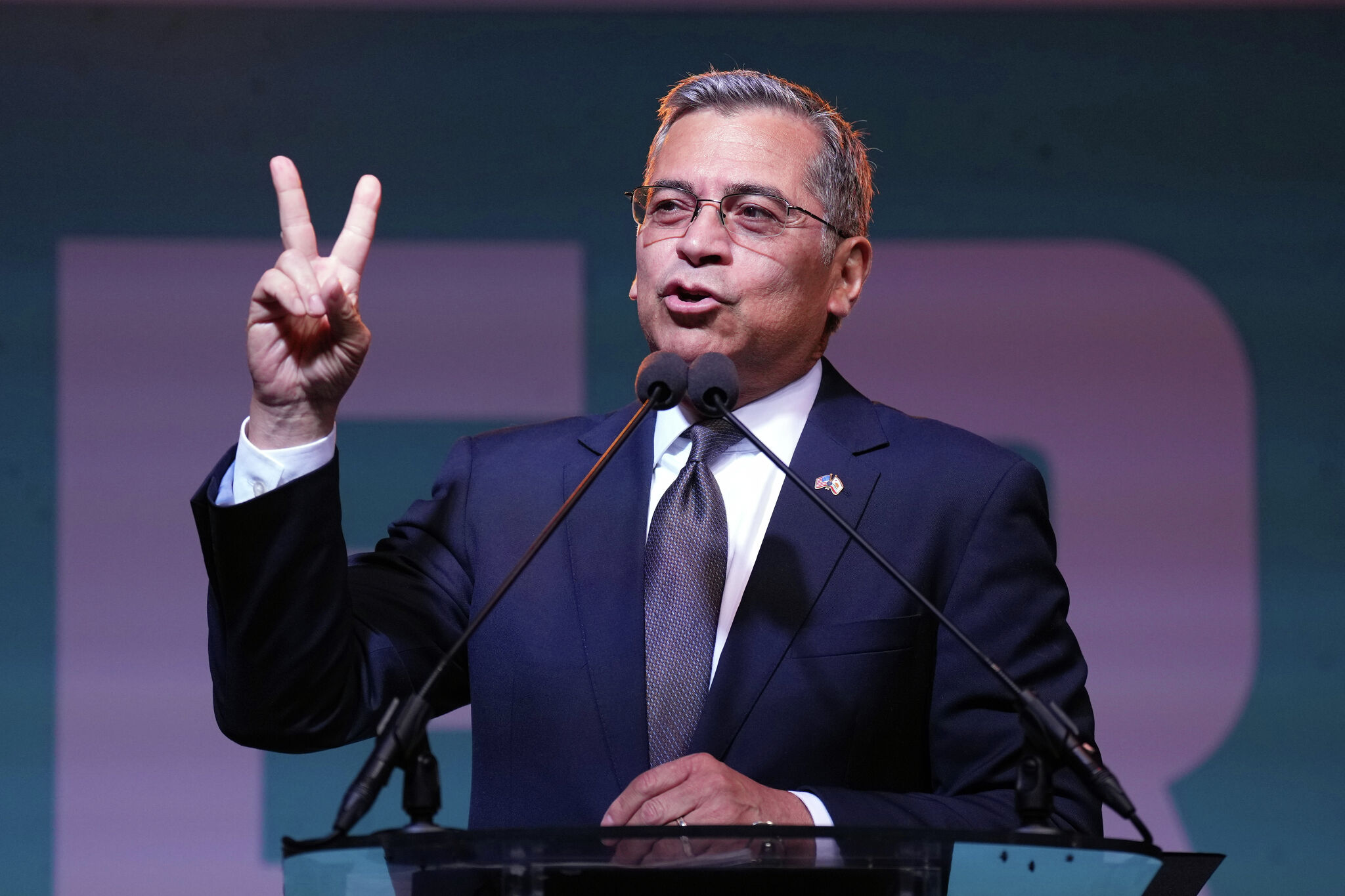
During midday in California, the state’s solar grid produces so much energy that, sometimes, it can’t even use it all. It’s a good problem to have, and one that the leading Democratic candidate governor thinks could be a boon to low-income households. At a recent summit hosted by Politico, Xavier Becerra said he wants to offer free electricity from 1 p.m. to 3 p.m. for those who qualify, possibly saving them upward of $1,000 annually.
Read more Videos of Big Island’s Rainbow Falls show dramatic impact of Hurricane Lala

Becerra’s plan is not entirely novel, and similar programs have been introduced in places like Australia and Texas.
Texas is the only U.S. state that has already established a program that offers free electricity during specific time windows. Several companies have plans that offer free hours during the night, day or weekend, provided that customers sign up for those plans. One company, TXU Energy, has offered a “free nights” program since 2012 to reduce the strain on the energy grid during the daytime, and it previously projected that if customers shifted 10% of their energy usage to nighttime, they could save a few hundred dollars a year.
Becerra’s program would apply to a few million households that already qualify for the state’s CARE/FERA program. Those customers receive reduced rates based on their income. A family of four earning less than $82,500 a year, for instance, would meet the requirements.
Texans have speculated online whether or not the free hours actually lighten the load for them financially. There’s no available data on the success of the program so far, which appears to have debuted for the first time in 2012.
This summer, the Australian government began offering its version of this initiative, which is most similar to Becerra’s “power hour” plan because it is also designed around midday power use. The program does not state any specific guaranteed annual savings, but it gives users three hours of free electricity per day.
Jonathan Underland, a spokesperson for Becerra’s campaign, said it’s difficult to directly compare these programs but suggested that California’s plan would be the largest-scale implementation in the country.
Becerra, who is facing off against Republican Steve Hilton in the Nov. 3 general election, first announced the plan last week. It is one of the first tangible policies he has laid out to the public since announcing his run for governor, and he said it’s something he can accomplish in his first year if elected.
The gubernatorial hopeful said the plan will also help relieve pressure for the utility companies who say the power grid often gets bloated during that midday time frame when excess energy is available.
Becerra offered scant details during his limited stage appearance, but he said the idea was simple: The state produces excess energy from solar, and Californians should optimize usage during the afternoon. If they do, it will be free.
“It just so happens that today, we produce so much solar energy, electricity, that oftentimes in the afternoon, we can’t make use of all of it,” Becerra said. “And so essentially it goes to waste, or we ship it off to some other state. Sometimes we have to pay to ship it out. Why don’t we use it?”
Read more A last memento of iconic Pea Soup Andersen’s is set to be removed
The state’s utility companies have long been in the hot seat, as customers continue to be strained by rising monthly costs. The California Public Utilities Commission’s Public Advocates Office projected recently that household bills are expected to increase by $444 annually starting next year, the San Francisco Chronicle reported. (The Chronicle and SFGATE are both owned by Hearst but have separate newsrooms.) By 2030, that number could double.
Progressive gubernatorial challenger Tom Steyer, who finished the June primary in third place, made a splash when he vowed to break apart the Pacific Gas and Electric monopoly, and he made it a central point of his campaign. The idea became a big talking point for Democrats and was one of the campaign promises that led Rep. Ro Khanna to endorse Steyer. Even Hilton, an ideological foe, agrees the utility companies should be broken up. Notably, Gov. Gavin Newsom said PG&E went through a recent restructuring after it was found financially responsible for prior wildfires and that he is cautious of a breakup.
Hilton said he agrees utilities charge too much but fired back on Becerra’s plan to resolve the affordability issue. He immediately went on X and called Becerra’s idea “disqualifyingly stupid.”
He reasoned that Becerra’s idea, while appearing like a win for consumers, is actually distracting from the bigger problem during the remaining 22 hours of the day: that energy bills continue to soar. Hilton said his promise to voters is to cut electric bills in half by relying more on natural gas-fired power plants. Steyer, who has taken a back seat since the primaries but remains vocal online, said he is glad Hilton has ideas on how to make bills cheaper but said he fundamentally disagrees with his plan.
Right now, Becerra holds a strong lead ahead of Hilton, according to a recent poll that UC Berkeley’s Institute of Governmental Studies released on Thursday. Becerra has support from 55% of likely voters compared with Hilton, who has 37%. Another 7% is undecided. The results are also highly partisan, with Democrats leaning heavily in favor of Becerra and Republicans for Hilton.

BECOME A FRIEND. GET OUR AD-FREE APP.
Mark Toney, the executive director of the Utility Reform Network, a nonprofit legal advocacy network, told SFGATE in an email that there are still questions about the specifics of Becerra’s plan but that it is “encouraging” to see the candidate’s commitment to bringing down the price of electricity.
“While we are unsure how much ratepayers might benefit from two free hours of electricity, we are eager to learn more about the proposal,” Toney said.
Editor’s note: This story was updated at 9:30 a.m., Aug. 17, to correct Jonathan Underland’s name and title.
— A resident-run PAC is causing an identity crisis for a Bay Area town
— He was the CEO of Truth Social. Now he runs a Pismo Beach wine bar.
— Becerra’s new ‘power hour’ idea would give Californians free electricity
— Mining claims appeared less than a day after Trump shrank 2 Utah national monuments
Read more Burning Man launches unprecedented promotion two weeks before gates open