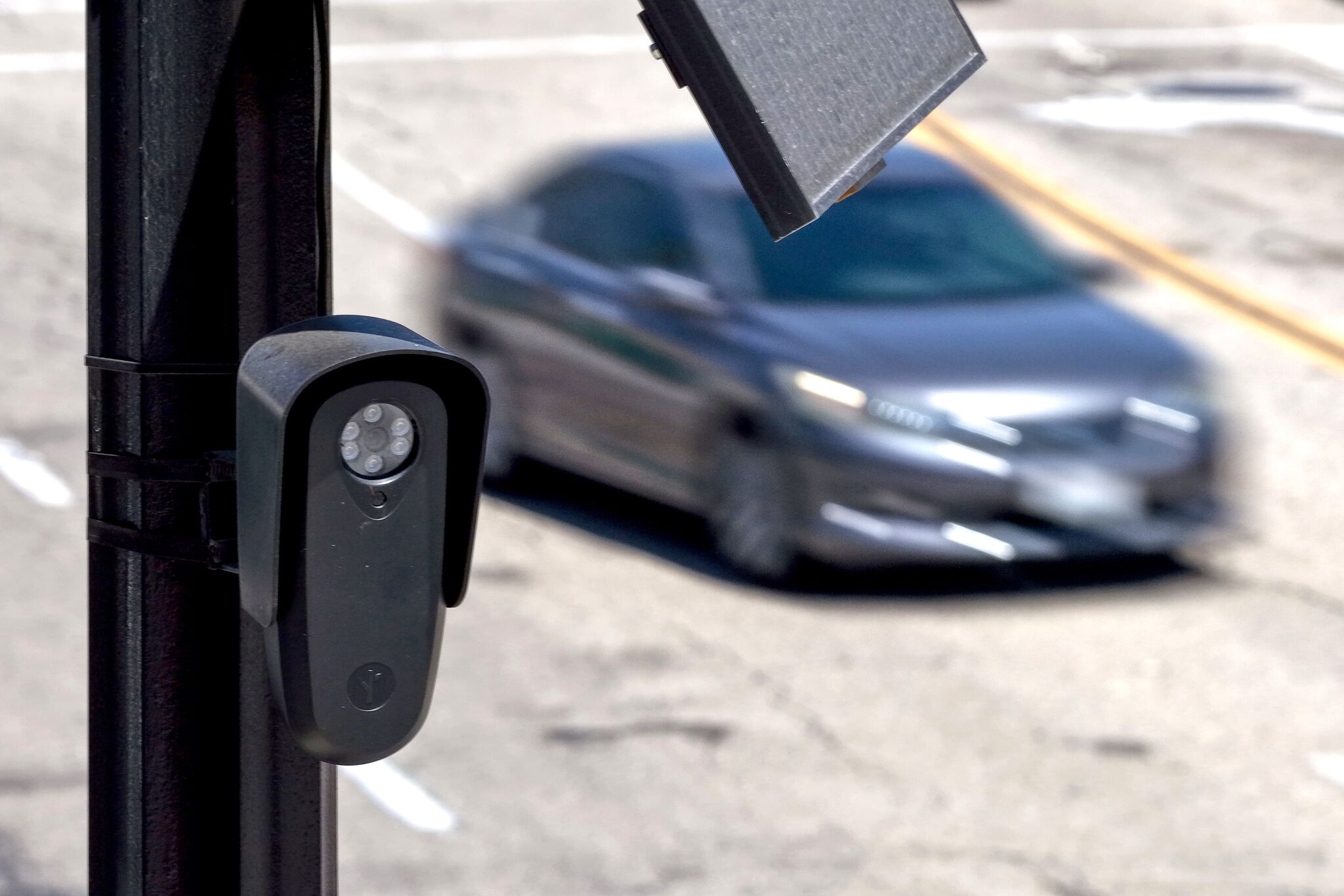
Spying cops and cancelled contracts force Flock to make sweeping changes
Following mounting controversy over its license plate reader cameras, police surveillance startup Flock Safety announced sweeping changes to its software on Thursday. Though the company largely promotes its technology as a crime-fighting tool for police departments and neighborhood associations, including many in the Bay Area, CEO Garrett Langley told SFGATE he believes the changes can also help sniff out crime within the police departments it contracts with.
Read more Mutated COVID-19 variant could be behind surge in SF virus levels

The reforms, announced Thursday, include reducing data retention from 30 days to seven days, barring special circumstances, and preventing users from freely searching the license plate database by requiring that searches by police be linked to a specific criminal case. The company also is expanding a previously optional internal auditing software that detects suspicious search activity and will now automatically lock users out of their accounts pending review from an administrator.
“We are the first company to say, ‘It’s unacceptable behavior,’” Langley said. “We’re going to shine a light on it, and we’re going to require all of our customers to audit their activity, and we’re going to build tools to highlight potential abuse and try to get rid of it.”
Langley said that the success of the changes will be measured by how many officers abusing the technology are arrested and removed. For a company that has built its reputation as a law enforcement tool, a new focus on misbehaving may feel like a surprising turn. But the shift comes on the heels of reported police abuses of Flock, such as officers using the tech to stalk people. In the midst of this and other controversies, cities like Santa Cruz and Los Angeles are abandoning their Flock contracts, sometimes for competitors.
Watchdogs and critics also view these reforms with skepticism. Nick Hidalgo, a senior staff attorney at the ACLU of Northern California, argues that the changes seem small compared with the scale of the problem. “This does seem to be a company desperate to save its business model after coming under increased pressure from community outrage and legal advocates,” he said. “The surveillance business model itself is the problem. There’s no way to reform all of the privacy concerns out of a system of cameras that monitor us wherever we go.”
The ‘political will’ to charge police officers
Flock gave SFGATE a demo of what police see when they use the Flock system, though the demo featured the current version without Thursday’s announced changes.
The tech acts almost like an advanced Google search, where police can select key vehicle identifiers to query its database, from car color to whether it has a bike rack. A machine learning algorithm then returns individual images of cars with a zoomed-in picture of the license plate and the plate number typed out. More advanced tools give officers the ability to perform broader searches. Those include tracking a target vehicle by searching for the car driving behind it, reverse image search and searching by unique characteristics of the vehicle.
Changes to Flock’s tech may not be enough, said former San Francisco District Attorney Chesa Boudin. (San Francisco voters recalled Boudin in 2022, two years before the San Francisco Police Department started installing Flock cameras around the city and voters passed a proposition allowing police to use more surveillance technology.) The reforms may catch an officer misusing the tech, but the decision to discipline them falls on local agencies and ultimately falls on whether the agencies are really motivated to take corrective action.
“You can have all the technology in the world to oversee and monitor police behavior, but that technology and that evidence is not enough if there’s no political will to actually have consequences for people who break the rules,” Boudin said. “That’s the bigger challenge with police accountability.”
Pursuing criminal charges for misusing internal police tech is already difficult with California lacking any specific statute outlawing the act, according to Boudin. He added that while there “may be a creative way” to charge someone under an unauthorized computer access law, charges would likely come from using the tech to commit another crime.
Boudin noted that this kind of police misconduct would be easy for departments to conceal by handling it internally. Evidence of any potential criminal use of Flock tech would have to either be voluntarily shared with a prosecutor or be sought after by an outside investigation.
“It’s very difficult for anybody outside the department to know about it, and very easy for the department to sweep it under the rug,” Boudin said. “Even with the best intentions from Flock, it’s just not enough to ensure accountability.
‘Lack of transparency, little to no oversight, and hardly any regulation’
Langley views Flock’s reforms as necessary, likening the changes to when cars became ubiquitous and the government eventually stepped in, mandating that companies install seatbelts and airbags. “I think it is our responsibility until the law catches up,” he said. “I want to lead by example.”
Read more California is on fire and these people are profiting off it
Nevertheless, Saira Hussain, a San Francisco senior staff attorney at the Electronic Frontier Foundation, argues that it seems easy for cops to get around the changes Flock is making. Like Hidalgo, she also argued that a judicial warrant should be required to run a Flock search.
“For example, even though a search has to be tied to a specific criminal case, if we see law enforcement officers using Flock in completely prohibited ways, like going after current or former [romantic] partners, to stalk them, what’s to stop them from lying and giving case numbers to do exactly that?” she said. “That’s a significant concern, and I don’t think you, as Flock, are going to be able to tech your way out of it.”
Lawyers at the ACLU and Electronic Frontier Foundation sued San Jose last year for covering the city with hundreds of Flock cameras. Automated license plate readers “can reveal travel patterns and provide an intimate window into a person’s life as they travel from home to work, drop off their children at school, or park at a house of worship, a doctor’s office, or a protest. It could also reveal whether a person crossed state lines to seek health care in California,” the lawsuit states.
The company’s technology has become embroiled in aggressive government immigration enforcement efforts, as well. Immigration and Customs Enforcement agents have reportedly accessed Flock data in multiple California cities like Capitola and Chico over the past two years, though the company’s website says, “ICE does not have direct access to Flock cameras, systems, or data.”
The Electronic Frontier Foundation also found that in 2025, police agencies logged hundreds of searches related to Hands Off, No Kings and other protests. Flock denies that its tech can be used to track individual people, not just cars, contradicting previous reports that officers can use Flock’s FreeForm search feature to scour for personal traits like “heavy-set male with a black and white hat,” not merely those of vehicles.
Flock’s changes to its software don’t change the fact that the technology is known to be unreliable, Hidalgo said. A recent analysis found that in the town of Roseville, Flock misread license plates in 71% of the alerts it sent to police. Hidalgo notes the irony that Flock, a company expanding police surveillance, has until recently benefited from its own obscurity. “The only time they wanted to be heard of was when they could claim their technology was used to solve some horrific crime. But those use cases are incredibly rare.”
Some cities have been flocking from Flock to competitors like Motorola and Axon, but all automated license plate reader companies are plagued with similar challenges, Hidalgo said.

BECOME A FRIEND. GET OUR AD-FREE APP.
“All of these companies have the same problems, and it’s primarily lack of transparency, little to no oversight, and hardly any regulation into how they collect, store and use our data,” he said.
For Langley, the new changes are part of a long and evolving process as Flock’s role in American policing expands.
“I’m not asking anyone to do anything other than to listen and to look at our actions and to hold us accountable,” Langley said. “I want what I think many people want, which is a safer world.”
— Body found near site of Calif. nurse’s disappearance likely not her
— Boys ages 12, 13 and 16 charged in California killing
— Laid off after 24 years, Bay Area radio host writes scathing farewell
— Elite private SF club hit with explosive harassment lawsuit
Read more Body found near site of Calif. nurse’s disappearance likely not her, police say
Sign up for SFGATE’s breaking news email