New California AI law goes into effect
Starting this week, large-scale artificial intelligence companies being used in California have to start watermarking material that is AI-produced so users know what is fake and what is not.
Read more Man who went missing from SoCal campsite found dead

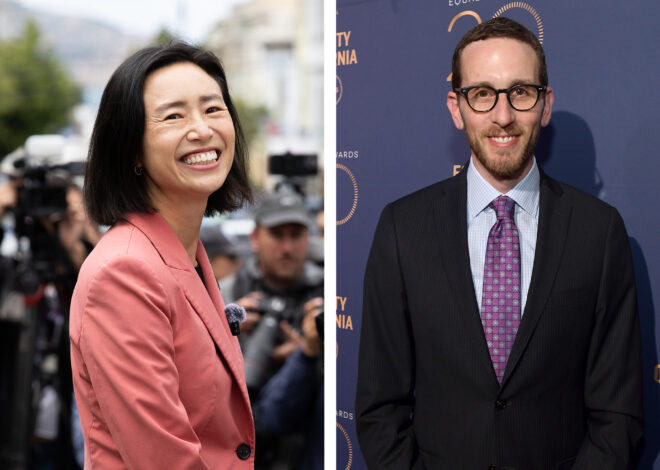
A Democrat from Menlo Park crafted the California AI Transparency Act, which was signed into law in 2024, and the first iteration of it finally went into effect last Sunday. Now, AI companies that generate photos, audio or videos will have to include metadata that is difficult to remove so that users can more easily tell if that content was created with artificial intelligence. Users will be able to plug that content into online verifiers to determine if they are real or fake.
This has been lauded as the first AI transparency law of its kind in the nation.
“This is the beginning of a foundational change of how content is represented on the internet,” state Sen. Josh Becker said. “Most people won’t notice dramatic changes overnight, but underneath the surface, AI-generated images, video and audio will have embedded content. Think of it as like a nutrition label.”
Becker said they spent the last few years making sure that the bill was “technically feasible” and that companies can actually implement it and are expected to.
OpenAI has already implemented its watermarking audio and video technology called SynthID, which will help people understand if content they are seeing was created by the company’s AI tools. Becker said Google is complying but did not specify how, and Adobe is also complying. SFGATE reached out to Google, Anthropic and Meta to ask how they have integrated new watermark features but did not hear back before the time of publication.
The law, authored by Becker, comes at a time where concerns about deepfakes are omnipresent. The author said previously in a bill analysis that the rapid development of artificial intelligence has made it “cheaper” and “easier” to make fake content and that it has also made it even more difficult to distinguish what is real, therefore earning the name “deepfakes.”
Becker said that one of the most concerning elements of deepfakes is the increasing fabrication of pornography and political messaging. He said the need for transparency is “paramount.”
Read more Officials ID 24-year-old man who drowned in Laguna Beach
“It is crucial for industry leaders to take responsibility for clearly labeling AI-generated content and developing tools that can accurately identify such content, especially when there is no visible disclosure,” Becker said.
The new law requires companies to ensure that those disclosures would be permanent or “extraordinarily difficult to remove.”

BECOME A FRIEND. GET OUR AD-FREE APP.
There was some pushback when it was first drafted, notably around the idea that watermarks are vulnerable to manipulation and don’t prevent any high-risk scenarios. One example, pointed out by Hodan Omaar, a former senior policy manager at the Center for Data Innovation, involves someone receiving spam calls from someone impersonating a family member. In this seemingly urgent situation, an individual may respond emotionally rather than logically, even if they are aware they can take steps to verify whether the caller is actually AI.
The law will be implemented fully after two more rollouts over the next two years.
The second rollout is set to take place at the start of 2027, which will indicate to users whether they are looking at images that are raw footage taken by an actual person or if they are seeing images generated by a computer. The third and final rollout is slated for January 2028 and will allow users to create their own metadata in the AI photos and videos they create.
— ICE agents arrest San Francisco woman at SFO
— Bay Area neighbors hated airport noise. Then came the billionaires.
— Proposed Calif. law prioritizes human customer service agents over AI
— Trump admin cancellation of UC funding sends researchers into fury
Read more Visa guts executives who were paid nearly $500K in latest round of AI layoffs