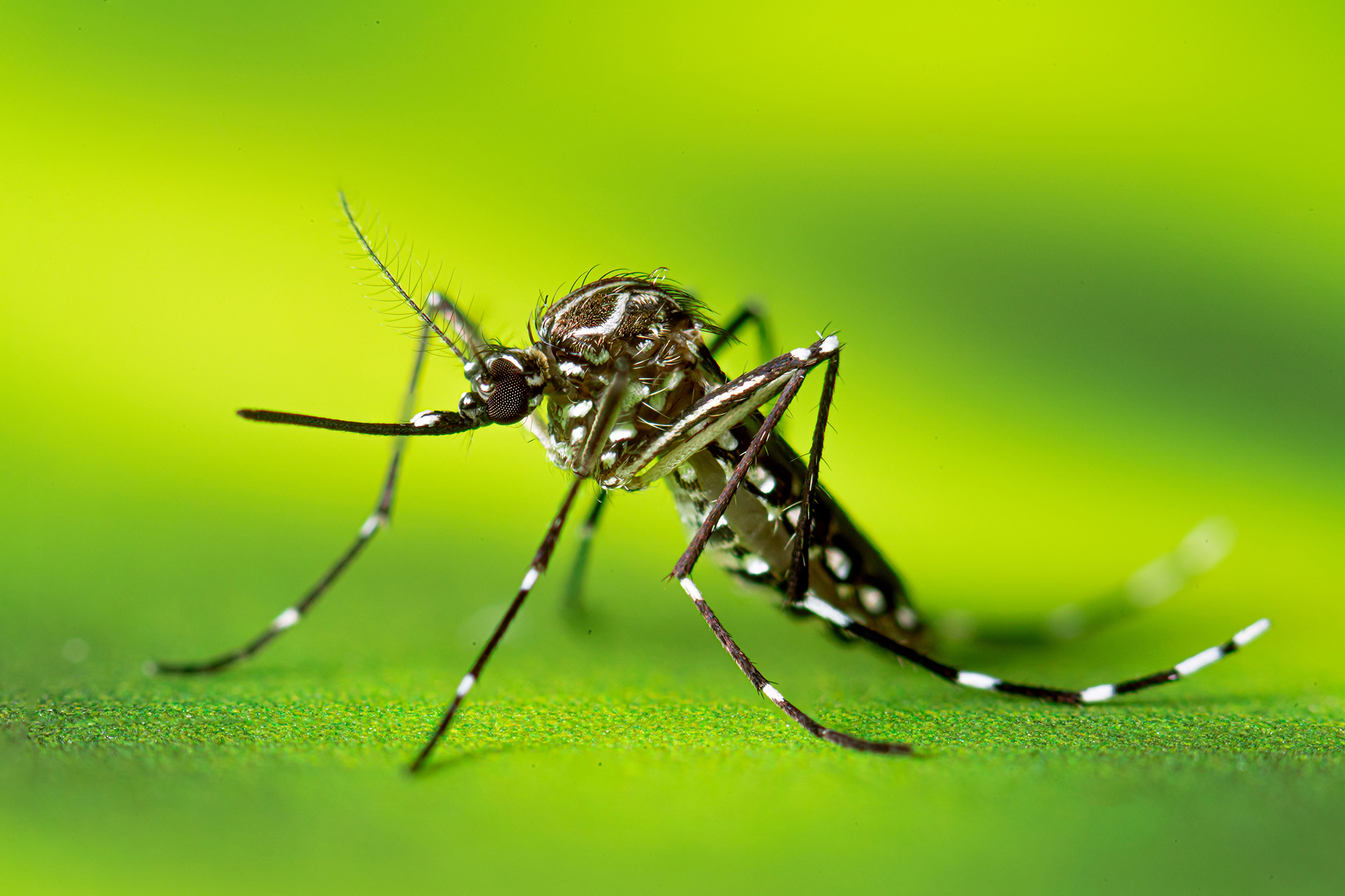
Invasive ‘yellow fever’ mosquito newly found in Castro Valley
An invasive insect dubbed the yellow fever mosquito has been discovered for the first time in Castro Valley. The mosquito, scientific name Aedes aegypti, has been increasingly found across new areas of California since it first arrived in 2013. Its spread is worrying experts as it’s capable of transmitting dangerous diseases including dengue, Zika and yellow fever.
Read more More than 30 road closures scheduled for SF Marathon

Multiple Aedes aegypti mosquitoes were discovered in traps in Castro Valley on July 20, according to the Alameda County Mosquito Abatement District. Officials are now using an insecticide to kill mosquito larvae in the area where the insects were found.
Erika Castillo, the regulatory and public affairs director for the abatement district, said recent humid weather thanks to both monsoonal moisture and tropical storm remnants led to ideal conditions for the Aedes aegypti, which is native to Africa.
These insects are “typically found in more tropical areas, so the humid weather is something they’re definitely adapted to,” Castillo told SFGATE.
This mosquito species are more commonly found in Southern and Central California. In the past few years, they have led to rare local transmission of dengue fever, although not in the Bay Area.
With the development of an El Niño in the Pacific Ocean, local officials are watching closely to see whether these insects continue to spread widely in the Bay Area. El Niño years occur when ocean waters warm along the equator, which could mean seeing more of the hot, humid, almost tropical weather mosquitoes thrive in.
Taylor Kelly, scientific and technical services manager for the Santa Clara County Mosquito and Vector Control District, explained that the humidity is key for the Aedes aegypti, which are at risk of desiccation in dryer temperatures.
“They love hot temperatures,” she said, adding that they can reproduce faster in these conditions. “It speeds up their development, and this humidity that we’re experiencing can really support their survivorship longevity.”
Read more Protest at C&H Sugar factory turns violent after 2 people reportedly hit by drivers
Kelly said Santa Clara has seen some Aedes aegyti activity this year, but she expects to see peak numbers later in the summer.
“We’re really just starting to see their numbers creep up,” she told SFGATE. Worse still, hot weather may cause mosquitoes to bite more often, she said.


BECOME A FRIEND. GET OUR AD-FREE APP.
Kelly said currently Santa Clara is seeing a major rise in native mosquito species, too. Those insects won’t spread dengue, but they can spread West Nile virus. The California Department of Public Health is reporting more West Nile virus activity in both mosquito and bird samples than in recent years, which consequently increases the risk of humans getting sick.
Dr. Peter Chin-Hong, an infectious disease expert and professor of medicine at UC San Francisco, told SFGATE as hot weather dries up water sources, birds and mosquitoes end up in the same areas. The insects then feed off the infected birds, which are the main reservoir of the virus, and are able to pass the virus on to people.
Hot weather also “shortens the incubation period in mosquitoes,” he said. “So when a mosquito gets infected from the bird with West Nile … it just gives it a shorter period before it bites a human, and the human can get West Nile.”
— California traveling nurse, 27, murdered while in Michigan
— Teen among dead in devastating Calif. car crash finally identified
— Long-awaited Highway 1 reopening has spelled disaster in Big Sur
— Woman killed herself to fulfill ChatGPT prophesy, lawsuit alleges
Read more First Pacific hurricane of 2026 sends giant swells to California
Sign up for SFGATE’s breaking news email