2 Bay Area cities ditch Flock, but surveillance is far from over
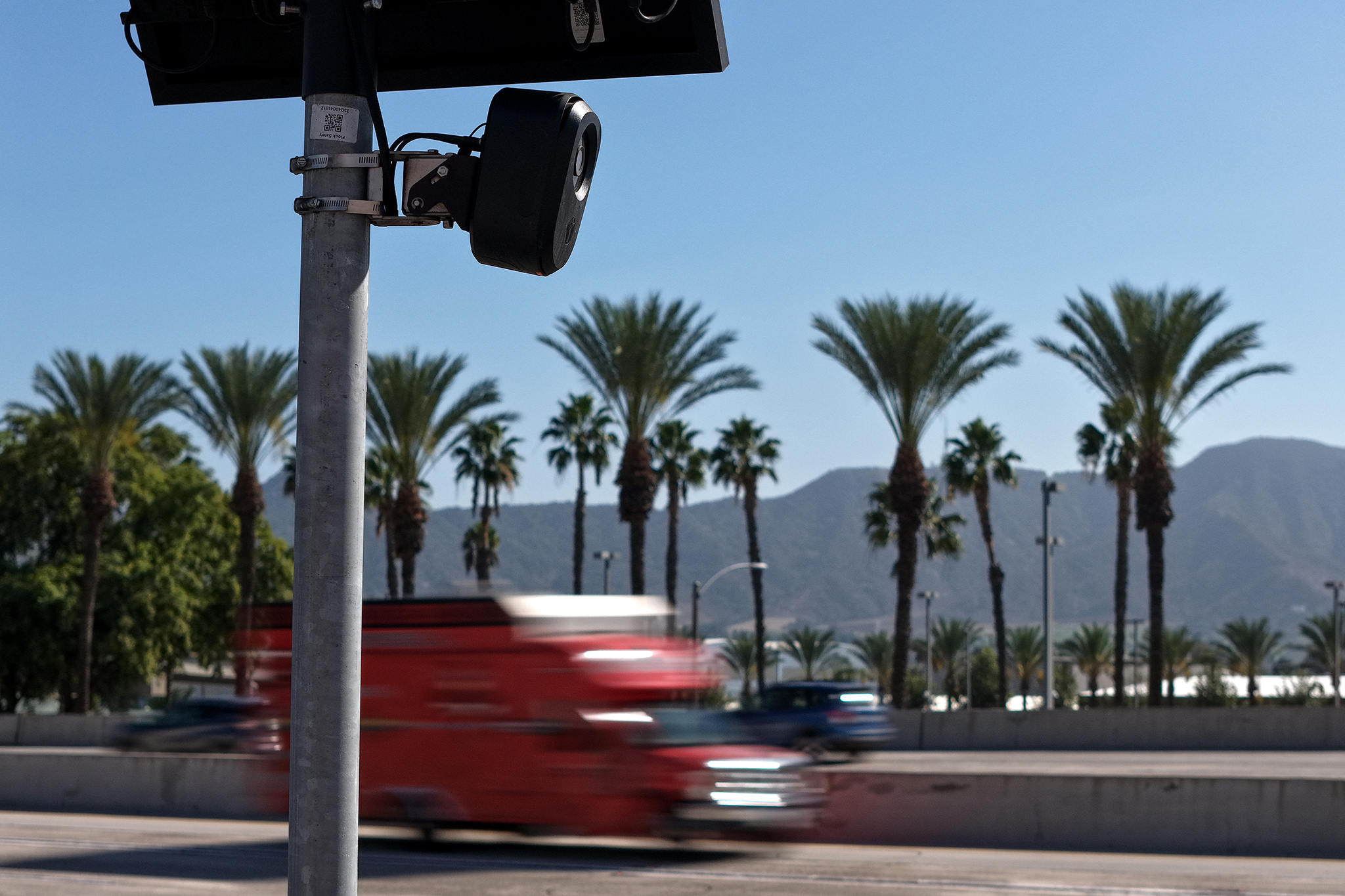
As controversies mount involving Flock Safety’s automated license plate readers, many cities around California and beyond have begun canceling their contracts with the company. But some places among them, like Antioch and Hayward, have opted to ink contracts with another company that does essentially the same thing, ensuring that numerous cameras remain pointed at city streets, collecting data daily.
Read more Drew Gilbert’s two-run homer in the 10th lifts Giants to a 6-5 win over the Cardinals

The moves cap a heated period where residents, activists, and civil liberties advocates have spoken out about privacy concerns and alleged police abuses of Flock’s databases. Some cities like Santa Cruz and Mountain View have responded to public pressure by dumping automated license plate readers altogether, but others have moved with little fanfare from Flock to one of its competitors, like Motorola Solutions, Genetec and Rekor. Among those, Axon has emerged as a go-to rival of Flock, and critics contend that its cameras come with many of the same controversies that have surrounded Flock.
“Both Axon and Flock are ALPR manufacturers whose products are used for the same purpose, to indiscriminately photograph every vehicle that passes regardless of whether that driver is under any suspicion, and then document that precise location, time, license plate, color, make, model, and other distinguishing characteristics, like bumper stickers,” said Lisa Femia, a staff attorney at the Electronic Frontier Foundation. “It is sort of like swapping Coke for Pepsi.”
Axon, based in Scottsdale, Arizona, and formerly known as Taser International, is no stranger to controversy. It’s the company that has long produced Tasers, an electroshock weapon responsible for more than 1,000 deaths, according to a Reuters analysis, and that it now advertises as a “less-lethal technology.” The company briefly considered developing a Taser-equipped drone in 2022, but it abandoned the idea after members of its ethics board resigned. Axon also sells myriad other police tools, including police software, dash cameras and body-worn cameras, which researchers have found do not reduce cases of police violence.
Axon did not respond to SFGATE’s requests for comment.
Debating the tech’s usefulness
Police departments have been quick to defend ALPRs, arguing that the technology helps officers solve crimes. At an Antioch City Council meeting on Aug. 25, police Lt. Michael Mellone said that after a vehicle is involved in a crime such as a shooting or robbery, a license plate reader system can help locate a potential suspect.
“Vehicles are central to a large share of the crimes that the police department investigates,” he said. “… A witness may have only a partial license plate, a vehicle description or a direction of travel for the vehicle, but a license plate reader system can turn that limited information into a focused lead.”
With the help of Antioch’s current Flock ALPR system, he said that his police department located at least 42 stolen vehicles over the past year, of which 23 have led to arrests.
During the meeting, council member Tamisha Torres-Walker acknowledged community concerns about privacy, safety, mass surveillance and threats to civil liberties, saying she wanted “to get Flock out of Antioch.” Along with the rest of the City Council present, though, she voted for the city to adopt a $660,000, four-year contract with Axon. Torres-Walker did not respond to SFGATE’s requests for comment.
Hayward, for its part, adopted a $2.9 million, five-year contract with Axon. Hayward’s communications officer also did not respond to SFGATE’s requests for comment.
Flock and Axon also said that their ALPRs reduce crime, such as motor vehicle thefts, because of the tech’s ability to track license plates and, for example, help identify stolen cars. Though Flock’s vehicle data and camera deployment are not generally accessible to researchers, making independent verification of its claims difficult, last month, it touted a not-yet-published study by a pair of researchers who are former police officers. They found that, since 2017, cities with Flock have seen a drop in car thefts of 11% on average.
Ian Adams, a co-author of the study and a policing researcher at the University of South Carolina, said he believes both those who say “Flock has no benefits” and those who say “Flock solves all crimes” will be upset with his study. Though the technology can help solve car thefts because it’s designed to identify and track down vehicles, the study found less evidence of an impact on other crimes.
“If Flock is having an effect on crime, the place we should see it the strongest is in motor vehicle theft,” he said.
Nonetheless, other researchers view the study with some skepticism, including Ángel Mendiola Ross, a sociologist at Stanford University who has studied how California police departments adopt certain technologies. A possible correlation between cities deploying Flock and a drop in car thefts doesn’t imply causation, they argued.
Flock declined to provide a comment to SFGATE and instead pointed to its webpage, which compares Flock and Axon license plate readers and promotes its camera technology and coverage across 49 states. The page also says that Flock “blocks searches tied to prohibited uses.”
The study Flock highlighted also ignores the costs and tradeoffs of ALPRs, Ross said.
Read more Ridgecrest becomes 1 of 3 California cities awarded special highway signs
“If they continue to find this roughly 11% reduction in motor vehicle theft, does that reduction justify creating and maintaining a persistent surveillance infrastructure?” they said. “This is also about, what else could be accomplished with the same resources?”
Alex Vitale, a sociologist and policing researcher at Brooklyn College, also questions the study. “What research gets funded, what research does police cooperate with, is the research that reinforces a police-centered approach to these things,” he said.
Calls for ditching all ALPRs
Critics of automated license plate reader systems aren’t impressed by the switch from Flock to Axon. “This strikes me as attempts by police departments to get ahead of the Flock backlash while still quietly moving forward with the technology,” Ross said. For example, 404 Media reported that police have asked Axon to make their cameras look different from Flock’s so that people don’t vandalize them.
Bay Area activists, who protested Flock and its backers in San Francisco in August, are skeptical as well.
“While Flock has emerged as the most prominent mass surveillance bogeyman, Axon ALPRs are very similar to Flock’s and present many of the same risks — namely unapproved access by outside agencies, incorrect license plate readings, and officer abuse,” said Luc Bouchard, the Flock campaign lead for Sunrise Bay Area, a climate activism and community organizing group.
Both Axon and Flock work with police agencies around the country, and though Immigration and Customs Enforcement isn’t a client of either company, federal agents have repeatedly gained access to Flock data, including in California, despite a state law prohibiting it. Through Flock’s National Lookup tool, police agencies can access databases of all other participating agencies, including some that share data with ICE.
“The more places you send this sensitive data, the more chances there are for it to get out to agencies it’s not supposed to or you wouldn’t want it to, or more chances for it to generally leak in ways that you couldn’t anticipate,” Femia said.
Flock currently has more than 120,000 cameras across most U.S. states and territories, and it said it runs more than 20 billion license plate scans per month. Axon has fewer cameras for building the license plate databases that police agencies would want, but it collects other kinds of data that Flock doesn’t, such as police body camera data, which are also accessible by clients on its Fusus platform, she said.
Critics argue that Axon, Flock and other ALPR companies have the same privacy problems and risks of abuse. Nick Hidalgo, a staff attorney for the ACLU of Northern California’s Democracy, Speech and Technology Project, said that the more data these surveillance technology companies collect from people, the more valuable they are to their law enforcement clients.

BECOME A FRIEND. GET OUR AD-FREE APP.
“Those problems are baked into the very business model of surveillance technology,” he said. “All these companies are trying to increase their shareholder value, and the only way they can do that is by maximizing the amount of personal information they harvest from us and increasing their ability to share that information with their other clients.”
Like other critics of ALPRs, Hidalgo doesn’t believe swapping Flock for Axon solves the problems that residents and civil liberty advocates have been speaking up about.
“I do not think that the cities that are ditching Flock and replacing them with Axon and others are getting the message,” he said.
— Human remains exposed by drought identified as Bay Area woman
— Infamous Marin teen criminal has parole grant taken away
— California woman killed by stalker after years of terror
— Woman accused of killing husband at upscale Calif. community
Read more Highway 101 Eel River Bridge set for yearslong earthquake retrofit
Sign up for SFGATE’s breaking news email