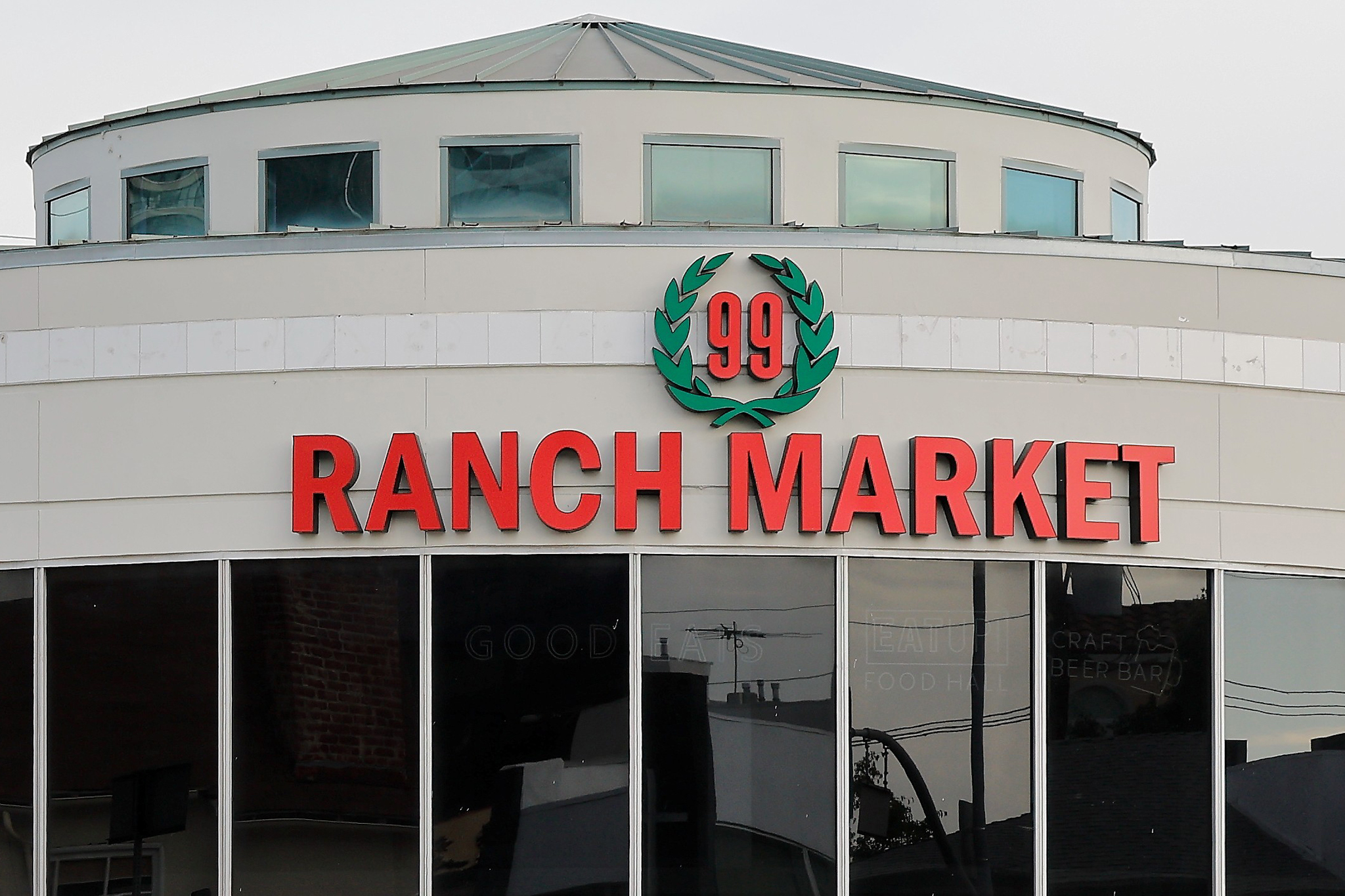
Trump admin brings discrimination lawsuit against 99 Ranch
Asian supermarket chain 99 Ranch has been hit with a federal lawsuit alleging that the company racially discriminated against non-Chinese employees when it wrongfully terminated staff based on their race.
Read more 2 Bay Area World Cup watch parties end in violence

The Equal Employment Opportunity Commission filed a complaint on Tuesday alleging that 99 Ranch’s parent company, Tawa Supermarket Inc., started discriminating against non-Chinese employees as early as 2016, when the employees were not promoted or were paid less than their Chinese colleagues. The lawsuit alleges that several non-Chinese employees were terminated without reason while their Chinese colleagues remained employed.
Catherine Eschbach, acting general counsel for the EEOC, said in a statement that the chain’s Asian ownership did not give it an excuse to discriminate against non-Chinese workers.
“The EEOC will not hesitate to bring litigation to make clear to employers that cultural preference regarding the composition of their workforce does not insulate them from liability,” Eschbach said. “Preferences based on protected characteristics are simply a form of illegal discrimination.”
In an emailed statement to SFGATE, a spokesperson for Tawa Supermarket Inc. said the claims brought by the EEOC were without “merit” and shared that it plans to defend the case.
“Tawa is committed to providing equal employment opportunities and does not tolerate discrimination or retaliation of any kind. We take these matters seriously and remain committed to treating all employees fairly and in accordance with the law,” the spokesperson wrote.
Anthony Sperber, a Berkeley attorney focusing on labor law, said it was unusual to see the EEOC filing a lawsuit against an employer rather than directing affected workers to get an attorney themselves. He said it’s also unusual for the commission to file a lawsuit over actions that took place a decade ago, although he said the EEOC appears to have been investigating the matter since at least 2022.
The EEOC was created by the Civil Rights Act of 1964, a landmark law aimed at reversing the anti-Black discrimination that was rampant during the Jim Crow era. But President Donald Trump has pushed the EEOC to prioritize investigating allegations of discrimination against white employees and Christians, suing over diversity programs that allegedly harmed white employees. Last December, EEOC Chair Andrea Lucas released a video urging “white male” workers to report any instances of being discriminated against at work “based on your race or sex.”
Valerie Wilson, an economist at the think tank Economic Policy Institute, told the Washington Post that Trump’s directives are turning “the mission of the EEOC on its head, in a way that weaponizes it against the people that it was intended to protect.”
Sperber said the Ranch 99 lawsuit is likely part of the agency’s new prerogative under Trump.
Read more Calif. city warns tourists ahead of July 4 weekend of beach shade cover rules
“I have heard the EEOC has become much more conservative under Trump, for example going after DEI initiatives and focusing more on ‘reverse discrimination’ compared to traditional discrimination,” Sperber said in an email. “This case would seem to fit that approach.”
However, this isn’t the first time the EEOC has filed a lawsuit against a company for allegedly discriminating against non-Chinese employees. In 2010, the EEOC reached a $500,000 settlement with a San Gabriel Hilton when mostly Latino banquet hall employees were not hired during a company turnover and were replaced with “less qualified Chinese workers,” the news release read.
According to the 99 Ranch lawsuit, the company hired non-Chinese employees in 2015 to “appeal to perceived customer preferences” but then fired them and replaced them with Chinese managers a year later. And then in 2017, the company terminated several non-Chinese managers who had been hired between 2015 and 2016, despite their good standing. One non-Chinese employee decided to resign when he was paid less than other Chinese employees with the same position and because he was not promoted to assistant store manager “based on his national origin,” despite his years of experience.

The Bay Area’s best free newsletter.
By signing up, you agree to our Terms Of Use and acknowledge that your information will be used as described in our Privacy Policy.
99 Ranch opened in 1984 in Orange County and is among one of the largest Asian grocery chains in the U.S., with stores across 10 states, including dozens of stores in California. The Bay Area currently has 16 locations. The grocery chain, which is headquartered in Buena Park, is best known for its selection of hard-to-find fruits and vegetables and its food court featuring dim sum.
The EEOC is asking that Tawa maintain policies that don’t further engage in “unlawful practices” and pay back affected employees. A trial by jury is also requested. SFGATE reached out to Tawa for comment but did not hear back by publication.
This news story has been updated.
— Trump admin brings discrimination lawsuit against 99 Ranch
— Boichik Bagels may have found a solution to its egg bagel crisis
— Popular San Francisco cafe and bakery closed indefinitely after fire
— Bay Area hospitality group to close all restaurants, lay off 365 staffers
For all things fascinating in Bay Area food, sign up for our Eat the Bay newsletter here.
Read more Giants third baseman Matt Chapman goes on injured list with abdominal strain