Desert flooding traps 70 ultramarathoners in ‘war zone’ conditions
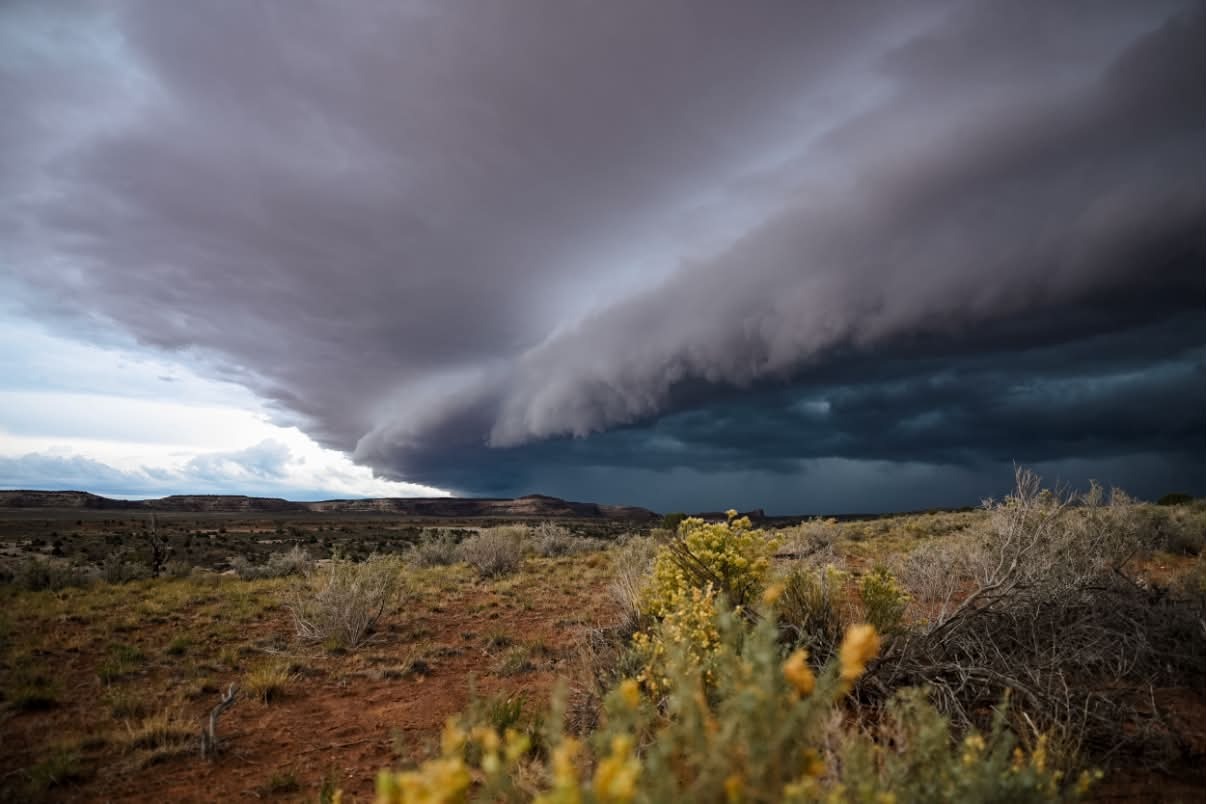
The remnants of Hurricane Rachel brought a weekend of mayhem to the desert southwest, prompting closures at several parks and stranding more than 70 ultramarathon runners and support staff at a remote desert outpost outside Moab, Utah.
Read more Retired SFPD officer linked to murder-suicide that left SFPD wife, daughter dead

Event organizers ultimately canceled the race, called the Moab 240, after conditions were deemed too dangerous to allow runners to safely continue.
The organizer, Destination Trail, wrote on Instagram that staff had received reports of “aid station structures blowing away, trees falling down, wind, rain, freezing temps” that were expected to continue through Wednesday.
“We are so, so sorry,” the organizers said. “We know how much time, training, and heart every one of you has poured into this race, and this is not the ending any of us wanted. But the safety of our runners, crews, and volunteers will always be our top priority, and we won’t risk anyone getting hurt.”
A ‘war zone’
The Moab 240 is an annual ultramarathon that takes runners from the national park gateway town of Moab through the red rock desert near Canyonlands and Arches national parks and across two mountain ranges. The race began Friday morning in town, giving runners up to 112 hours to finish a 240-mile loop. After a warm morning, with temperatures in the high 80s, the weather quickly deteriorated into heavy storms.
Videos on social media show runners attempting to cross swollen creeks, their shoes caked in mud and rain ponchos ripped apart by the gusting winds. Toward the evening, runners approaching Cottonwood Creek — a seasonal stream in a remote area that was recently removed from Bears Ears National Monument — were turned back by flash flooding. They gathered at a nearby aid station, and race organizers held everyone there for the night.
The station had heated tents, hot food, and drinking water, according to organizers, and they sent additional supplies to accommodate the extra people. It’s unclear whether those supplies ever reached the station, however, and organizers did not respond to a request for clarification prior to this article’s publication. People present, however, described a harrowing night in which they had just 20 tents for close to 100 people. Runners piled together under emergency blankets to keep warm.
Advice| My wife is unable to have sex, but I still want it. What can I do?
Health | How I went from ‘healthy’ to a quadruple bypass in weeks
Sports| Private investigator shakes up a California high school
Tech | Zuckerberg’s new toy is a parasite. Don’t fall for it.
Read our stories ad-free on the new SFGATE app.
The organizers canceled the remainder of the race the following day around noon. Runners who overnighted at the aid station were able to hike several miles out, where law enforcement and search and rescue personnel could safely evacuate them. All runners have since left the course.
Runners who had already made it past Cottonwood prior to the flood faced another set of difficulties, however.
Matt LaJeunesse, an avid runner and owner of a tandem BASE jumping business in Moab, was acting as a pacer for Ashley Paulson, a record-breaking runner who was in second place heading into Saturday night. On such long races, pacers help runners maintain their speed and ensure their safety.
By the time LaJeunesse joined Paulson, around 11 p.m. on the night of Oct. 10, she had already run close to 200 miles and was preparing to climb about 9,000 feet up and over the La Sal mountains outside Moab.
“At that point, your ability to critically weigh a situation and make decisions becomes really compromised,” LaJeunesse told SFGATE. “I think ultrarunners also have a different tolerance for risk than most people, which makes it hard to gauge the danger.”
LaJeunesse, who knows the landscape of the mountains well and recently completed another ultrarace, the Leadville Trail 100, met Paulson through social media and agreed to guide her for a 31-mile stint. Just before they left, the pair heard about the chaos behind them. It took only about a mile before they encountered their own version — what LaJeunesse called a “war zone.”
Over the next 14 hours, LaJeunesse and Paulson ran through rain, sleet, mud and gusts of wind topping 50 mph. Much of the route passed through the burn scar of a 2025 wildfire, and LaJeunesse told SFGATE they had to navigate something close to 150 trees that had fallen across the trail. Because it was dark, it was impossible to know how close the falling trees were to them.
“As we’re crossing them, you’re also hearing more snap all around you,” he said. “There was nothing to do but be methodical and keep moving and making good decisions.”
Read more Calif. family’s dog, let out by campground staff, now roams Yellowstone alone
Despite the danger, LaJeunesse said that Paulson was fully prepared to continue after arriving at the next aid station around 1 p.m. the following afternoon. She was moments away from leaving when an organizer informed them that the race had been canceled.
“Even though I feel for the runners, I absolutely think they made the right call,” he said. “I was one of the few people with any familiarity with the route up there, and I still struggled. A catastrophe was going to happen if they sent another 200 people in.”
A wet weekend for all
Moab was far from the only place to face challenging conditions. The men’s finals of the Red Bull Rampage — a world-famous competition for freeride mountain bikers in Virgin, Utah, near Zion National Park — was similarly canceled on Oct. 10 due to “adverse weather conditions” including high winds.
National park sites also reported weather-related incidents. Hikers in Zion National Park in Utah were temporarily stranded along the Emerald Pools Trail — a popular loop passing a series of waterfalls and deep pools — after the creek there flooded.
James Bevins and his wife, Kenzie, were visiting Zion from Ohio for the first time. After a beautiful day spent hiking on Friday, they changed their plans once the rain picked up on Saturday afternoon.
“All of the slot canyons had been closed, so we decided to go to the Emerald Pools,” Bevins told SFGATE. “Our understanding was that the Emerald Pools was not a slot canyon, and the staff at Zion were saying that it’s a good time to go when it’s raining because you can see the waterfalls in full action.”
On their way to the uppermost pool, the pair crossed a small creek. At the time, Bevins said the water was only about an inch deep. By the time they reached the upper pool, however, the rain had picked up. They turned around, but when they arrived back at the creek just 10 minutes later, it had become a roaring torrent. Visitors coming from the other direction on the loop said a second creek was cutting off their access there, too, leaving about 50 people stranded between the two.
“We started to panic a bit. There were babies, kids, older people, a lot of different types of people with different abilities,” Bevins said. “We didn’t feel immediately threatened where we were, but we couldn’t see what was happening above us on the cliffs.”
Someone had enough service to call 911, and rescue was dispatched. Before personnel arrived, however, the rain began to slow. Members of the stranded group created a human chain across the creek and used a piece of twine to pull others across.
The Emerald Pools hike was open Monday, even as the area remains under a flash flood watch through the evening Monday.
Other parks have similarly restricted access to trails and roads due to the rain. In Utah’s Bryce Canyon National Park, officials closed the Wall Street Trail — half of the popular Navajo Loop — and noted that other trails are “open but muddy.” In Death Valley National Park in California, the flooding prompted the closure of sections of the Cottonwood Marble Loop, a 28-mile 4×4 road.
Capitol Reef National Park, in southern Utah, closed a handful of trails, including Grand Wash and Capitol Gorge, while also noting that the status of more than a dozen roads in the park remains unknown but “likely impassable.” Last month, a family was stranded in Cathedral Valley, a remote section of the park, after a flash flood cut off the road, forcing the four to camp overnight in their vehicles.
Weather conditions across the southwest continue to forecast rain over the coming days. Visitors are encouraged to monitor park websites for current info, and to avoid traveling in areas where flash flooding may occur.
— National park ranger quits, tours visitor centers to fight censorship
— 30-year-old who set El Capitan speed record dies in national park climbing accident
— Near Mount Rainier, mysterious sightings continue to baffle the public
— Calif. marmot researchers turn to OnlyFans as their funding dries up
We love national parks just as much as you do, so we have a newsletter that covers them from top to bottom. Sign up here.
Read more Search for ‘SNL’ writer’s missing sister leads police to Joshua Tree Airbnb