More bad news for California’s imperiled Joshua trees
Last October, a hiker who lit toilet paper on fire in Joshua Tree National Park reportedly started a fire near popular Black Rock Campground, forcing an evacuation of the campground and the closure of a visitor center and nearby trails. The fire started nearly two weeks into a government shutdown that left national parks with minimal staffing.
Read more SF school district announces opening date, site for new public school

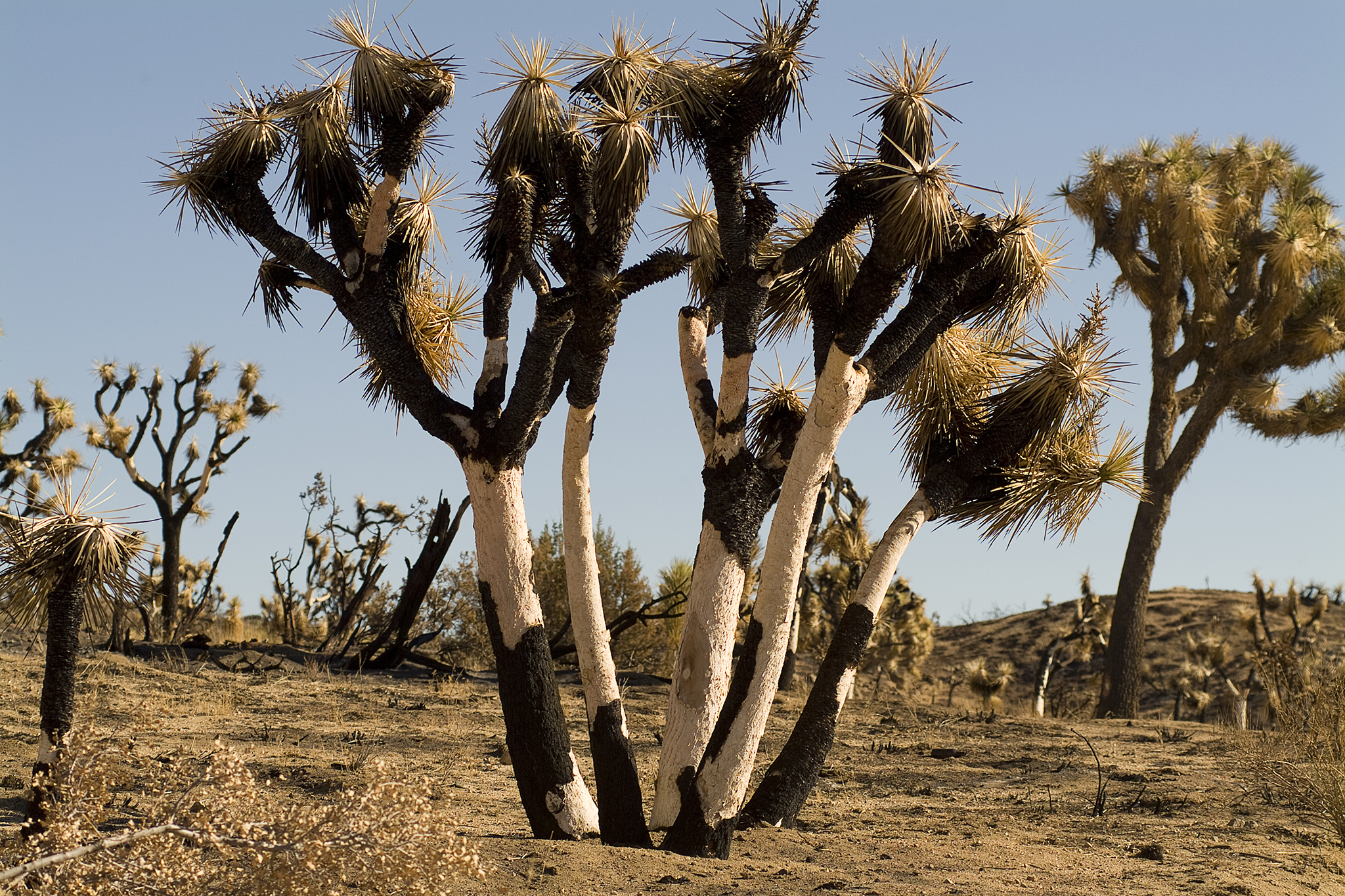
The Black Rock Fire burned 72 acres. Earlier that same year, the Eureka Fire scorched over 200 acres in the Covington Flats area of the park, a higher-elevation region that’s considered crucial “climate refugia” habitat, where the threatened western Joshua tree stands a better chance of surviving as climate change brings hotter and drier conditions. And in 2023, the Geology Fire burned over 1,000 acres, killing an estimated 3,000 Joshua trees in a backcountry area of the park.
Historically, fires that started in this part of the Mojave Desert have burned out quickly, as the sparse landscape made it difficult for fires to spread from one desert plant to another. But in recent decades, a combination of invasive grasses and hotter, drier conditions have brought Joshua Tree National Park into a new era of wildfire.
Despite those new threats, the Trump administration recently canceled more than $1 million in projects that would have helped the park restore burned areas and prepare for future fires.
Hawaii |The standard Hawaii vacation is over
News| Bay Area high school jumps from No. 187 to No. 10 in new ranking
Travel |TSA terminates contractor at SFO after 24 years
Culture| Crowds descend on SF to see pop star’s personal art collection
Read our stories ad-free on the new SFGATE app.
“Fire frequency and occurrence is increasing throughout the Mojave and throughout the Southwest,” Mark Butler, former superintendent of Joshua Tree National Park, told SFGATE this week. “These proposals from Joshua Tree are really in response to those changing fire impacts, and so the time is right — or, it’s past due — for the National Park Service to really figure out ways to respond to these ecological changes that have occurred, and the changes in fire ecology at Joshua Tree and elsewhere in the Mojave Desert.”
On Aug. 7, the Interior Department quietly and unceremoniously canceled 140 approved agreements between the National Park Service and outside partners at parks and programs across the country. Some of those agreements have since been appealed, but 133 remain canceled, totaling $25.9 million in axed funding for park programs, according to the Center for Western Priorities.
Joshua Tree National Park took the biggest hit, losing 10 agreements totaling $1.2 million in funding. All of the agreements were with the Nevada-based Great Basin Institute, a nonprofit organization focused on outdoor and conservation-focused job opportunities, often for young people, early-career workers and veterans. The Great Basin Institute oversaw nearly half of the total canceled funding across the National Park Service, representing $12.7 million in lost funds and 184 job positions that are now canceled.
Peter Woodruff, the organization’s executive director, told SFGATE that the Interior has not provided an explanation for why the projects were suddenly canceled.
A spokesperson for the Interior Department previously told the Washington Post that the department “disapproved a number of partnership agreements with groups actively working against the best interests of the American people and the priorities of this administration,” adding that the decision focused on making sure that “taxpayer dollars are being used in alignment with the administration’s objectives to make life more affordable for Americans, unleash domestic energy production and expand access to our public lands.”
The 10 agreements at Joshua Tree National Park included multiple agreements that would hire technicians to restore areas damaged by wildfire by collecting and planting native seeds, reducing invasive plants and mapping and monitoring restoration sites. Without funding, “burned areas at Joshua Tree National Park will recover slowly, allowing invasive species to spread and reducing habitat quality for wildlife,” according to National Park Service records compiled by the Center for Western Priorities.
Other projects were more forward-looking on preparing for fire, such as improving available geographic information system data related to fire response and park resources, and hiring a “fire preparedness vegetation specialist” who would focus on improving fire management decision-making by providing data and information that managers could use in emergency situations.
Read more Newsom vetoes a bill to regulate Big Tech’s ‘pervert’ glasses
“If this work is not completed, the park will be unable to fight wildfire. Fires will be larger and fire suppression will be more expensive. Visitors will see fewer Joshua trees in Joshua Tree National Park,” according to National Park Service records related to the project.
Butler called that canceled project one of the “most egregious” impacts in Joshua Tree National Park, noting that the Park Service’s own proposal said the project was needed to fight wildfires.
“This really deals with fundamental management decision-making at Joshua Tree National Park to support fire preparedness and response, and the whole idea is that this project is going to help reduce and improve response times and decrease costs associated with fire suppression,” said Butler.
Joshua trees are already facing a number of existential threats from climate change, drought and wildfires. One 2019 study projected “an almost complete elimination of Joshua trees” from their namesake park by the end of the century.
And because the desert plants aren’t adapted to fire, wildfires can be particularly devastating, with Joshua tree mortality typically 80% or higher after severe fires. In a vicious cycle, invasive grasses (which have spread through the park in recent decades because of air pollution) claim an even deeper hold on desert landscapes post-fire, as native plants struggle to reestablish themselves.
Before 1965, lighting fires in Joshua Tree burned less than a quarter-acre, but “fires now spread faster and burn more intensely” because of the introduction of these nonnative plant species, according to the National Park Service.
Right now, Joshua trees are still relatively abundant in the park, although they are reproducing much less frequently, leading to fewer younger trees as the older trees slowly die off. That means patches of “climate refugia” will become even more important as the overall habitat of the species shrinks, said Colin Barrows, secretary of CactusToClouds Institute, a nonprofit focused on conservation in the Southern California desert.
As Joshua trees become isolated in smaller patches of habitat, “you can get one small patch that can be totally wiped out in a single fire, and another patch that can be wiped out in a single fire, and suddenly we’re in a situation where there’s no Joshua trees,” Barrows said.
“The park has done a really good job of using the science and the modeling to prioritize restoration and to do seed collection in the places that are most at risk, and to do fire abatement in the places that are most at risk,” said Barrows. “And all of those jobs are the exact contracts that just got cut.”
— National park ranger quits, tours visitor centers to fight censorship
— 30-year-old who set El Capitan speed record dies in national park climbing accident
— Near Mount Rainier, mysterious sightings continue to baffle the public
— Calif. marmot researchers turn to OnlyFans as their funding dries up
We love national parks just as much as you do, so we have a newsletter that covers them from top to bottom. Sign up here.
Read more Smart ring CEO found guilty of bilking millions from tech investors