‘New reality’: California scientists uncover why rivers are turning orange
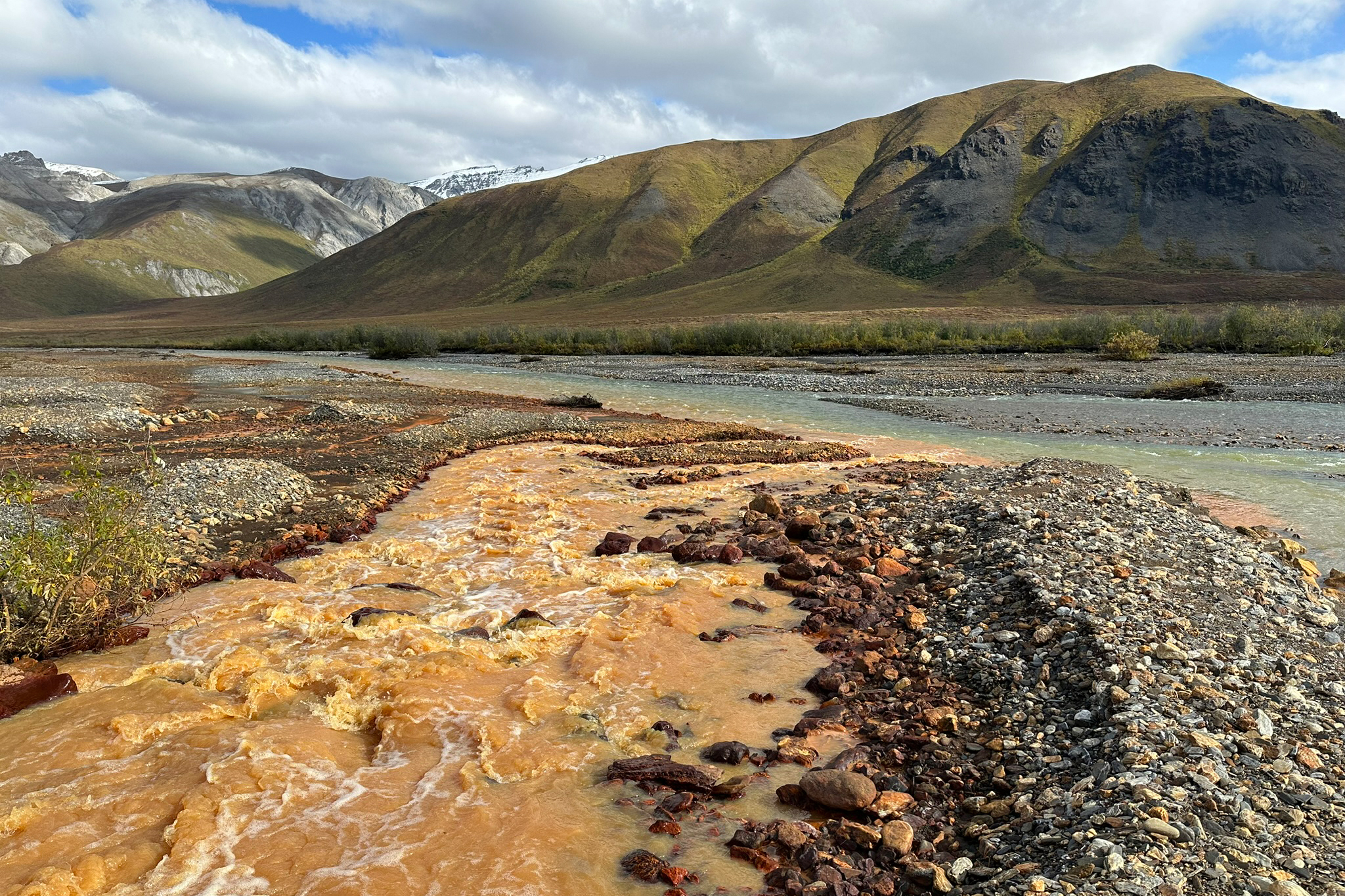
In 2018, scientists traversing through Alaska’s remote Brooks Range were confronted by a strange phenomenon they’d never seen before: Despite their bucolic surroundings, the rivers around them that were once crystal clear were suddenly orange and milky, resembling the type of rust-colored water typically seen by abandoned industrial sites.
Read more Teoscar Hernández, Andy Pages hit home runs, Skubal strikes out 10 as Dodgers beat Giants 2-0

Now, after conducting research at several of these waterways, researchers from California have discovered that they were even more acidic and metallic than water leached from mines.
The phenomenon — a byproduct of thawing permafrost — might become more common as the world continues to warm.
According to a September 2026 study authored by several UC Davis environmental researchers, Arctic waterways are becoming more vulnerable to thawing permafrost, which releases toxic elements through acid rock drainage. The process results in minerals being exposed to air and water for the first time, causing a release of acid, sulfate and a mixture of metals.
After studying six different watersheds, the scientists discovered “concentrations of nickel, zinc, and cadmium similar to those observed in mine-impacted rivers outside the region.” There are still many mysteries regarding the environmental implications, but scientists noted the six rivers’ water chemistry substantially changed in tandem with warm weather in the region.
“This is very acidic, metallic water,” said senior author Brett Poulin, a UC Davis professor in the Department of Environmental Toxicology, in a Sept. 24 article published by the university. While “there is some resiliency in this system,” Poulin continued, “there are metals that increased downstream, and those can be transported very long distances.”
These metals also became more toxic the further they traveled downstream: Concentrations were 70 times higher 60 miles away from their entrance point, the UC Davis article says. As of 2025, over 200 rivers and streams in the Brooks Range region have been potentially affected by this recent phenomenon.
Read more Gavin Newsom’s childhood SF home returns to market
“This was a process that was not forecast, predicted or included in any assessment of how the Arctic will change under a warmer climate, but we’re seeing it in rivers across the Arctic,” Poulin told the university.
It’s still unknown whether acid rock drainage in these waterways has a negative impact on rural communities and ecosystems, but scientists are continuing to monitor them.
“Concerns and hopes are the big takeaways,” Taylor Evinger, an author of the study, told UC Davis. “While we are not seeing massive fish die-offs, and we’re not aware of drinking water quality issues currently harming villages, the numbers of observations are still concerning.”
Evinger pointed out hundreds of watersheds have signs of acid rock inputs even though they are untouched by industrial activity.
“It’s a new reality of climate change,” Evinger said in the article.
— Woman’s body hidden under Calif. home without owner knowing
— Infamous Calif. serial killer dies in prison
— Suspect fleeing police breaks into Calif. home, kills woman
— Airport warns SFO travelers to ask ‘friend with a truck’ for rides
Read more Elizabeth Holmes to reportedly leave prison, move to halfway house next year
Sign up for SFGATE’s breaking news email