As the American West dries out, a secret savior emerges from the soil
It was well above 90 degrees the day I followed scientists out across the Needles district in Canyonlands National Park. As we stepped off the road, I kept my eyes on my feet, which I intentionally placed atop the sparse vegetation. Saltbush and bunch grasses crunched beneath my boots, their snap carrying in the still, late afternoon air.
Read more Central Coast local captures more shark activity on camera than ever before

Anywhere else, this way of walking, referred to as plant hopping, would seem callous, like going out of my way to damage the few plants tough enough to eke out a living in this place. But in the desert, it’s the ground surrounding the plants that is perhaps the most crucial, yet fragile part of the landscape.
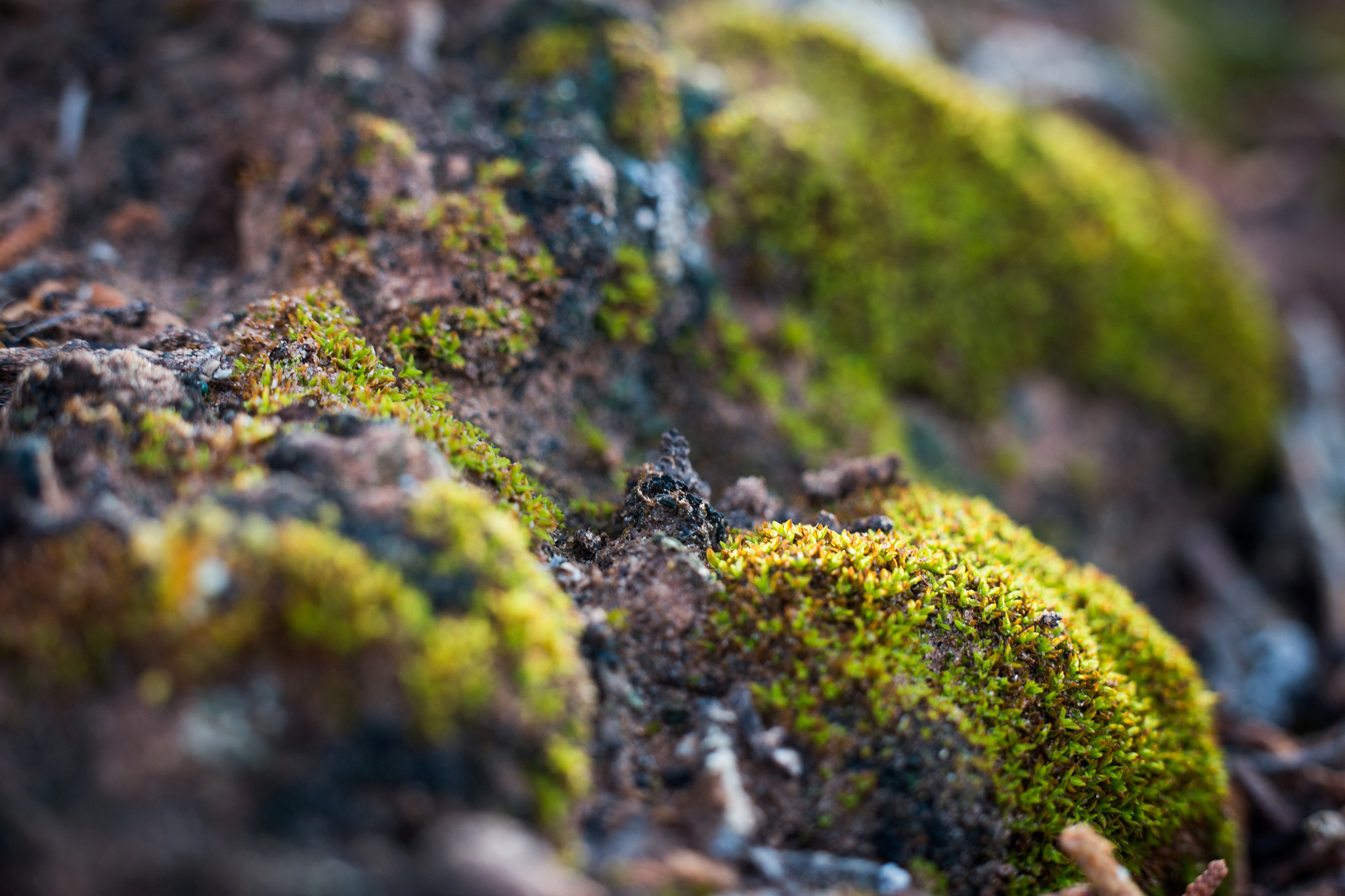
We were there to learn about biocrust — the dark, craggy layer that grows slowly, over many decades, across the surface of drylands around the world. As its name suggests, biocrust is teeming with life, and national parks such as Canyonlands and Arches offer a living laboratory for studying these vibrant, miniature ecosystems. Scientists are now learning that biocrust plays important roles in everything from erosion control and nutrient cycling to bracing against the worst impacts of climate change. And as temperatures continue to rise, researchers are turning to these living soils as a potential tool for restoring healthy landscapes.
“There’s so few organisms that can make it in such a harsh environment, and so it’s hard to overstate how absolutely vital biocrust is to keeping the whole system operating,” said Jayne Belnap, a senior scientist emeritus at the U.S. Geological Survey who pioneered biocrust research on the Colorado Plateau. “The little things matter, and they matter at a massive scale.”
Hidden life in the desert
The community of people who study and protect biocrust is robust in the desert southwest, and that’s in part because of Belnap, who trained a generation of soil scientists. Belnap herself visited Moab — the gateway town to several national parks — nearly every summer as a child, and calls the desert hub “the center of my universe.” After finishing her schooling in the early 1990s, she returned to study the land more deeply.
Back then, no one really knew about biocrust, but it quickly began to appear in various projects. “I really wanted to know what made everything work the way it does, and it became clear that the answer, especially in deserts, is the soil,” Belnap said. “I set my boat to sail on biocrust because every single string I pulled really mattered.”
A dedicated group of scientists has since followed suit, revealing far more about these living soils, which in the high deserts of Colorado, Utah, Arizona, Nevada and New Mexico can represent as much as 80% of the living ground cover.
Biocrust is now known by many names, including cryptobiotic soil, crypto or biological soil crust. All acknowledge that it teems with hidden life. And while it may appear uniform, biocrust is in fact an assemblage of many organisms, including bacteria, algae, fungi, lichen and mosses. Like tenants in an apartment building, each inhabits its own unique space and carries out different duties in its community.
Cyanobacteria, for example, grow root-like webs within the soil, stabilizing it against erosion. And just as their larger counterparts do, microscopic algae and fungi keep nutrients like carbon and nitrogen cycling through the system. Lichen act as a form of armor, shielding the crust from UV radiation, while mosses serve as sponges, holding onto what little water there is. Collectively, these organisms both produce and reinforce soils, creating the foundation upon which everything else grows.
That day in the field, USGS research ecologist Rebecca Finger-Higgins moistened her finger and pressed it to the ground. Like some forgotten form of magic, the earth beneath flared green, revived for the moment by the sudden presence of water.
“That’s always a fun party trick,” she said, smiling. “It really demonstrates that these are living things, biding their time until conditions are right.”
How national parks are teaching us about biocrust
Researchers have untangled the importance of biocrust in part because of longstanding and emerging projects in national park sites across the southwest.
Certain areas in Canyonlands have been monitored since 1996, for instance, representing varying amounts of cattle grazing. Virginia Park, near the park’s southern boundary, has never been grazed, while the front range, where I joined the team this spring, has been heavily and repeatedly grazed. Evidence of cattle was clear in their hoofprints and droppings.
Twice a year, the team samples these areas to see how the landscapes are changing over time. Their findings reveal that disturbance is perhaps the greatest immediate threat to biocrust’s survival. These communities grow very slowly, reaching full maturity over decades, and even a single footprint or tire track can damage biocrust for many years. In the 1990s, Belnap partnered with the National Park Service to launch a “Don’t bust the crust” awareness campaign. Inside parks and around gateway towns, signs can still be found asking visitors to stay on trails and tread lightly.
Education |3 Bay Area high schools crack Calif.’s top 10 in new ranking
Food| Blue Apron, once valued at $2B, descends into chaos
News| Employers are ghosting college grads and rescinding offers
Read our stories ad-free on the new SFGATE app.
The loss of this layer has implications for the broader landscape as well. Sites that have been heavily grazed, and therefore have less intact biocrust, hold fewer native plants and a higher proportion of invasive species like cheatgrass and tumbleweeds, according to Finger-Higgins. The latter has become a problem for desert communities, swallowing entire towns in what residents call a “Tumblegeddon,” while cheatgrass provides abundant fuel known to spark hot, fast-moving wildfires.
Soils lacking biocrust are also more likely to shed dust, and Sasha Reed, a biogeochemist at USGS, says that dust is a growing concern. Dust clouds have caused fatal accidents along major highways, and dust also settles onto snow, darkening its surface and melting it faster. As a result, mountain plants are sprouting earlier in the year, absorbing water that would normally flow down into the watershed and into rivers like the mighty Colorado, which provides water to up to 40 million people.
“You start out looking at this crust on the surface, and suddenly you’re talking about things like watersheds and plant phenology,” Reed told SFGATE, referring to the study of the timing of biological events in nature. “It makes you feel like a conspiracy theorist, except that we’re documenting it as it happens.”
Climate change marks another major threat to desert ecosystems, including biocrust. The West is currently decades into a megadrought not witnessed in at least 1,200 years. While biocrust is one of the few things that can dry out fully without dying, a 2018 study suggests that as much as 40% of Earth’s biocrust is at risk of disappearing.
“As things get warmer and dryer, these systems are likely to have outsized responses to those changes, including the important services they provide,” Brooke Osborne, a biogeochemist at Utah State University and the USGS’s Southwest Biological Science Center, told SFGATE. “If we’re going to prevent the worst consequences of climate change, we need to understand what to be on the lookout for.”
One valley over from Moab, Osborne and her colleagues have spent decades running the world’s first and only long-term warming experiment dedicated to drylands to better understand these impacts. Over the years, they’ve exposed the region’s biocrust to a plethora of stressors, crisping them with heat lamps or dousing them with simulated rain. The team has learned that biocrusts are indeed sensitive to warming, and that even a 4-degree increase in temperature can have profound effects on their ability to bolster soils and unlock and store nutrients.
Read more How prediction markets became the center of a fake California poll scandal
Nearby, in Arches National Park, Osborne has also spent the past six years applying artificial fertilizers to the land to understand more about how plant communities and biocrusts are able to carry out their ecosystem roles.
Osborne put me to work on this endeavor when I joined her Nutrient Network team in the park in late May. Armed with clipboards and field guides, we catalogued ground cover and identified species across dozens of plots. Then, we began sprinkling different mixtures of fertilizer, the blue, brown and yellow pellets reminiscent of Dippin’ Dots ice cream. When combined, they create individual fertilizers with different ratios of nitrogen, phosphorus and potassium.
Following these treatments, the team is now taking sediment core samples — hole-punches into the top 40 centimeters — to look at how effectively biocrust is able to unlock and cycle the nutrients that fertilizer provides. Fertilizing is commonly used as a management technique to improve forage for cattle, but recent work from the Nutrient Network team has shown that more is not always better. In some cases, too high an influx of nutrients can actually reduce plant diversity, damage biocrust and dampen ecosystem function.
“Both climate change and grazing are really here to stay, and so we need to both understand these stressors and get creative about the recommendations we can give to land managers to make sure we’re all getting our needs met,” Osborne said.
Can biocrust save the day?
Even as biocrust is being threatened, it may also be the key to staving off some of the worst effects of climate change. If conservation scientists can learn to grow biological soil crusts and restore them on the land, it may be possible to improve the health of the entire ecosystem.
To do so, scientists will need to continue investigating biocrusts, learning more about the contributions of individual species as well as their collective roles. In 2024, Reed and others established a project called CrustNet, aimed at improving the representation of biocrusts in dryland research across the world. The project currently includes dozens of sites across 22 countries, including one at Canyonlands, where researchers all run the same tests aiming to understand how biocrusts respond to different stressors.
Even with these unknowns, however, researchers are moving ahead with ambitious plans.
Colin Tucker, the forest programs director at the Colorado-based Mountain Studies Institute, has spent years pioneering a new technique that involves growing biocrust as sods, similar to grass sods that can be laid out to grow a lawn. In 2017, Tucker began what is now the world’s largest effort to grow intact biocrust communities on sods at a site called Mayberry, just down the road from Osborne’s warming experiment, where Tucker worked as a postdoctoral researcher.
The first major challenge, he said, has been overcoming the extremely slow growth of biocrust by figuring out the combination of light, water and nutrients that each species needs to accelerate its development. It took years, but today, Tucker can reliably quadruple biocrust cover in a greenhouse within two to three months, and has had similar success growing crusts outside, albeit under carefully managed conditions.
The second issue, and perhaps the more difficult of the two, has been ensuring that the final sod is able to do all the things we expect biocrust to do. “Every biocrust is made up of different species doing different things, which is hard to recapitulate in a lab,” he said.
A new paper published Aug. 6 details how the group pulled crusts from eight locations throughout the West, ranging from Southern Idaho to the Sonoran and Chihuahuan deserts on the U.S.-Mexico border. They grew them under conditions simulating future climate change, ultimately landing on a supercocktail of only the most robust species. Lichens from the Mojave were the best at withstanding heat, for example, while mosses from the Colorado Plateau and the Great Basin were the fastest-growing when given some shade.
In 2019, Tucker and his colleagues planted their sods at two 10-acre sites, including one at the Canyonlands Research Center, to see how well the biocrust would do without being carefully tended. The group recently resurveyed the sites after five years, and Tucker admits that the results have been mixed.
“It’s not an easy thing we’re trying to do here, but I absolutely think it’s worth doing,” he said, adding that even a partial success has taught the team something. Moving forward, Tucker will be deploying biocrust sods at freshwater springs and in old mining reclamation sites.
Farther afield, other researchers are testing the sod technique as a fire management tool. As the southwest seethes with wildfires, fuel breaks are an important tool for containing the flames, but their construction also opens up space for invasive plants like cheatgrass to grow.
In preliminary findings shared at this year’s Ecological Society of America meeting in July, Northern Arizona University biocrust researcher Keven Griffen described a grass-fire cycle in which fine, easily burned fuels like cheatgrass can spring up in fuel breaks, ultimately helping fires hop across them. For her dissertation, Griffen, a former Park Service employee, is investigating whether biocrust sods can reduce invasive grass spread and limit runaway wildfires.
Results from the past two years show that the sods did reduce the presence of invasive species at test sites in the Sonoran desert in Arizona and across three sites in the Mojave desert in California. In 2024, a lightning strike actually caused five sods at one site to burn, and Griffen said she was surprised to see that the sods survived the flames.

BECOME A FRIEND. GET OUR AD-FREE APP.
Overall, it’s an exciting time to be involved in the biocrust community, even as the West faces an uncertain future, Tucker told SFGATE.
“Working as a climate change scientist right now, any optimism I have is a survival mechanism, but that’s not to say it’s unfounded optimism,” he said. “People I work with are doing amazing work every day, and we’ve been able to use our successes to create something new. That’s what it will take, and what we all should look to do.”
— National park ranger quits, tours visitor centers to fight censorship
— 30-year-old who set El Capitan speed record dies in national park climbing accident
— Near Mount Rainier, mysterious sightings continue to baffle the public
— Calif. marmot researchers turn to OnlyFans as their funding dries up
We love national parks just as much as you do, so we have a newsletter that covers them from top to bottom. Sign up here.
Read more Fire in Yosemite gateway town burns beloved saloon to the ground