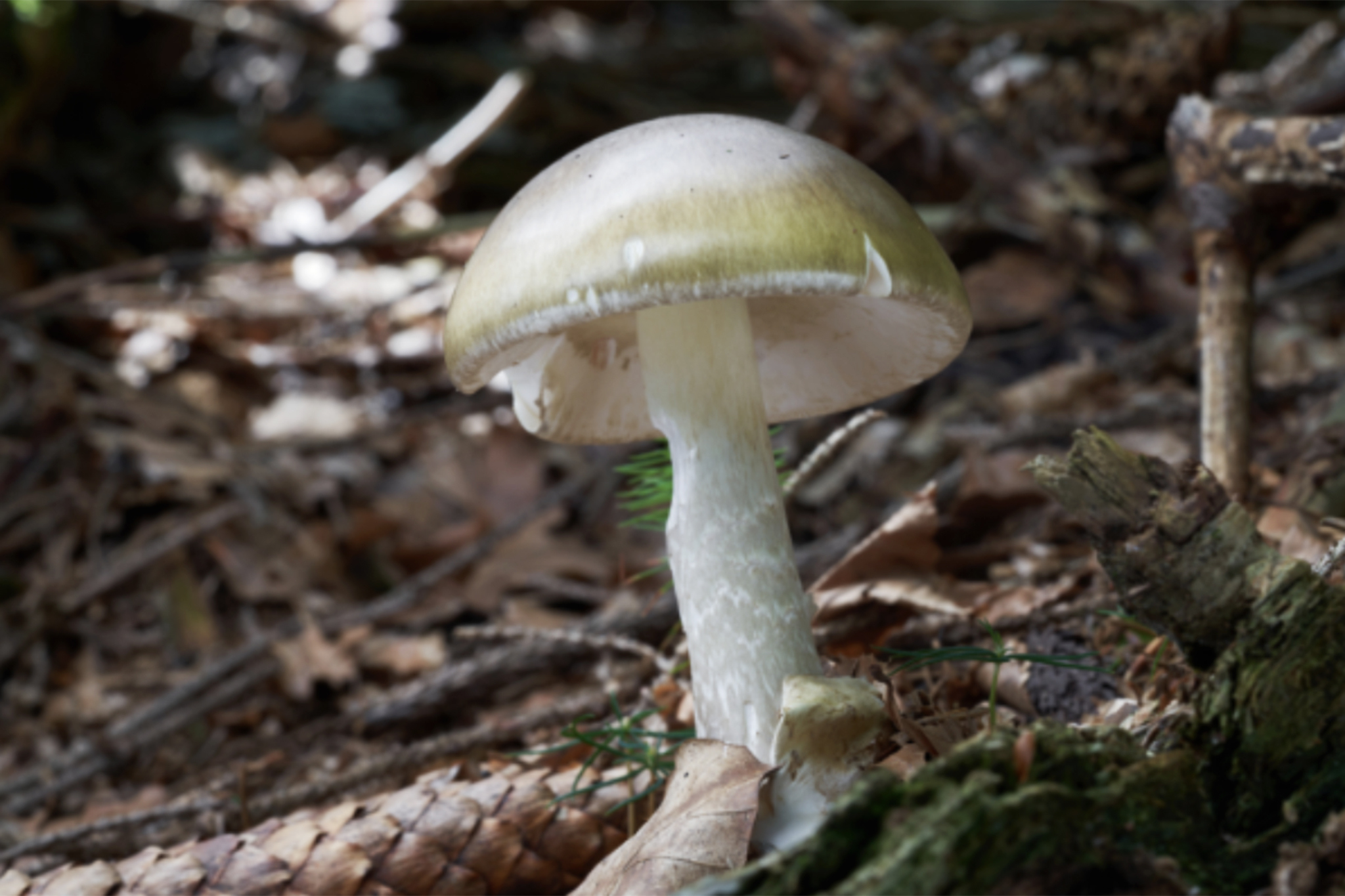
California’s deadly mushroom outbreak reaches alarming new levels
Bay Area health officials are warning the public of an unusual surge in mushroom poisonings across the region and state, including the latest cases in Napa County.
Read more Bay Area dad facing 3 years in prison after prank gone wrong

Over the weekend, three adults were hospitalized after eating wild mushrooms they collected in the rural area of Deer Park, the county’s Health and Human Services Agency said in a Tuesday news release. The three people were not Napa County residents and were foraging mushrooms specifically between Deer Park Road, Fawn Road and Silverado Trail.
The agency said the poisonings are part of an “unprecedented outbreak” of mushroom-related illnesses and deaths across California. According to the California Department of Public Health, there have been 47 cases, including four deaths, since Nov. 18, 2025. Of these cases, hospitalizations occurred in six Bay Area counties: Alameda, Contra Costa, San Francisco, San Mateo, Santa Clara and Sonoma.
When health officials first noticed the uptick in November, they began tracking the cases and trying to understand the outbreak, Craig Smollin, medical director of the San Francisco Division of the California Poison Control System, told SFGATE. Smollin, who is also an emergency medicine professor at UC San Francisco, said California typically sees about five cases a year on average, making the current spike especially puzzling.
“These cases are a continuation of a mushroom poisoning outbreak that began in November and is continuing for longer than usual. It is also unusually large and widespread,” he said.
Health officials said recent rains have boosted wild mushroom growth and could be one of the main factors driving the outbreak, including the most recent poisoning in Napa.
“It’s possible that allowed for another crop of these mushrooms to come up. It’s not unheard of that these mushrooms can grow year-round, not just during the rainy season,” Smollin said.
Still, he noted that the current volume of cases has soared far beyond the levels health officials typically see in a standard year. People have been eating the death cap and Western destroying angel mushrooms, according to CDPH.
Alan Rockefeller, an El Cerrito mycologist, told SFGATE that at one point, death cap mushrooms were the most common species in some parts of the Bay Area wilderness during the wet winter months.
“In the middle of December, just walking through the woods, you would see 10,000 death caps, and they were the most common mushroom out.”
Both death caps and destroying angels can closely resemble safe wild varieties and even mushrooms sold in grocery stores, causing people to potentially misidentify them, experts said.
“They’re going to be growing in places that potentially have other mushrooms that are edible, growing in the same area, and they look very much like those other mushrooms. And they can look so different at different stages,” Smollin said.
The mushrooms in this outbreak have a group of toxins called amatoxins, he said, which can cause severe damage to the liver or even death in the most serious cases. Symptoms of mushroom poisoning may not appear until 6 to 24 hours after a person eats them, and in moderate cases, it can cause nausea, vomiting, diarrhea and cramping.
Read more Calif. family sues OpenAI for allegedly causing teen’s fatal overdose
“When you go into the wild and decide to forage, you’re taking a risk. And unless you have really a lot of experience, the risk is that you could pick a mushroom that could change your life forever,” Smollin said. “Ending up with a liver transplant is a life-changing event. Medications for the rest of your life, you have gone through a huge surgery, it’s a big deal.”
Experts also found that many of those poisoned were international visitors, a factor that may contribute to confusion when identifying mushrooms in California.
“It’s not uncommon for people who have foraged in other parts of the world successfully to come to a new place where there’s different types of mushrooms around it or something that looks like something that was edible before but really isn’t,” Smollin said. “… I don’t know why that would be more prevalent this year than other years, but it does seem like those communities are particularly at risk.”
Similarly, Rockefeller said he’s unsure what’s driving the dramatic spike in poisonings but suspects more people are eating wild mushrooms without properly identifying them first.
There are several apps, such as iNaturalist, that foragers can use to identify mushrooms, and Rockefeller believes that they are reliable for guidance if the photo is clear enough.
“I don’t think the apps are causing poisonings, although if people did blindly follow what the apps say, [it] could cause poisonings,” he said.
Mushroom foraging has been steadily trending upward the past 20 years, according to Rockefeller, but it really started to pick up in the region around 2016.
“People are wanting to be more connected with nature, especially with all of the computers these days,” he said. “… I think a lot of people feel that people just kind of want more connection to the land.”
The best way to avoid poisoning, state health officials say, is to avoid eating wild mushrooms altogether.
“In this time, with so many of these deadly mushrooms out there, we would suggest not foraging,” Smollin said.
— Coca-Cola to shut down California plant after 114 years
— Two bodies found in underground vault in downtown Fresno
— ‘Very contagious’ parvovirus found throughout Northern Calif.
— 3 straight polls show once-flailing Democrat now front-runner
Read more 2 women allegedly fight, bear spray used inside Bay Area Safeway
Sign up for daily SFGATE breaking news alerts here.