Nevada’s bleakest tourist destination cancels tours through 2026
The Nevada National Security Site, which hosted hundreds of nuclear tests during the Cold War and helped instill fear in the public imagination through morbid public broadcasts, is canceling free public tours for the rest of the year, officials announced.
Read more Giants beat the scuffling Dodgers 9-3 as Devers and Adames spark a 7th-inning surge

“Due to funding uncertainty, public tours of the Nevada National Security Site have been canceled through 2026,” a notice on its website says. “Going forward, public tours will be evaluated dependent on the budget situation at that time.”
Arguably the most eerie tourist destination in Nevada, the test site has several attractions that bring thousands of annual visitors to the sparse desert region — mainly because the remnants of some former nuclear projects are still standing.
One major attraction is , a small desert town 65 miles outside Las Vegas, which once housed hundreds of workers who carried out test operations. From 1951 to 1992, employees lived in temporary quarters, ate in mess halls and swam in an Olympic-sized swimming pool. The Mercury Bowl, the town’s eight-lane bowling alley, was a popular hangout for off-the-clock workers, along with the steak house and movie theater, where attendees watched feature films like “Oklahoma” and “West Side Story.” Since nuclear test programs ceased operations, many of the structures have been demolished or repurposed.
, complete with cars and houses, was built to simulate how a nuclear attack would impact “a typical American community,” according to the Nevada National Security Site. To illustrate a bomb’s destruction, officials built two colonial-style homes, furnished them, and placed mannequins in dining rooms with fresh food flown in from San Francisco and Chicago. In 1953, officials televised a nuclear test, called “Annie,” which destroyed one of these houses within just three seconds. Another test was broadcast in 1955, where a bomb, “Apple 2,” blasted an even more elaborate community, complete with buildings, trailers and radio stations.
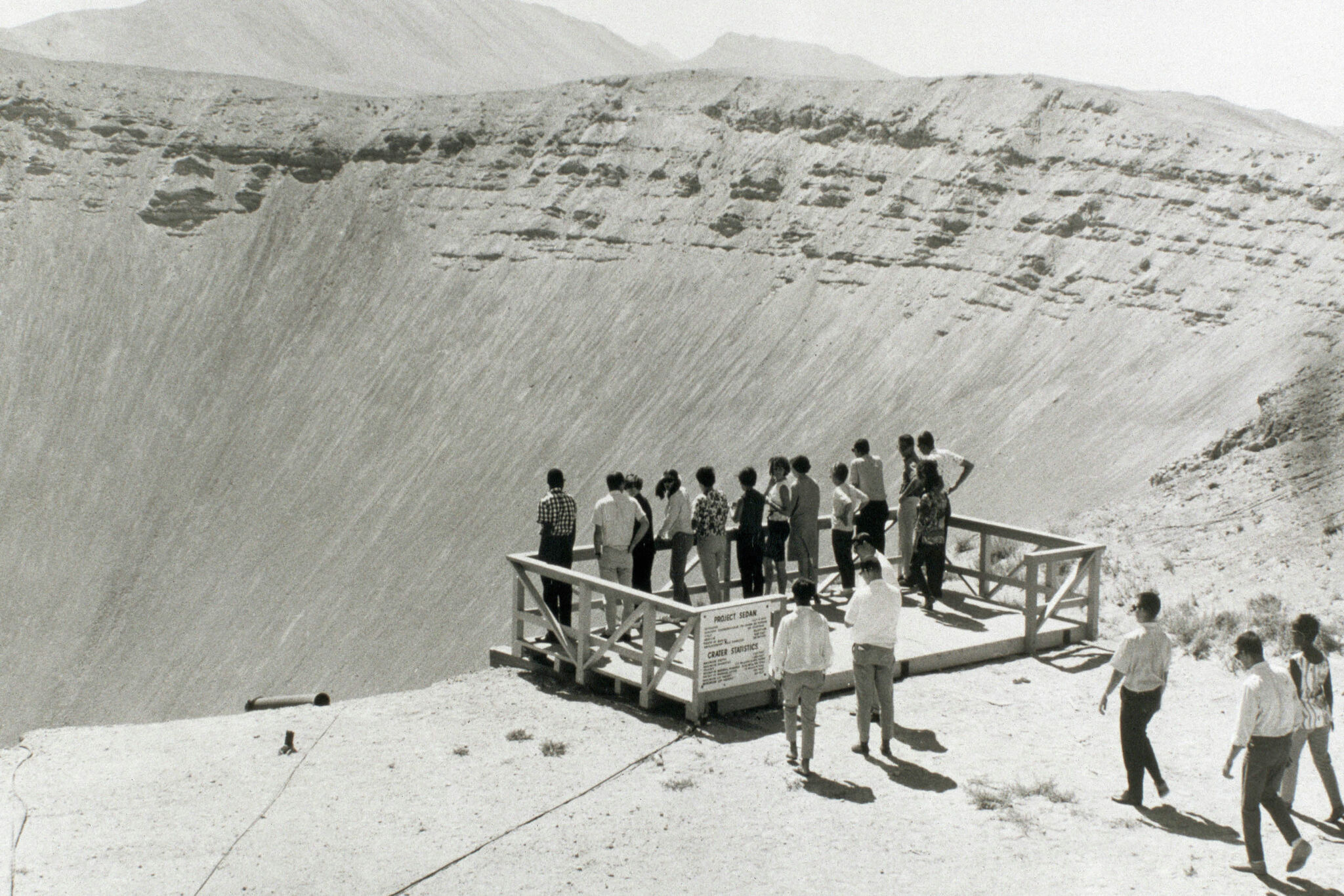
Another area of interest is the , one the largest human-made craters on the planet. Measuring more than several football fields long, it was formed in 1962 following an explosive thermonuclear test that blew up 12 million tons of earth.
Read more Mookie Betts returns to the Dodgers’ lineup after an oblique injury

were conducted in the atmosphere before testing was moved underground in 1963, and nuclear weapons testing operations ceased entirely in 1992. Today, the site is still used for special training operations, where emergency personnel respond to simulated nuclear attacks at the training ground. Nuclear debris, like twisted steel and sand melted into glass, is also scattered throughout the site, where the soil emits low levels of radiation.
Don’t let Google decide who you trust.
The free public tour ran monthly, chauffeuring visitors from the Atomic Museum in Las Vegas to the remote site via charter bus. The tour accommodated 50 people at a time and brought thousands of visitors each year.
Test site media representatives did not respond to SFGATE by the time of publication.
— Calif. mayor charged with working for Chinese government
— The SF tech worker whose unhinged order broke In-N-Out forever
— Lyft passenger killed on I-80 after fight with driver, CHP says
— Infamous California killer Betty Broderick dies
Sign up for daily SFGATE breaking news alerts here.