US 395 is a stunning mountain highway. It’s also one of the deadliest for Calif. wildlife.
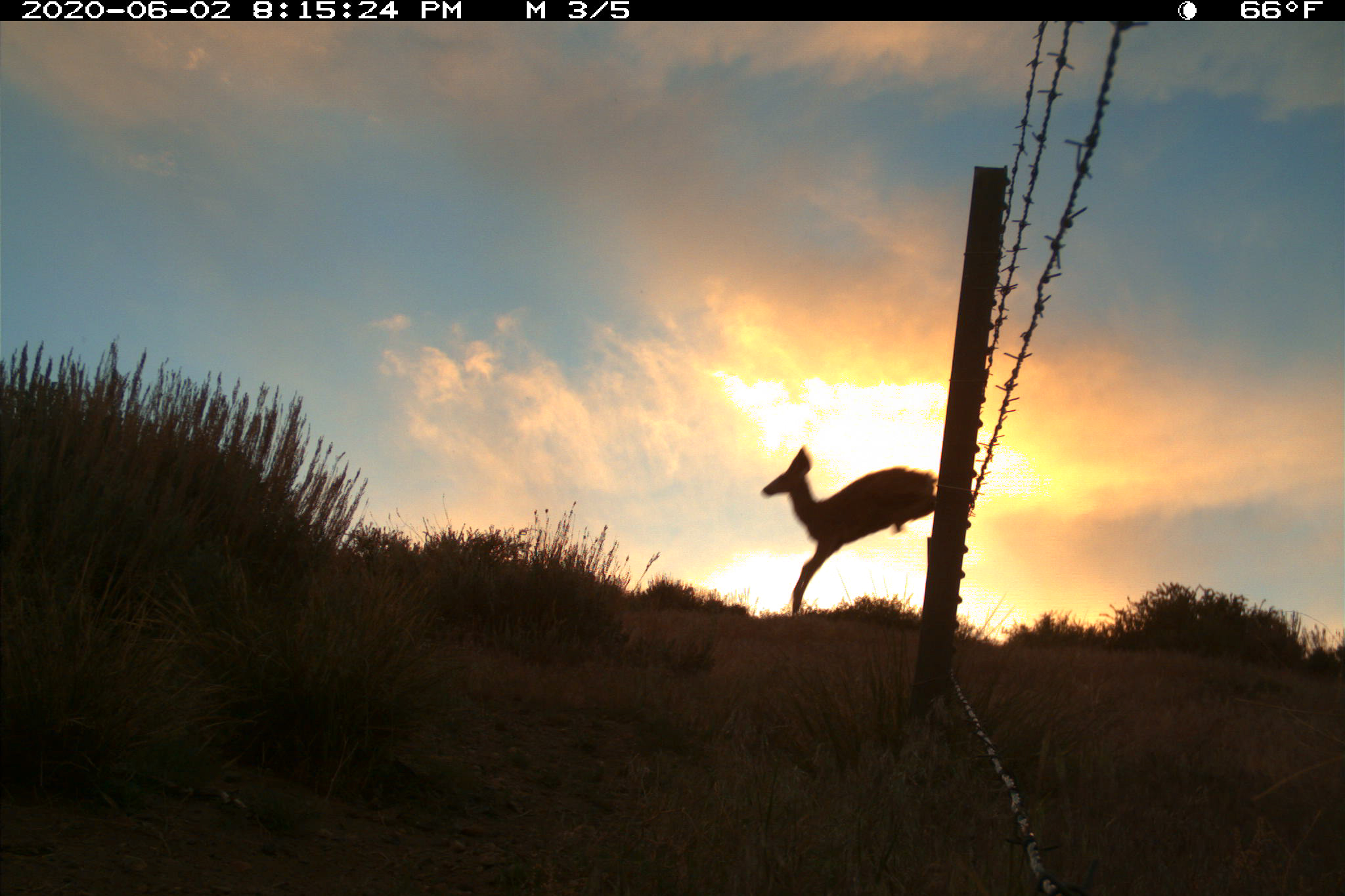
The Casa Diablo herd of mule deer call the Eastern Sierra Nevada home. They’re migrants. In the spring, after the snow melts, the herd seeks refuge from summertime heat in the high elevations of the mountains. But come fall, the herd moves back down to the high desert to escape the deep snowfall that the Sierra Nevada is famous for.
Read more 1 dead, 3 missing after boat capsizes near Alcatraz

U.S. Route 395 cuts a straight line through the herd’s traditional migration route. Every year, as they travel from the mountains to the desert, they have to cross the highway, dodging cars and semitrucks zooming by at speeds upward of 70 or 80 mph. Vehicle collisions are one of the leading causes of mortality for the herd.
This section of road is part of the , a 250-mile drive from Topaz Lake in Nevada to Little Lake in California. The High Sierra skyline runs along the west side of the highway: a breathtaking panorama of snow-capped peaks, including the highest mountain in the Lower 48, Mount Whitney, and a handful more 14,000-foot summits. To the east, a vast high desert landscape rolls across the valley, running into the White Mountains.
Every day, cars, semitrucks and motorcycles zoom straight down the middle of this landscape on U.S. 395. That vehicle traffic makes the highway a deadly problem for wildlife who live in the Eastern Sierra, especially mule deer who migrate between the mountains and the high desert, according to state wildlife officials.
A 10.5-mile segment of U.S. 395 near Mammoth Lakes is a particularly bad spot for two herds of mule deer: the Casa Diablo and the Round Valley herds, said Beth Pratt, the president and CEO of the Wildlife Crossing Fund. Scientists and wildlife advocates have pinpointed multiple “roadkill hotspots” on this stretch of road.
It’s not just deer that are killed. Bears, mountain lions, coyotes, bobcats, foxes, rabbits and sage grouse — a threatened species — have also died on this stretch of road, Pratt said. The Sierra Nevada red fox is one of the rarest mammals in the country and has been spotted in this area. Wolves have also traveled through this part.
Pratt and a consortium of wildlife advocates and state officials are working on a solution that could save the lives of wild animals, reduce the number of vehicle collisions on U.S. 395 and improve wildlife connectivity.
On Tuesday, the group announced a major milestone that’s been reached toward building a series of wildlife crossings on U.S. Route 395 outside of Mammoth Lakes. The project includes an overpass at Morrison Hill and an underpass at Convict Creek, along with fencing and jump outs, Pratt said.
“What we now know is how disruptive our roadways are,” Pratt said. “It doesn’t matter if you have open space on both sides. If you’re disrupting pathways to food, to shelter, to mates, you’re impacting everything from, yes, animals getting hit by cars to genetic diversity.”
The California Department of Fish and Wildlife listed this section of U.S. 395 in its 2022 list of wildlife movement barrier priorities, citing its impact on mule deer, mountain lions, black bears and sage grouses. Caltrans has also identified this stretch of U.S. 395 in its priorities for addressing .
“Roadkill is a preventable natural disaster,” reads a on roadkill hot spots in California by the UC Davis Road Ecology Center. An estimated 48,442 mule deer died from vehicle collisions on California roads in 2023. That’s more than 10% of their total population in California, and the roadkill deaths are occurring at the same time that overall mule deer populations are on the decline.
Read more Pneumonia-causing bacteria detected in tap water at California state office
The UC Davis report identifies U.S. Route 395, near Mammoth Lakes, as a roadkill “hotspot,” based on the number of reported wildlife deaths per mile of road per year.
This spring, Caltrans completed the initial design work on the wildlife crossings, with a $3.17 million Wildlife Conservation Board grant. The Wildlife Crossing Fund raised additional private funding for the first phase of design.
Momentum is continuing to build on the project. Looking forward to the next phase of design and engineering work, the Wildlife Crossing Fund has raised about $1 million of the needed $11 million, according to Pratt.
In all, the cost to build both wildlife crossings adds up to an estimated $84 million.
Pratt said she’s not intimidated by those figures. She has been instrumental in getting the Wallis Annenberg Wildlife Crossing built in Los Angeles, which is set to be the world’s largest wildlife crossing upon completion. That project has spurred interest in building wildlife crossings not only in California but across the nation, she said.

The Bay Area’s best free newsletter.
By signing up, you agree to our Terms Of Use and acknowledge that your information will be used as described in our Privacy Policy.

The Annenberg crossing, which spans Highway 101, is “in the middle of Hollywood, in LA,” Pratt said. “You can’t ignore it. Most of these crossings are in rural areas. Most people don’t see them. This one, people did, and it really has had a pretty incredible influence on putting crossings in the public sphere.”
If all goes according to plan, Pratt hopes to break ground on the Mammoth Lakes wildlife crossings within two to three years.
— Renowned US marine biologist shot dead in Philippines
— She was alone in a remote Bay Area farmhouse. A killer found her.
— Calif. roadside icon, closed for years, to be demolished
— Calif. city bans drive-thrus rather than approve new In-N-Out
Read more COVID-19 is showing ‘stirrings of a summer surge’ in California
Sign up for SFGATE’s breaking news email